Midkine Attenuates Aβ Fibril Assembly and AmyloidPlaque Formation
Junmin Peng, Masihuz Zaman, Shu Yang, Ya Huang, Jay Yarbro, Zhen Wang, Danting Liu, Hadeer Soliman, Alex Hemphill, Sarah Harvey, Shondra Pruett-Miller, Valerie Stewart, Ajay Tanwar, Ravi Kalathur, Christy Grace, Martin Turk, Sagar Chittori, Yun Jiao, Zhiping Wu, Anthony High

TL;DR
This study shows that the protein midkine reduces amyloid plaque formation in Alzheimer's disease, offering a potential protective role.
Contribution
The study reveals midkine's novel role in attenuating Aβ fibril assembly and amyloid plaque formation in Alzheimer's disease.
Findings
MDK reduces Aβ40 and Aβ42 fibril formation in multiple assays.
MDK knockout in 5xFAD mice increases amyloid and microglial activation.
Proteomic analysis shows Aβ and microglial component accumulation in MDK knockout models.
Abstract
Proteomic profiling of Alzheimer’s disease (AD) brains has identified numerous understudied proteins, including midkine (MDK), that are highly upregulated and correlated with Aβ since the early disease stage, but their roles in disease progression are not fully understood. Here we present that MDK attenuates Aβ assembly and influences amyloid formation in the 5xFAD amyloidosis mouse model. MDK protein mitigates fibril formation of both Aβ40 and Aβ42 peptides in Thioflavin T fluorescence assay, circular dichroism, negative stain electron microscopy, and NMR analysis. Knockout of Mdkgene in 5xFAD increases amyloid formation and microglial activation. Further comprehensive mass spectrometry-based profiling of whole proteome and aggregated proteome in these mouse models indicates significant accumulation of Aβ and Aβ-correlated proteins, along with microglial components. Thus, our…
Genes, proteins, chemicals, diseases, species, mutations and cell lines named across the full text — each resolved to its canonical identifier and authoritative record.
Click any figure to enlarge with its caption.
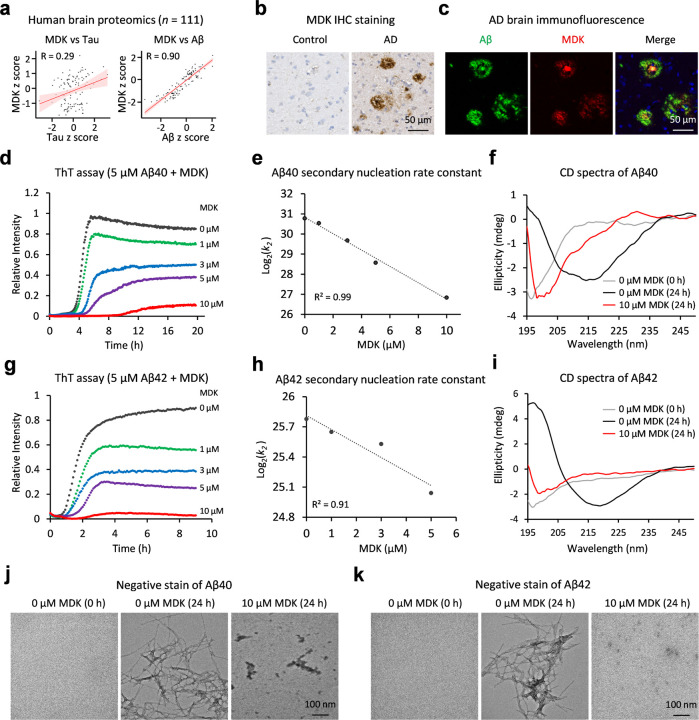 Figure 1
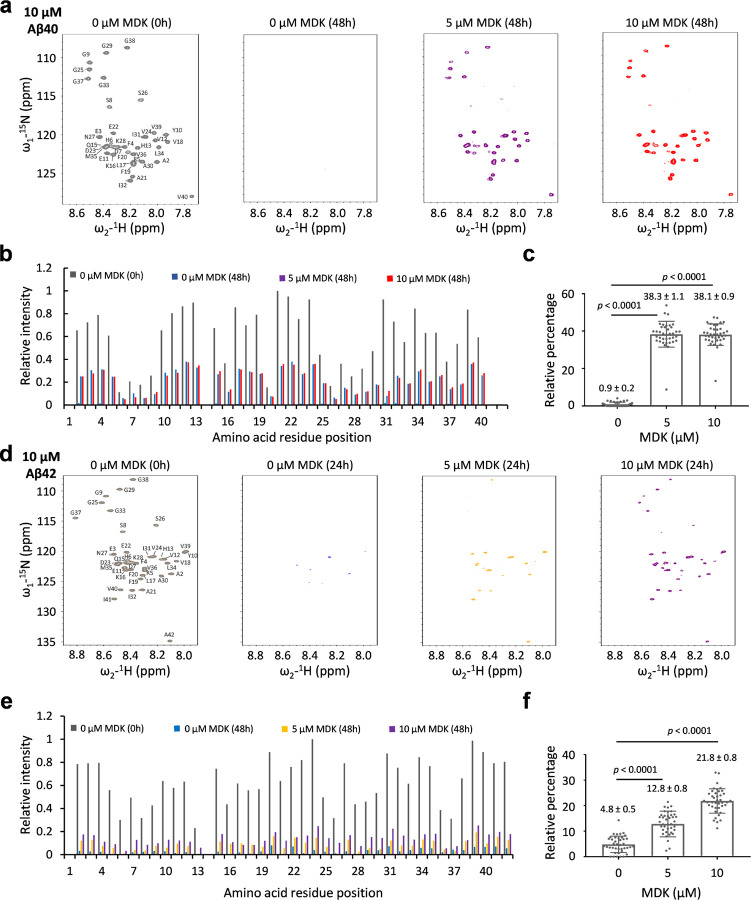 Figure 2
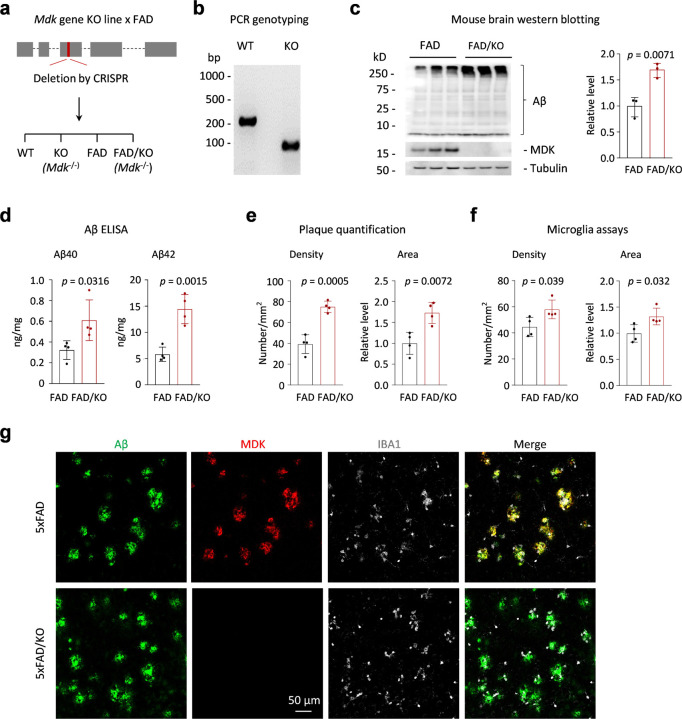 Figure 3
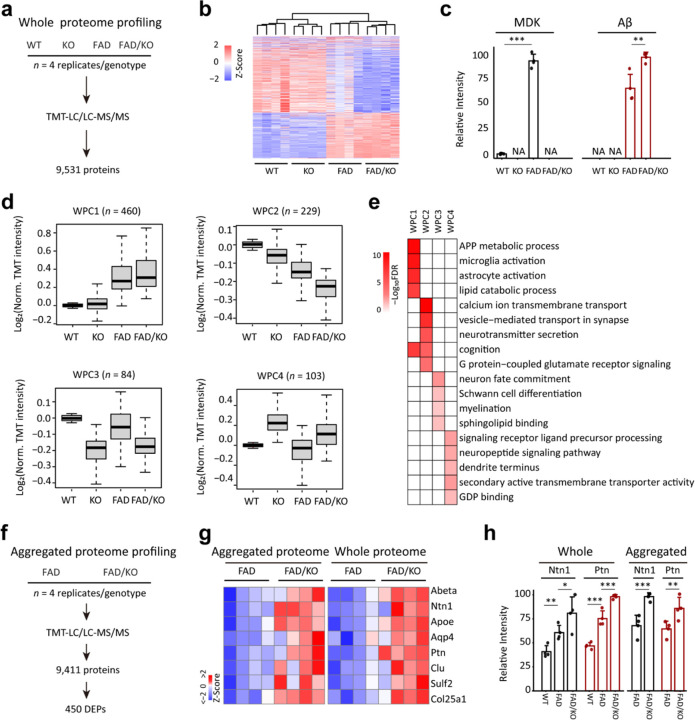 Figure 4
Peer Reviews
No public reviews on file for this paper yet. If you reviewed it on a platform where reviews are public (OpenReview, ICLR, NeurIPS, ICML), you can paste yours below so the community can read it here.
Videos
No videos yet. Explain this paper in a talk, walkthrough, or lecture? Add one.
Taxonomy
TopicsProteoglycans and glycosaminoglycans research · Glycosylation and Glycoproteins Research · Advanced Glycation End Products research