Intrinsic Gata4 expression sensitizes the aortic root to dilation in a Loeys-Dietz syndrome mouse model
Emily E. Bramel, Wendy A. Espinoza Camejo, Tyler J. Creamer, Leda Restrepo, Muzna Saqib, Rustam Bagirzadeh, Anthony Zeng, Jacob T. Mitchell, Genevieve L. Stein-O’Brien, Albert J. Pedroza, Michael P. Fischbein, Harry C. Dietz, Elena Gallo MacFarlane

TL;DR
This study finds that Gata4 expression in vascular smooth muscle cells makes the aortic root more vulnerable to dilation in a mouse model of Loeys-Dietz syndrome.
Contribution
The study identifies Gata4 as a novel intrinsic factor that increases aortic root vulnerability in Loeys-Dietz syndrome.
Findings
LDS VSMCs show reduced extracellular matrix-receptor components and increased stress/inflammatory pathways.
Gata4-expressing VSMCs in the aortic root have a less differentiated, proinflammatory profile.
Deleting Gata4 in VSMCs reduces aortic root dilation in LDS mice.
Abstract
Loeys-Dietz syndrome (LDS) is an aneurysm disorder caused by mutations that decrease transforming growth factor-β (TGF-β) signaling. Although aneurysms develop throughout the arterial tree, the aortic root is a site of heightened risk. To identify molecular determinants of this vulnerability, we investigated the heterogeneity of vascular smooth muscle cells (VSMCs) in the aorta of Tgfbr1M318R/+ LDS mice by single cell and spatial transcriptomics. Reduced expression of components of the extracellular matrix-receptor apparatus and upregulation of stress and inflammatory pathways were observed in all LDS VSMCs. However, regardless of genotype, a subset of Gata4-expressing VSMCs predominantly located in the aortic root intrinsically displayed a less differentiated, proinflammatory profile. A similar population was also identified among aortic VSMCs in a human scRNAseq dataset. Postnatal…
Genes, proteins, chemicals, diseases, species, mutations and cell lines named across the full text — each resolved to its canonical identifier and authoritative record.
Click any figure to enlarge with its caption.
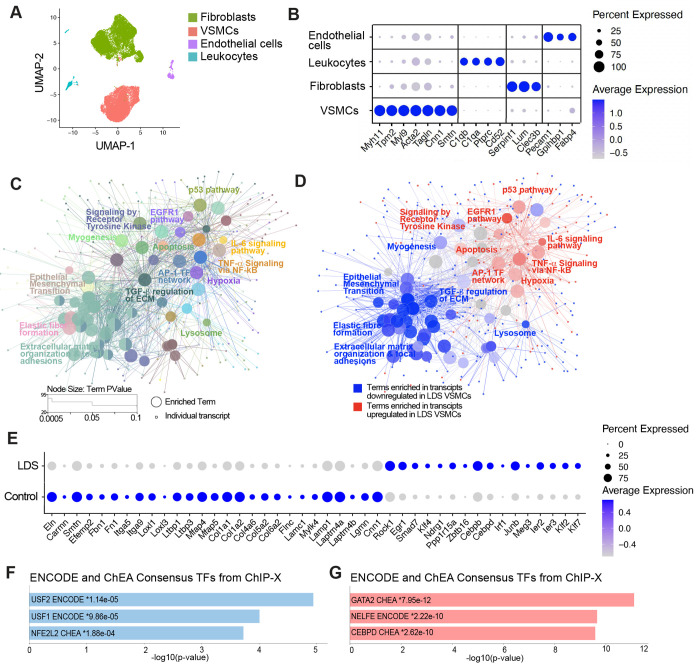 Figure 1
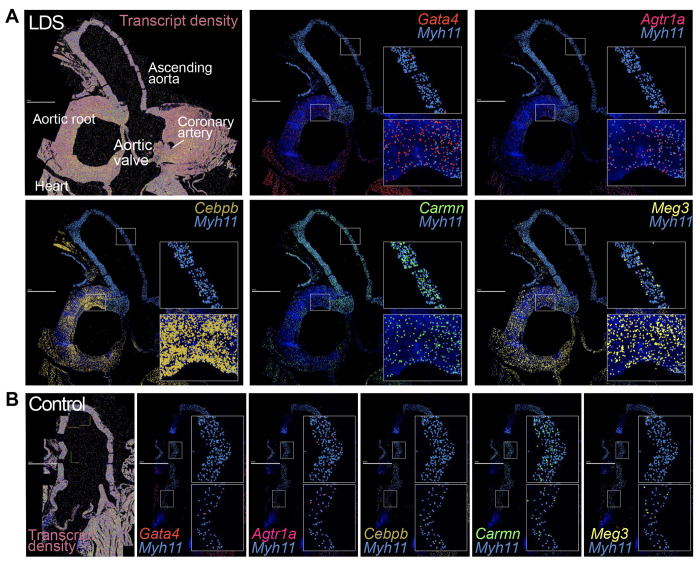 Figure 2
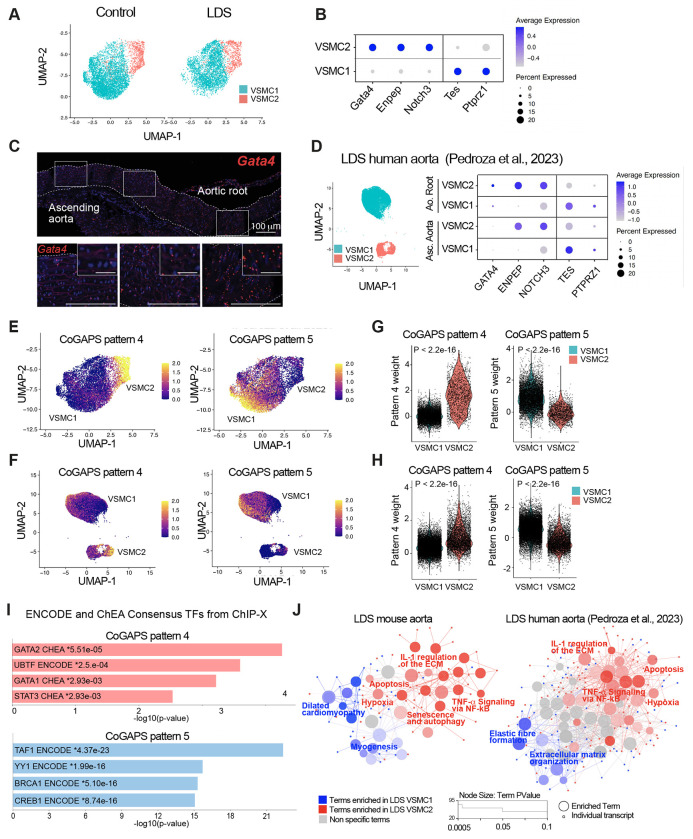 Figure 3
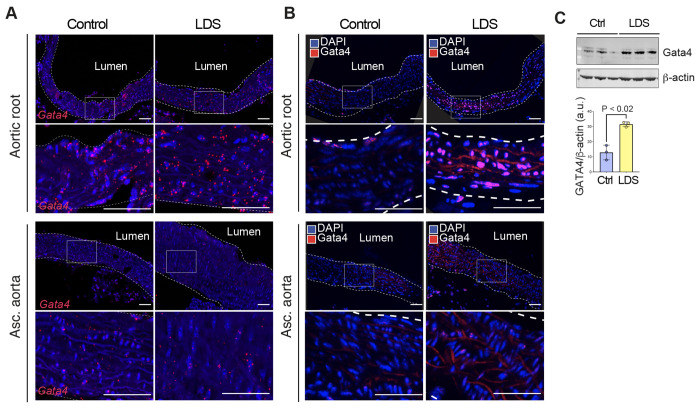 Figure 4
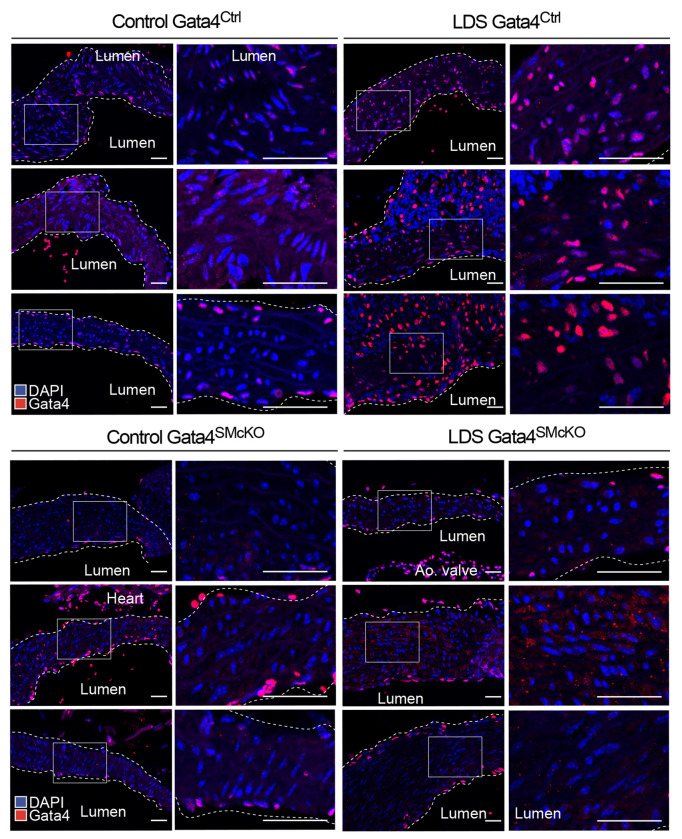 Figure 5
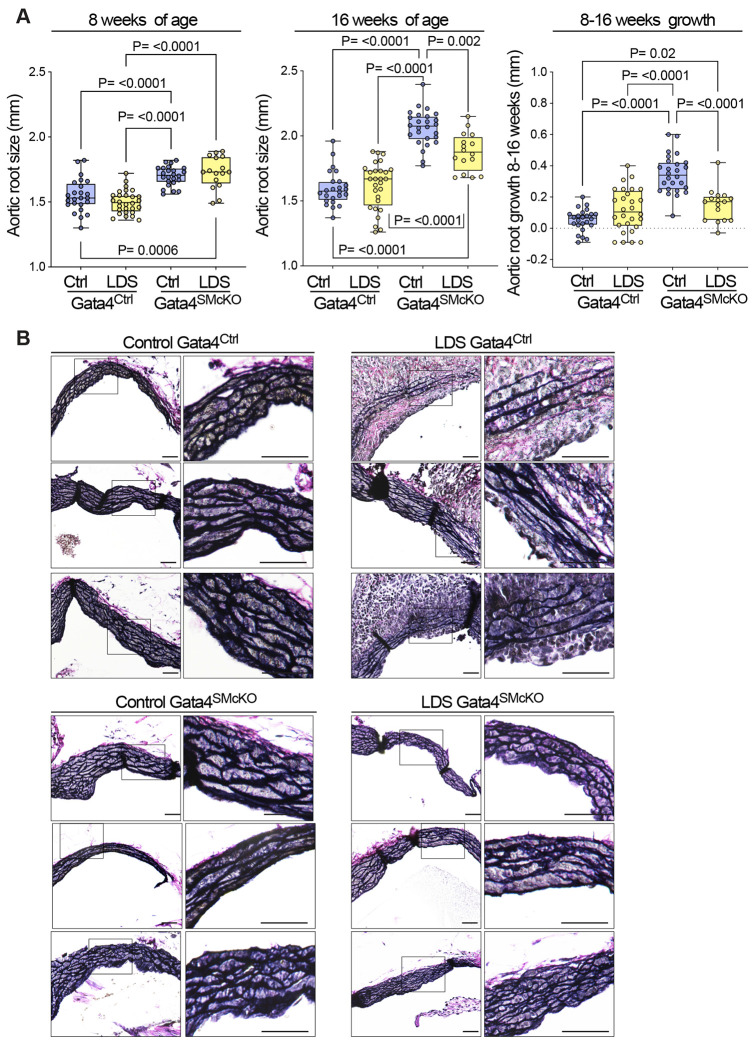 Figure 6
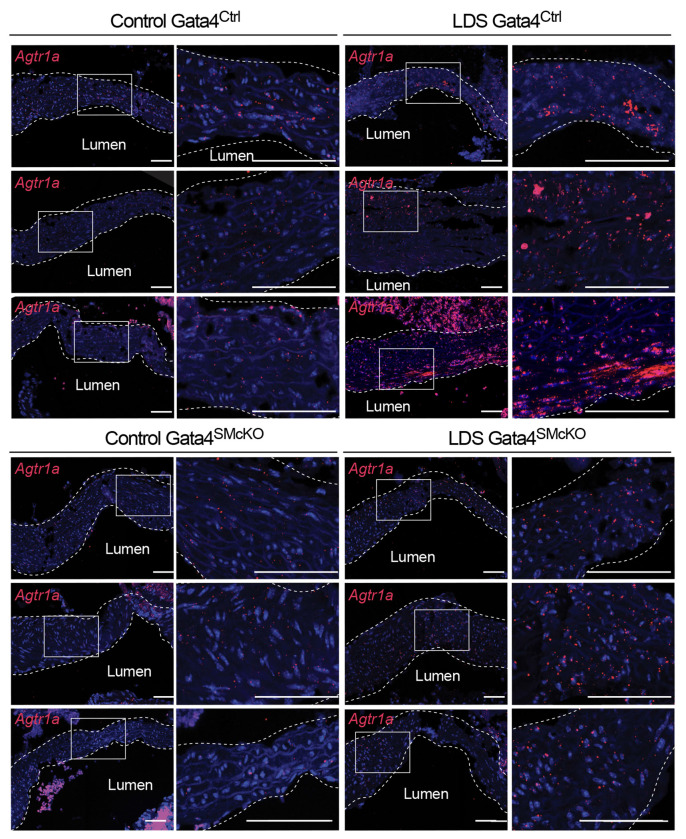 Figure 7
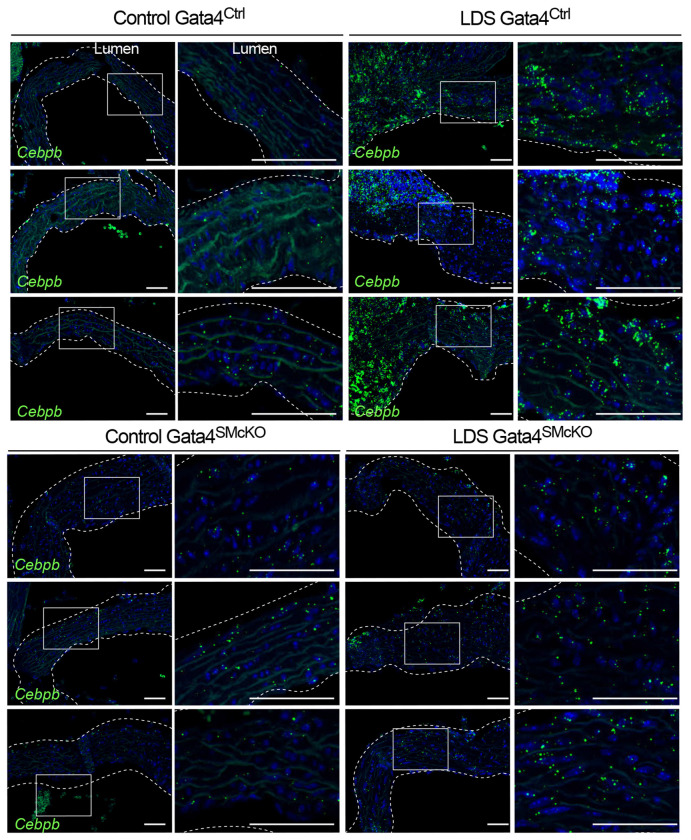 Figure 8
Peer Reviews
No public reviews on file for this paper yet. If you reviewed it on a platform where reviews are public (OpenReview, ICLR, NeurIPS, ICML), you can paste yours below so the community can read it here.
Videos
No videos yet. Explain this paper in a talk, walkthrough, or lecture? Add one.
Taxonomy
TopicsConnective tissue disorders research · Aortic aneurysm repair treatments · Pregnancy and preeclampsia studies