Backbone NMR resonance assignments for the VP1u N-terminal receptor-binding domain of the human parvovirus pathogen B19
Maria Luiza Caldas Nogueira, Renuk Lakshmanan, Gwladys Rivière, Mario Mietzsch, Antonette Bennett, Robert McKenna, Joanna R. Long

TL;DR
This study provides the first NMR resonance assignments for the receptor-binding domain of the human parvovirus B19, offering a foundation for future drug development.
Contribution
The paper presents the first experimental NMR backbone assignments for the B19V VP1u receptor-binding domain.
Findings
The RBD of B19V forms a stable structure with three helices connected by tight turns.
NMR chemical shifts align well with AlphaFold's predicted structure, confirming its accuracy.
The RBD construct is suitable for future NMR studies and antiviral drug development.
Abstract
Parvovirus B19 (B19V) is a human pathogen that is the causative agent of several diseases in infants and adults. Due to a lack of antivirals against this virus, treatment options are limited. The minor capsid protein of B19V has a unique N terminus, named VP1u, which is essential for infection. The VP1u encodes a receptor binding domain (RBD), necessary for host cell entry, and a phospholipase A2 (PLA2) domain, crucial for endosomal escape during cellular trafficking. Both domains are indispensable for infection, making the RBD a plausible drug target for inhibitors against B19V, as it is located on the exterior surface of the virus. To date, no experimental structural information has been available for the VP1u component for any Parvovirus. Here we report the backbone NMR resonance assignments for the RBD of B19V and demonstrate it forms a stable structure. The backbone chemical shifts…
Genes, proteins, chemicals, diseases, species, mutations and cell lines named across the full text — each resolved to its canonical identifier and authoritative record.
Click any figure to enlarge with its caption.
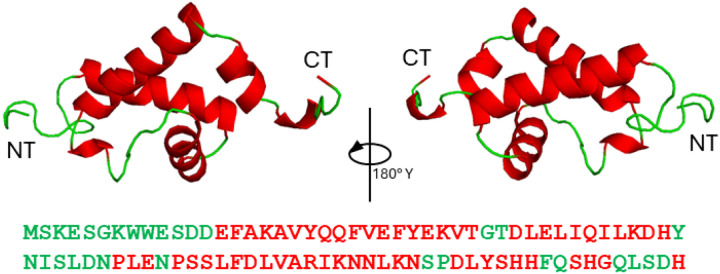 Figure 1
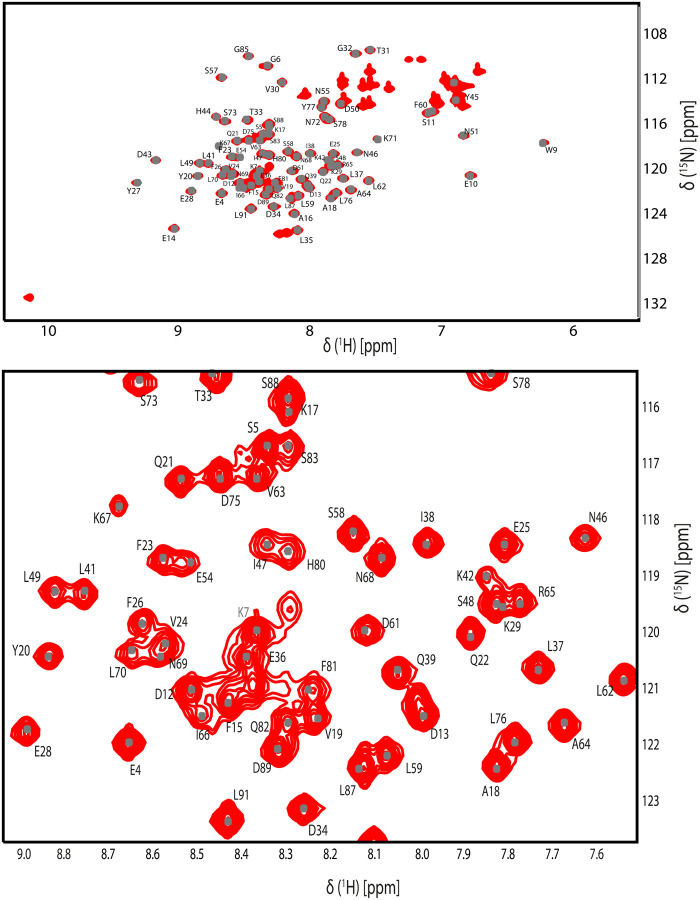 Figure 2
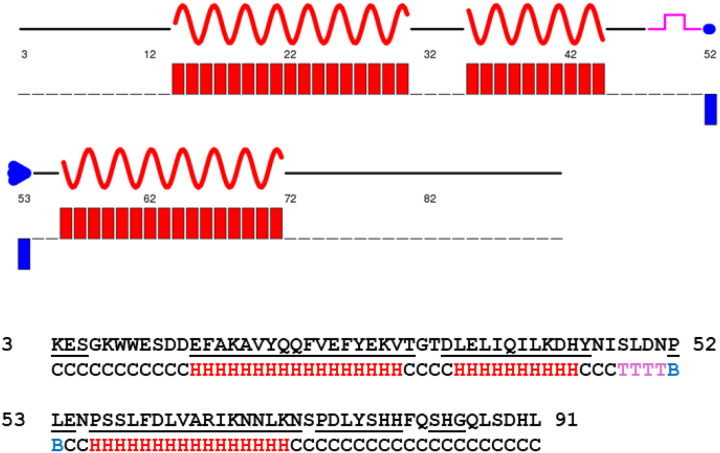 Figure 3
Peer Reviews
No public reviews on file for this paper yet. If you reviewed it on a platform where reviews are public (OpenReview, ICLR, NeurIPS, ICML), you can paste yours below so the community can read it here.
Videos
No videos yet. Explain this paper in a talk, walkthrough, or lecture? Add one.
Taxonomy
TopicsParvovirus B19 Infection Studies · Dermatological and COVID-19 studies · Cytomegalovirus and herpesvirus research