Engineering Frustrated Lewis Pair Active Sites in Porous Organic Scaffolds for Catalytic CO2 Hydrogenation
Shubhajit Das, Ruben Laplaza, J. Terence Blaskovits, Clémence Corminboeuf

TL;DR
This paper presents a method to design immobilized Frustrated Lewis Pair active sites in porous materials for efficient CO2 hydrogenation.
Contribution
The study formulates practical design guidelines for immobilized FLPs through large-scale screening of 25,000 candidates.
Findings
Boron-containing acidic sites near nitrogen bases in MOFs are effective for CO2 hydrogenation.
Simple descriptors like acidity, basicity, and spatial arrangement predict active site performance.
Design principles derived from top-performing candidates can guide future FLP catalyst development.
Abstract
Frustrated Lewis pairs (FLPs), featuring reactive combinations of Lewis acids and Lewis bases, have been utilized for myriad metal-free homogeneous catalytic processes. Immobilizing the active Lewis sites to a solid support, especially to porous scaffolds, has shown great potential to ameliorate FLP catalysis by circumventing some of its inherent drawbacks, such as poor product separation and catalyst recyclability. Nevertheless, designing immobilized Lewis pair active sites (LPASs) is challenging due to the requirement of placing the donor and acceptor centers in appropriate geometric arrangements while maintaining the necessary chemical environment to perform catalysis, and clear design rules have not yet been established. In this work, we formulate simple guidelines to build highly active LPASs for direct catalytic hydrogenation of CO2 through a large-scale screening of a diverse…
Genes, proteins, chemicals, diseases, species, mutations and cell lines named across the full text — each resolved to its canonical identifier and authoritative record.
Click any figure to enlarge with its caption.
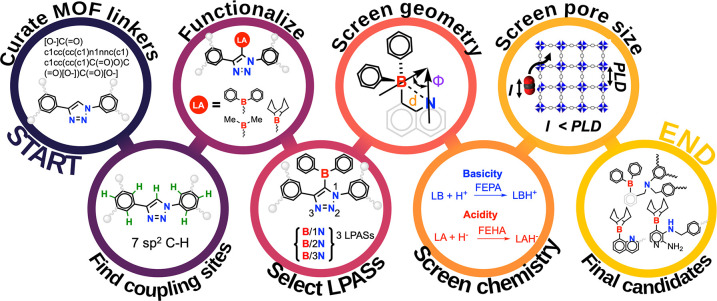 Figure 1
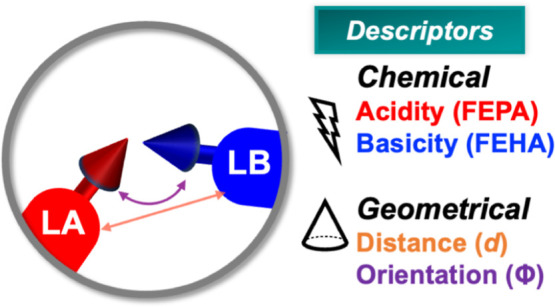 Figure 2
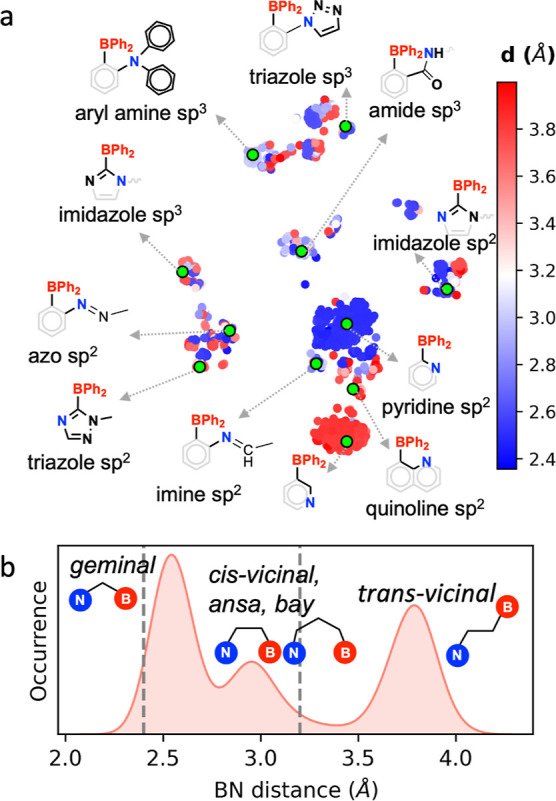 Figure 3
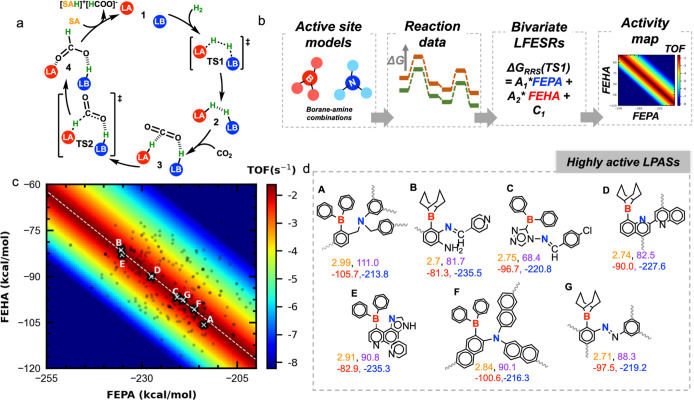 Figure 4
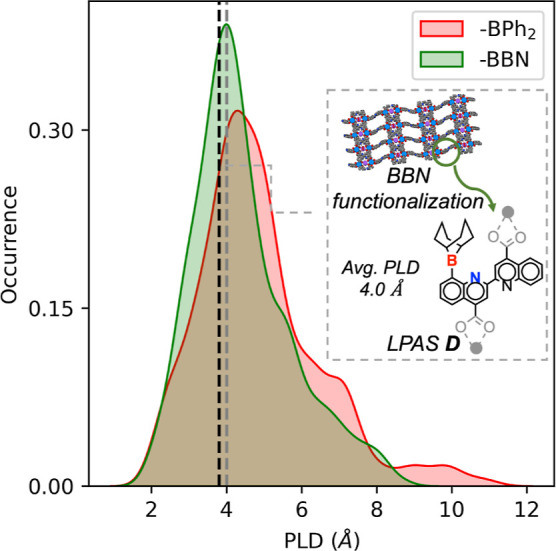 Figure 5
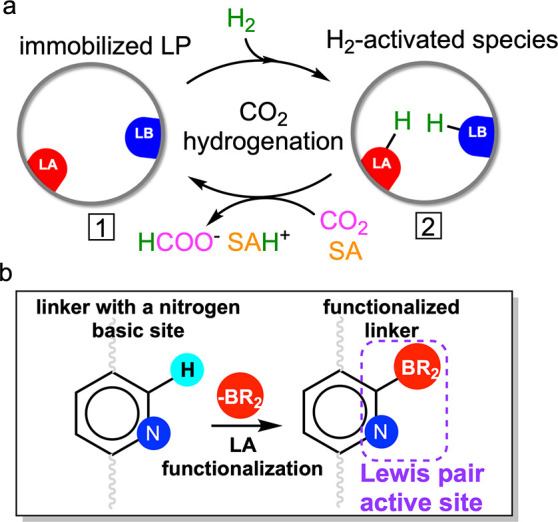 Figure 6
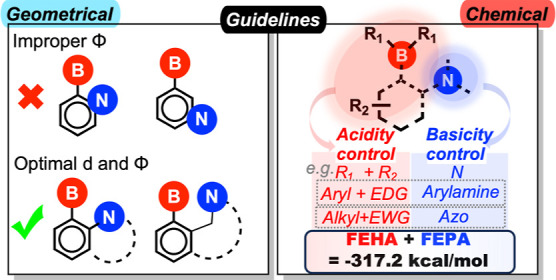 Figure 7
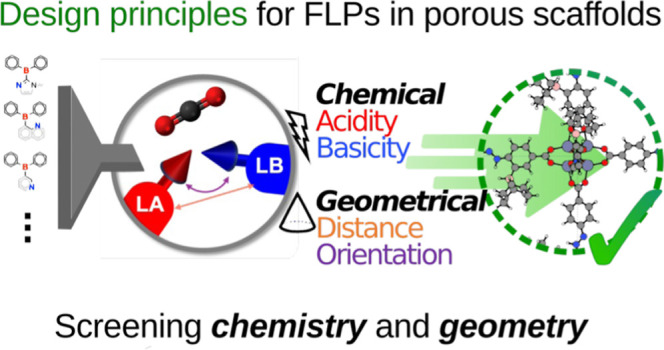 Figure 8
Peer Reviews
No public reviews on file for this paper yet. If you reviewed it on a platform where reviews are public (OpenReview, ICLR, NeurIPS, ICML), you can paste yours below so the community can read it here.
Videos
No videos yet. Explain this paper in a talk, walkthrough, or lecture? Add one.
Taxonomy
TopicsNuclear Physics and Applications