Harnessing the Benefits of Telehealth in Long COVID Service Provision
Naomi Whyler, Liz Atkins, Prue Hogg, Amanda Leong, Julie Metcalfe, Michelle Scoullar, Emma Tippett

Abstract
Genes, proteins, chemicals, diseases, species, mutations and cell lines named across the full text — each resolved to its canonical identifier and authoritative record.
Click any figure to enlarge with its caption.
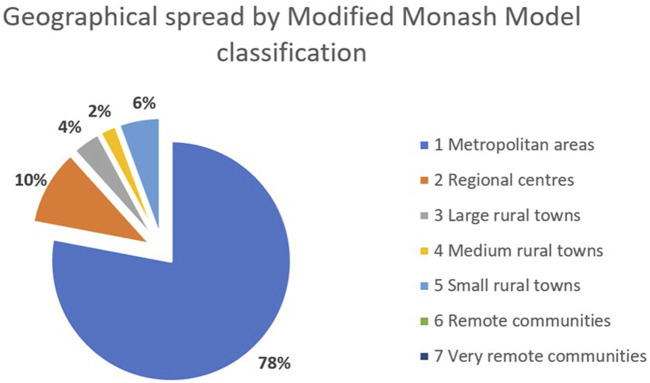 Figure 1
Peer Reviews
No public reviews on file for this paper yet. If you reviewed it on a platform where reviews are public (OpenReview, ICLR, NeurIPS, ICML), you can paste yours below so the community can read it here.
Videos
No videos yet. Explain this paper in a talk, walkthrough, or lecture? Add one.
Taxonomy
TopicsTelemedicine and Telehealth Implementation · Long-Term Effects of COVID-19 · COVID-19 diagnosis using AI
Dear Editors,
We commend Luo et al. for their in-depth analysis of the current available services in Australia to support people with Long COVID [1]. This devastating illness affects over 10% of those after acute COVID-19 infection and is projected to affect over 200 million people in the next decade worldwide [2]. Many with Long COVID are severely impacted by physical symptoms to the extent that simple activities of daily living are extremely fatiguing, and the demands of travel to a healthcare appointment can trigger episodes of severe post-exertional malaise which has been found to affect over 80% of those with Long COVID [3]. Provision of healthcare should be available in a format that does not worsen symptoms nor impact upon them financially.
As Luo et al. describe, options for Long COVID specialist care in Australia are limited, particularly for people in rural or remote locations [1]. We note, however, that their summary did not review the option of telehealth as a model of care for Long COVID. Telehealth encompasses provision of medical assessment, diagnosis, treatment, and education through the use of technology, including video and telephone-based consultation [4]. Our Australian-based clinic, which was not included in Luo et al.’s review, uses a telehealth model of care and to date has provided care to over 500 people with Long COVID (including children) from all states and territories, including the Northern Territory, which has no other dedicated Long COVID services [1]. Of our cohort, 22% live outside of major metropolitan centres as measured by the Modified Monash model [5] (Figure 1).
This model of care provides an option for patients with physical [6] or other disability and geographical limitations [7] to equitably access healthcare without physical detriment or disproportionate financial penalty due to travel costs. The need, strengths, safety and limitations of telehealth services to provide rapid and accessible care has been highlighted throughout the COVID-19 pandemic. Systemic changes within the Australian health system provided funding of a wide-scale shift in the modality of care delivery [4], and which have been trialled elsewhere including Canada [8].
The use of telehealth, where service is otherwise limited, provides a real option for many patients to receive care they would not otherwise be able to access [6], and the inability to undertake a physical examination can often be mitigated through close collaboration with the person’s primary care provider. This approach has been successfully demonstrated in several settings including with rehabilitation [9], an important facet of long COVID care. Furthermore, formal and informal consumer feedback from our clinic indicates that this model of care is desired by many people with Long COVID, in keeping with published literature [10]. Luo et al. highlight the importance of consumer engagement and empowerment, and including consumers in discussion about models of care is of paramount importance to be able to provide optimal quality care.
Provision of care for Long COVID must be equitable, should not exacerbate symptoms, and should be designed with consumer needs and opinions at its heart. The benefits of telehealth are numerous for those with Long COVID and should be embedded within systemic strategies to enhance care.
The reference list from the paper itself. Each links out to its DOI / PubMed record.
- 1Luo S Zheng Z Bird SR Plebanski M Figueiredo B Jessup R An Overview of Long COVID Support Services in Australia and International Clinical Guidelines, With a Proposed Care Model in a Global Context. Public Health Rev (2023) 44:1606084. 10.3389/phrs.2023.1606084 37811128 PMC 10556237 · doi ↗ · pubmed ↗
- 2Davis HE Mc Corkell L Vogel JM Topol EJ. Long COVID: Major Findings, Mechanisms and Recommendations. Nat Rev Microbiol (2023) 21:133–46. 10.1038/s 41579-022-00846-2 36639608 PMC 9839201 · doi ↗ · pubmed ↗
- 3Bonilla H Quach TC Tiwari A Bonilla AE Miglis M Yang PC Myalgic Encephalomyelitis/Chronic Fatigue Syndrome Is Common in Post-Acute Sequelae of SARS-Co V-2 Infection (PASC): Results From a Post-COVID-19 Multidisciplinary Clinic. Front Neurol (2023) 14:1090747. 10.3389/fneur.2023.1090747 36908615 PMC 9998690 · doi ↗ · pubmed ↗
- 4Caffery LA Muurlink OT Taylor-Robinson AW. Survival of Rural Telehealth Services Post-Pandemic in Australia: A Call to Retain the Gains in the ‘New Normal’. Aust J Rural Health (2022) 30(4):544–9. 10.1111/ajr.12877 35612267 PMC 9545882 · doi ↗ · pubmed ↗
- 5Australian Government Department of Health and Aged Care. Modified Monash Model (2023). Available from: https://www.health.gov.au/topics/rural-health-workforce/classifications/mmm#about-the-modified-monash-model (Accessed December 1, 2023).
- 6Valdez RS Rogers CC Claypool H Trieshmann L Frye O Wellbeloved-Stone C Ensuring Full Participation of People With Disabilities in an Era of Telehealth. J Am Med Inform Assoc (2021) 28(2):389–92. 10.1093/jamia/ocaa 297 33325524 PMC 7717308 · doi ↗ · pubmed ↗
- 7Bradford NK Caffery LK Smith AC. Telehealth Services in Rural and Remote Australia: A Systematic Review of Models of Care and Factors Influencing Success and Sustainability. Rural Remote Health (2016) 16(4):4268–23. 10.22605/rrh 4268 27817199 · doi ↗ · pubmed ↗
- 8Alami H Lehoux P Attieh R Fortin JP Fleet R Niang M A ‘Not So Quiet’ Revolution: Systemic Benefits and Challenges of Telehealth in the Context of COVID-19 in Quebec (Canada). Front Digit Health (2021) 3:3. 10.3389/fdgth.2021.721898 · doi ↗