Investigation of Motor Learning Effects Using a Hybrid Rehabilitation System Based on Motion Estimation
Kensuke Takenaka, Keisuke Shima, Koji Shimatani

TL;DR
A new hybrid rehabilitation system using EMG signals and a neural network helps improve motor learning for upper-limb paralysis patients.
Contribution
A novel EMG-driven hybrid system using motion estimation for rehabilitation that supports motor learning without voluntary movement.
Findings
Hybrid instruction was as effective as visual feedback training in accuracy, stability, and smoothness.
The system enables intuitive learning of joint motion and muscle contraction for multiple movements.
Passive hybrid instruction promotes motor learning in paralysis patients unable to perform voluntary movements.
Abstract
Upper-limb paralysis requires extensive rehabilitation to recover functionality for everyday living, and such assistance can be supported with robot technology. Against such a background, we have proposed an electromyography (EMG)-driven hybrid rehabilitation system based on motion estimation using a probabilistic neural network. The system controls a robot and functional electrical stimulation (FES) from movement estimation using EMG signals based on the user’s intention, enabling intuitive learning of joint motion and muscle contraction capacity even for multiple motions. In this study, hybrid and visual-feedback training were conducted with pointing movements involving the non-dominant wrist, and the motor learning effect was examined via quantitative evaluation of accuracy, stability, and smoothness. The results show that hybrid instruction was as effective as visual feedback…
Genes, proteins, chemicals, diseases, species, mutations and cell lines named across the full text — each resolved to its canonical identifier and authoritative record.
Click any figure to enlarge with its caption.
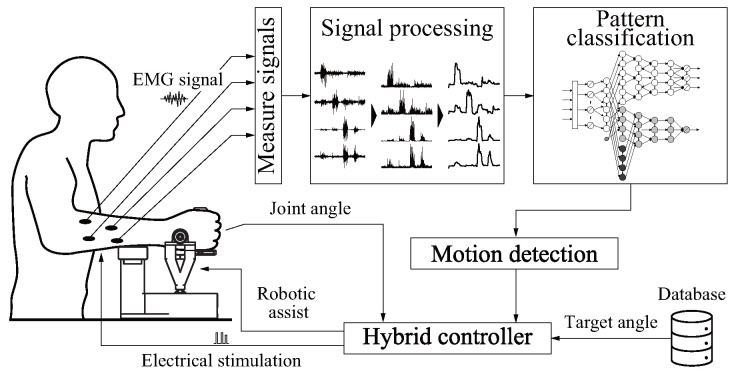 Figure 1
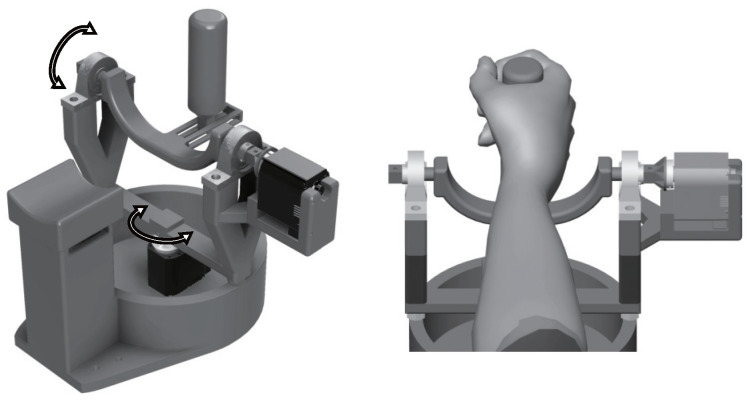 Figure 2
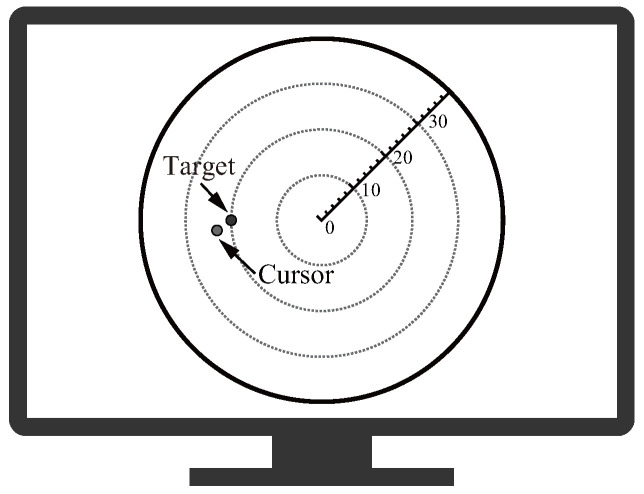 Figure 3
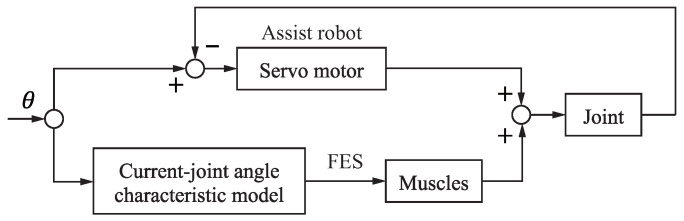 Figure 4
 Figure 5
 Figure 6
 Figure 7
 Figure 8
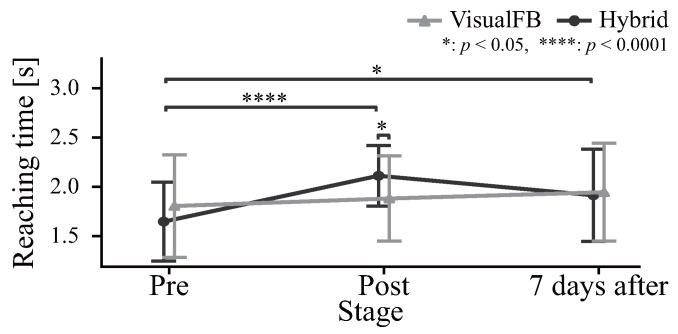 Figure 9
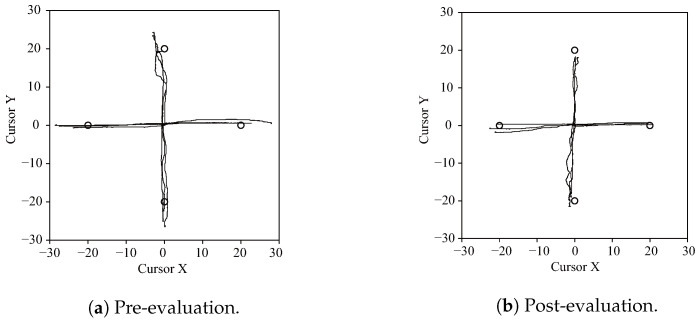 Figure 10
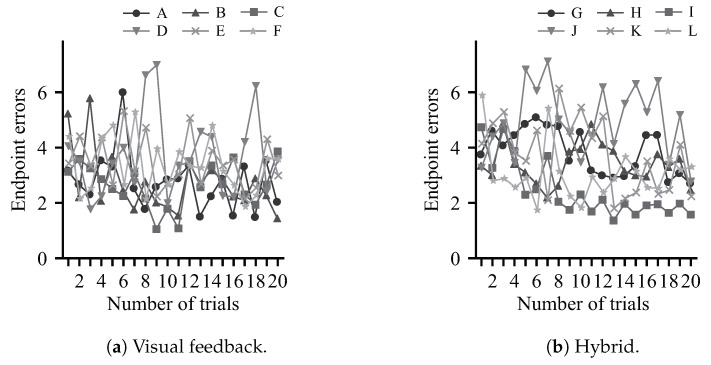 Figure 11
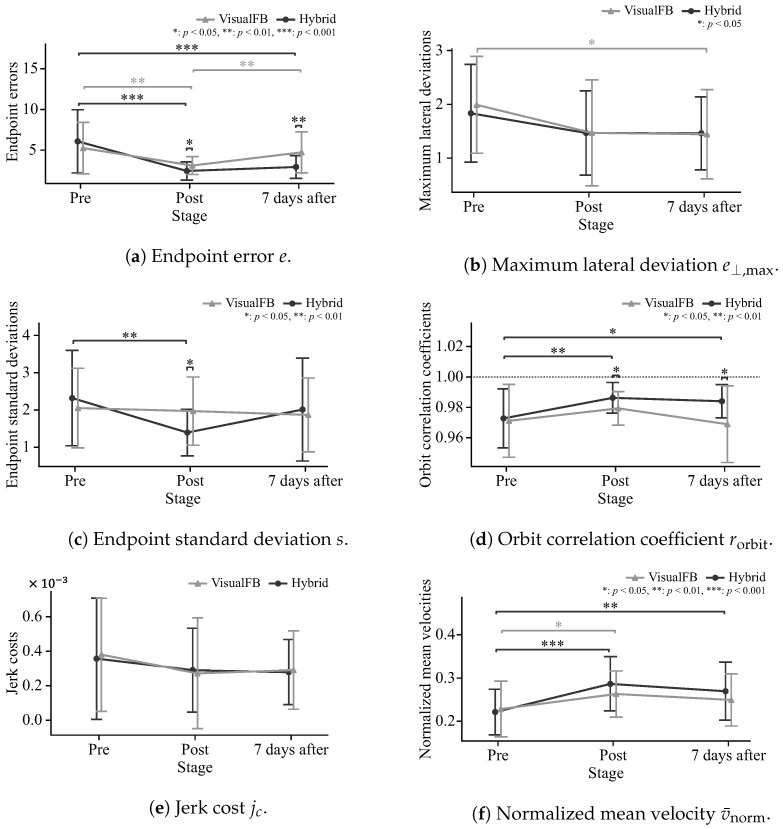 Figure 12
Peer Reviews
No public reviews on file for this paper yet. If you reviewed it on a platform where reviews are public (OpenReview, ICLR, NeurIPS, ICML), you can paste yours below so the community can read it here.
Videos
No videos yet. Explain this paper in a talk, walkthrough, or lecture? Add one.
Taxonomy
TopicsStroke Rehabilitation and Recovery · Muscle activation and electromyography studies · EEG and Brain-Computer Interfaces