Study on TPD Phasemeter to Suppress Low-Frequency Amplitude Fluctuation and Improve Fast-Acquiring Range for GW Detection
Min Ming, Jingyi Zhang, Huizong Duan, Zhu Li, Xiangqing Huang, Liangcheng Tu, Hsien-Chi Yeh

TL;DR
This paper introduces a new phasemeter design to improve gravitational wave detection by reducing amplitude noise and increasing the range for fast signal acquisition.
Contribution
The novel tangent phase detector (TPD) phasemeter is proposed to overcome limitations of traditional SPD phasemeters in amplitude noise suppression and fast-acquiring range.
Findings
The TPD phasemeter suppresses amplitude fluctuations to a noise floor of 1 μrad/Hz1/2.
The TPD phasemeter has a maximum lockable step frequency three times larger than SPD phasemeters.
Simulation results confirm the TPD's improved performance in phase tracking and stability.
Abstract
A phasemeter as a readout system for the inter-satellite laser interferometer in a space-borne gravitational wave detector requires not only high accuracy but also insensitivity to amplitude fluctuations and a large fast-acquiring range. The traditional sinusoidal characteristic phase detector (SPD) phasemeter has the advantages of a simple structure and easy realization. However, the output of an SPD is coupled to the amplitude of the input signal and has only a limited phase-detection range due to the boundedness of the sinusoidal function. This leads to the performance deterioration of amplitude noise suppression, fast-acquiring range, and loop stability. To overcome the above shortcomings, we propose a phasemeter based on a tangent phase detector (TPD). The characteristics of the SPD and TPD phasemeters are theoretically analyzed, and a fixed-point simulation is further carried out…
Genes, proteins, chemicals, diseases, species, mutations and cell lines named across the full text — each resolved to its canonical identifier and authoritative record.
Click any figure to enlarge with its caption.
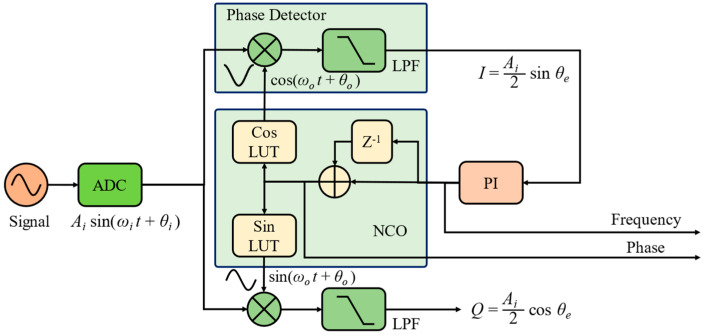 Figure 1
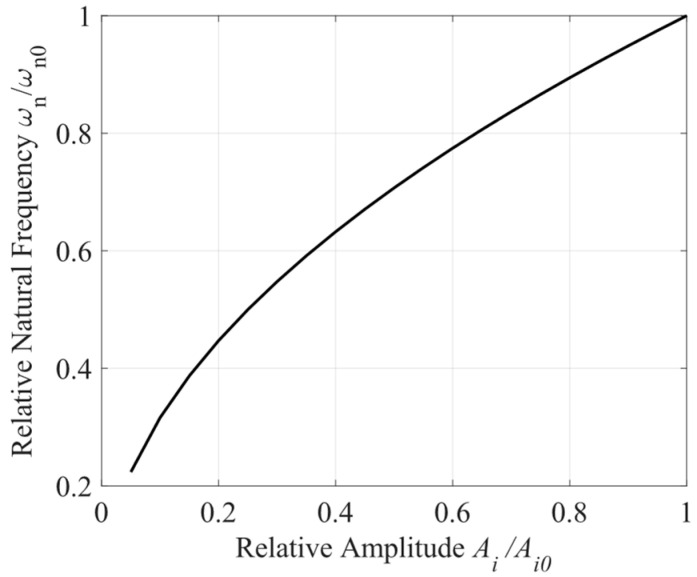 Figure 2
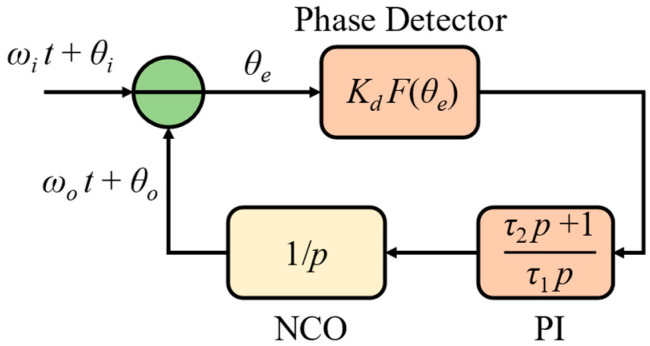 Figure 3
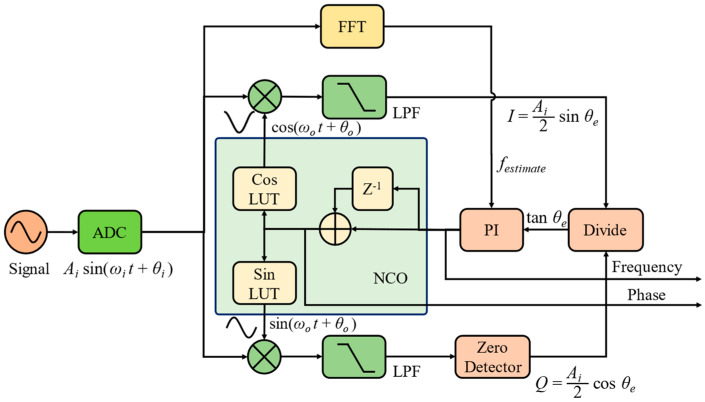 Figure 4
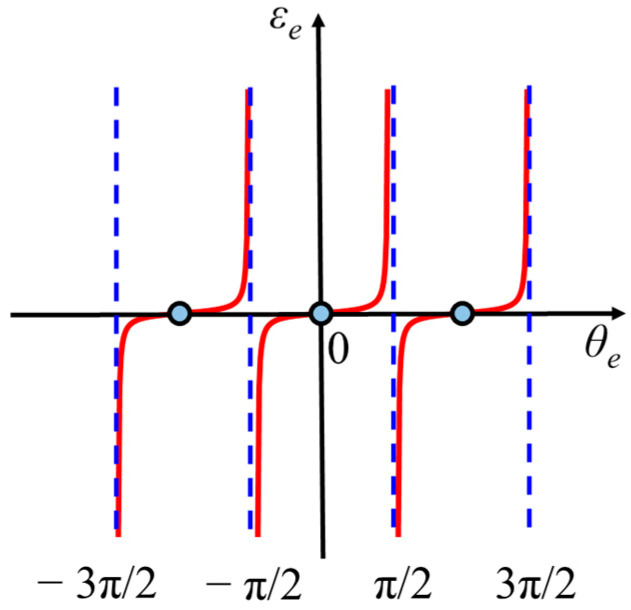 Figure 5
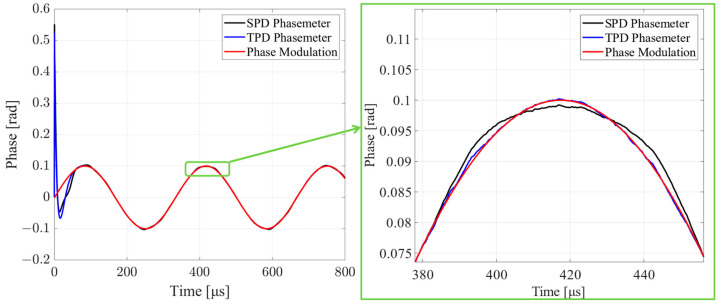 Figure 6
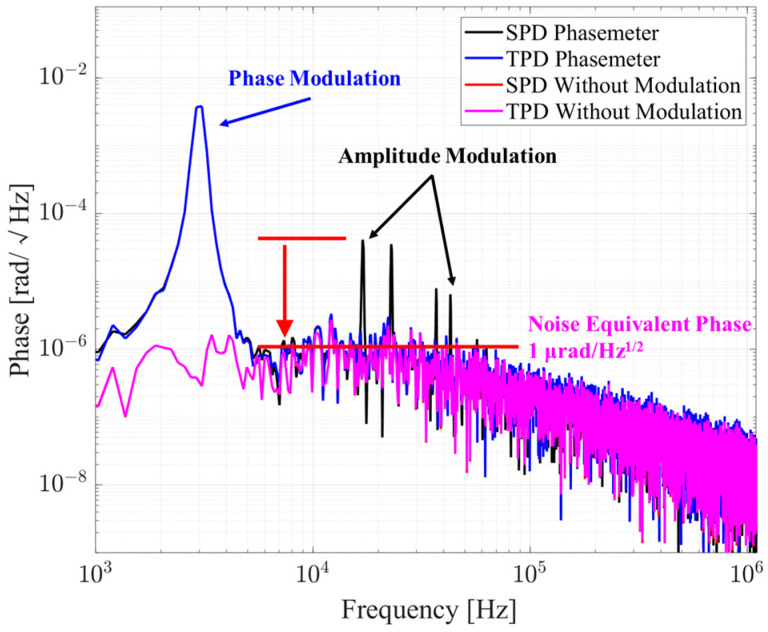 Figure 7
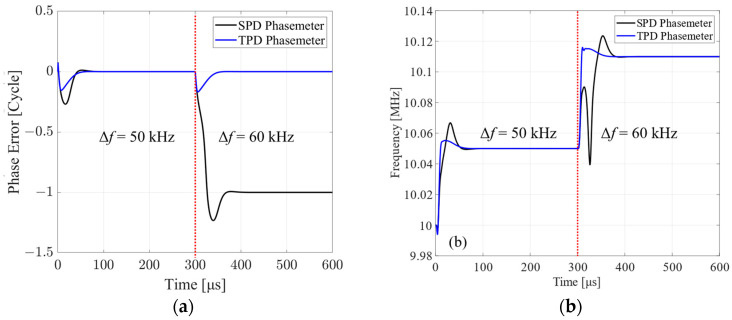 Figure 8
Peer Reviews
No public reviews on file for this paper yet. If you reviewed it on a platform where reviews are public (OpenReview, ICLR, NeurIPS, ICML), you can paste yours below so the community can read it here.
Videos
No videos yet. Explain this paper in a talk, walkthrough, or lecture? Add one.
Taxonomy
TopicsPulsars and Gravitational Waves Research · Advanced Frequency and Time Standards · Geophysics and Gravity Measurements