Cryotherapy Treatment Effect on Heat-Treated Nickel-Titanium (NiTi) Rotary Single-File System: An In Vitro Comparative Study by Finite Element Analysis
Yadav Chakaravarthy, Vishnu Prasad, Vanita Dattatray Revankar, Haripriya Karthikeyan, Suresh Saravanan, Aishwarya Santosh

TL;DR
This study investigated whether cryotherapy reduces stress and fatigue in nickel-titanium endodontic files used in root canal treatments.
Contribution
The study introduces a novel application of cryotherapy to improve the longevity of NiTi rotary files using finite element analysis.
Findings
Cryotherapy did not significantly reduce cyclic fatigue in NiTi rotary files.
Cryotherapy led to a reduction in stress on the NiTi rotary single-file system.
The study used finite element analysis to evaluate mechanical responses in an in vitro setting.
Abstract
Background The use of endodontic files multiple times can cause fatigue in them and can lead to their separation in the root canal. The purpose of this study was to achieve a reduction in cyclic fatigue stress in a newly introduced nickel-titanium (NiTi) rotary single-file system. The study aimed to determine whether cryotherapy could help reduce cyclic fatigue and stress on rotary files after multiple uses during root canal treatment. By utilizing finite element analysis (FEA), the study provided a comprehensive evaluation of how cryotherapy might enhance the performance and longevity of these instruments, ultimately benefiting patients undergoing root canal therapy. Methodology This in vitro comparative study used scanned plastic teeth with genuine root canal anatomy and FEA to investigate the mechanical response to cyclic fatigue and stress of NiTi rotary file system. The…
Genes, proteins, chemicals, diseases, species, mutations and cell lines named across the full text — each resolved to its canonical identifier and authoritative record.
Click any figure to enlarge with its caption.
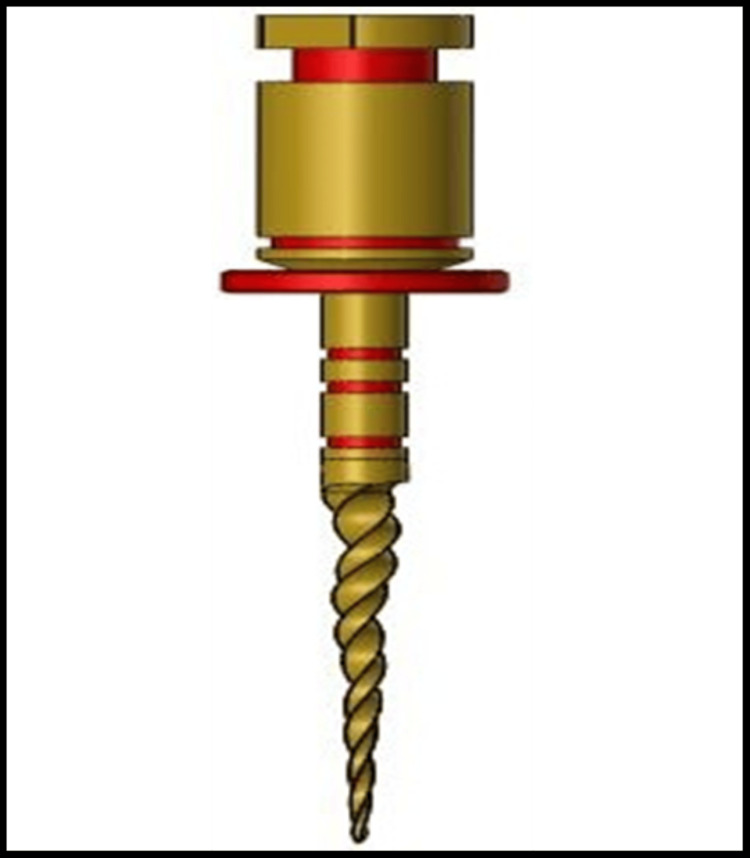 Figure 1
| Load cases | No. of cycles | |
| Procodile file | Procodile-cryotreated file | |
| Fatigue | 4.022 | 8.218 |
| File thread displacement (mm) | N | Mean | Standard deviation | SE | t-value | p-value | Remarks |
| Procodile file | 17 | 3.06 | 3.07 | 0.75 | 0.642 | 0.525 | Not significant |
| Procodile-cryotreated file | 17 | 3.83 | 3.84 | 0.93 |
| Load cases | Stress (Mpa) | |
| Procodile file | Procodile-cryotreated file | |
| Bending test | 1186.04 | 948.84 |
Peer Reviews
No public reviews on file for this paper yet. If you reviewed it on a platform where reviews are public (OpenReview, ICLR, NeurIPS, ICML), you can paste yours below so the community can read it here.
Videos
No videos yet. Explain this paper in a talk, walkthrough, or lecture? Add one.
Taxonomy
TopicsMetal and Thin Film Mechanics · Bone Tissue Engineering Materials · Advanced ceramic materials synthesis
Introduction
By removing inflammatory or necrotic pulp tissue from the root canal system, endodontic treatment known as root canal therapy aims to eradicate infection and maintain the original tooth. Typically, this process entails shaping and cleaning the root canal using specialized endodontic rotary devices before filling it with biocompatible material. The orientation and position of possible root fractures during treatment can be affected by several essential variables, such as dentin thickness, external root morphology, and root canal shape [1].
Scientific research does not provide substantial support for the generally held idea that teeth with root canal therapy are more prone to fractures than healthy teeth. According to recent research, the fracture rate of teeth with root canal therapy and teeth without endodontic treatment is similar, indicating that the process may not have a significant negative impact on the mechanical characteristics of teeth [2,3].
In recent years, the design and composition of endodontic rotary files have seen significant advancements, with changes in the alloys' chemical properties and the files' geometric design. These developments have improved the mechanical performance and durability of these instruments [4]. Despite recent developments, the unexpected separation of endodontic rotary files within the root canal during treatment remains difficult for endodontists [5,6].
To better understand and address these challenges, endodontics has leveraged the power of finite element analysis (FEA) to assess stress distribution and potential points of failure during root canal procedures. This type of analysis provides valuable insights into how different factors affect the performance of rotary files and the overall success of the treatment [7-9].
In an effort to further improve endodontic outcomes, an in vitro comparative study was conducted to examine the potential benefits of applying cryotherapy to a rotary single-file system (Procodile, Komet) [10-12]. The study aimed to determine whether cryotherapy could help reduce cyclic fatigue and stress on rotary files after multiple uses during root canal treatment. By utilizing FEA, the study provided a comprehensive evaluation of how cryotherapy might enhance the performance and longevity of these instruments, ultimately benefiting patients undergoing root canal therapy.
Materials and methods
Study setting and design
This in vitro comparative study utilized scanned plastic teeth with genuine root canal anatomy and FEA to investigate the nickel-titanium (NiTi) rotary file system's mechanical response to cyclic fatigue stress. The scanned plastic tooth was shaped to apical size #20 by the newly introduced NiTi rotary single-file system (Procodile, Komet) instrument. The endodontic file (Procodile, Komet) was created by computer software (FEM software) through the junction of two distinct geometries. Mandibular tooth models were scanned and developed by FEM (IDEAS11 NX; UGSiPlano, TX). Consent was obtained or waived by all participants in this study. Institutional Ethics Committee for Research on Human Subjects of Vinayaka Mission's Sankarachariyar Dental College issued approval RES/VMSDC/2022/02.
Data sources and variables
In this invitro study, the experiment group was divided into Group A and Group B. Group A included the FEA of the NiTi rotary single-file system (Procodile, Komet), which was non-cryotreated. It was further subdivided into three subgroups: subgroup (A1), which included cryotherapy untreated NITI rotary single-file system (Procodile, Komet) that evaluated cyclic fatigue after two times of biomechanical preparation; subgroup (A2), which had cryotherapy untreated NiTi rotary single-file system (Procodile, Komet) that evaluated cyclic fatigue after four times of biomechanical preparation; and subgroup (A3), incorporated cryotherapy untreated NITI rotary single-file system( Procodile, Komet) that evaluated cyclic fatigue after six times of biomechanical preparation. Group B displayed FEA of NiTi rotary single-file system (Procodile, Komet) which was cryotreated. It was further divided into three subgroups: subgroup (B1), which comprised of cryotherapy treated NITI rotary single-file system (Procodile, Komet) that evaluated cyclic fatigue after two times of biomechanical preparation; subgroup (B2), which constituted cryotherapy treated NITI rotary single-file system (Procodile, Komet) that evaluated cyclic fatigue after four times of biomechanical preparation; and subgroup (B3), comprised of cryotherapy treated NiTi rotary single-file system (Procodile, Komet) that evaluated cyclic fatigue after six times of biomechanical preparation. This endodontic file has three distinct components, namely, active, shaft, and transition. The computer generated this endodontic file by joining two different geometries: the machined and raw materials. There is a direct overload on this reference node. Two different load cases were created in order to investigate bending and torsional stresses. The FE solver receives an input file containing the whole FE model definition through this procedure. It is important to emphasize that this approach eliminates the need for an extra third-party software by producing fully parameterized FE models in which the user may specify the geometry mesh density, material properties, and loading conditions. To generate a 3D model for FE analysis, a mesh of linear, eight-noded, hexahedral components was put over the instrument in the program. One economical alternative is cryogenic therapy.
Instead of only changing the metal's surface, cryotreatment has the ability to change the metal's whole cross-section. The methodology suggested by Vinothkumar was adhered to in this in vitro investigation [13]. The cryogenic liquid was turned into vapor and entered the area below the platform in accordance with a time-temperature program that cooled the samples with evaporating vapor from the cryogenic liquid pool in the area below the platform, bringing the temperature down gradually to -184.44°C (88.6 K or -300°F) at a rate of 1.5°C/min for two hours and 18 minutes. After cryogenically treating NiTi instruments, their microhardness was improved.
At a higher temperature, it was discovered that the cryogenic treatment had more positive effects than the conventional cold treatment, such as improved metal overall strength and cutting efficiency. Numerous details on the stress conditions along the file length are provided by the maximum and average stress profiles. This indicates maximum localized stress levels and the average stress in each section of NiTi rotary file system. An image of Procodile file has been shown in Figure 1.
Procodile image
Data analysis
The data was initially collected in the Kobo Toolkit. It was then exported to MS Excel (Microsoft Corporation, Redmond, Washington, United States) for analysis. The mean and standard deviation of the variables were calculated and tabulated. Student's t-test was used, and a corresponding p-value was derived. A p-value less than 0.05 was considered significant.
Results
Table 1 shows that the comparison between the Procodile file and the Procodile-cryotreated file under fatigue conditions reveals a significant difference in performance. The Procodile file endured 4.022 cycles, while the Procodile-cryotreated file demonstrated almost double the endurance, completing 8.218 cycles. This data suggests that cryotreatment may enhance the durability of the Procodile file, making it more resistant to fatigue.
The comparison of file thread displacement between Procodile and Procodile-cryotreated files (Table 2) reveals the statistical significance of the differences. Both groups had 17 samples. The mean thread displacement for the Procodile file was 3.06 mm, with a standard deviation (SD) of 3.07 and a standard error (SE) of 0.75. For the Procodile-cryotreated file, the mean thread displacement was 3.83 mm, with an SD of 3.84 and an SE of 0.93. The t-value was 0.642, resulting in a p-value of 0.525. Therefore, the data suggests no significant difference in the file thread displacement between the two groups.
Table 2: p-value between Procodile and Procodile-cryotreated filesp-value < 0.05 is considered to be significant. N is the number of patients
Table 3 compares stress levels between the Procodile file and the Procodile-cryotreated file during a bending test. The stress experienced by the Procodile file was 1186.04 MPa, whereas the Procodile-cryotreated file endured a lower stress level of 948.84 MPa. This stress reduction suggests that the cryotreated file may offer improved resilience and better performance under bending stress than the standard Procodile file.
Discussion
The recent introduction of a single-file rotary system has claimed to reduce the stress on files and prevent separation. Compared to many file systems, a single-file system improves the root canal's shaping ability and cyclic fatigue resistance [14,15]. NiTi has the characteristics of two distinct metals and may exist in two crystalline forms. The alloy typically exists under steady-state stress, transforming into a martensite structure in an austenitic crystalline phase. Nevertheless, the structure reverts to its original austenitic phase and form when the stress is released. Stress-induced thermoelastic transition is used to describe this phenomenon [11].
Over the years, numerous methods have been tried to analyze stress on the NiTi rotary files. FEA is a computer-based study system that helps determine the stress distribution in rotary files. It is based on the principle that the structure of a rotary file is divided into a small number of elements where the mechanical behavior is connected by carrier points called “nodes.” Cryogenic treatment is a cost-effective option. The principle of cryotherapy involved loading the alloy's austenitic phase and changing it to the alloy's martensitic phase. Due to changes in the crystalline nature of the metal in the rotary file caused by cryotherapy help, the martensitic phase of the alloy changes to the austenitic phase, thereby helping to reduce the stress of a rotary file [13]. Despite having a special memory ability, NiTi was prone to separating without notice. Both torsional and flexural fractures can occur in these files. Repetitive phase transformation is produced during instrumentation by loading and unloading NiTi files.
Gavini et al. (2018) stated that after cryotreatment, nitrogen was equally distributed across the instrument's cross-section [16]. This could be explained by using two different nitrogen distribution processes with different outcomes, such as cryotherapy, depending on the composition of the alloy and the manufacturing process. Zelic et al. (2015) discovered that while NiTi compositional changes had no substantial impact on its mechanical characteristics, the thermomechanical history must be considered a key influence in the ultimate mechanical strength [4]. Because the tested files in the NiTi rotary single-file system (Procodile, Komet) were created with distinct geometric features and designs, it is challenging to assess the impact of a single factor on their cyclic fatigue resistance. The mechanical behavior of endodontic rotary files under bending and torsional circumstances has been analyzed extensively using the FE approach. The automated process makes it possible to create an FE model of the endodontic file using the previously created geometry and an accurate description of the geometry of the file based on its design parameters.
The study by Vukicevic et al. compared the cyclic fatigue resistances of single-file NiTi systems: One Shape (Micro-Mega, Besancon, France), HyFlex EDM (Coltene/Whaledent, Altstätten, Switzerland), WaveOne Gold (Dentsply Maillefer, Ballaigues, Switzerland), and Reciproc Blue (VDW, Munich, Germany) [17]. The cyclic fatigue resistance of the HyFlex EDM files was higher than that of the One Shape, Reciproc Blue, and WaveOne Gold files within the confines of the current in vitro investigation. This results from the rotary files' alloy composition, which enhances their ability to withstand cyclic fatigue [17]. Both 48 Neoniti and Reciproc NiTi rotary files (#25, 6% taper) were used in an in vitro experimental investigation by Nakamura et al. in two subgroups with and without cryogenic treatment [18]. Neoniti and Reciproc NiTi rotary files' cyclic fatigue resistance can be considerably increased by cryogenic treatment [18]. This is because changes in the crystalline nature help to reduce the cyclic fatigue of rotary files.
The study's limitations include its reliance on in vitro models, limited sample size, use of simplified tooth models, potential difficulty in generalizing findings beyond the specific experimental conditions, focus on mechanical factors, exclusive evaluation of a single-file system, and omission of clinical variables such as root canal anatomy and operator experience. Thus, great care should be taken when extrapolating the findings of this in vitro investigation. To account for geographic differences in the FEA simulation and in clinician preparation, more plastic teeth than the two employed in this study might be used in future research. However, given the constraints of this in vitro comparative investigation, it can be deduced that following numerous root canal applications, the NiTi rotary single-file system (Procodile, Komet) experienced reduced stress thanks to cryotreatment.
Conclusions
Looking forward, future studies might consider expanding the range of plastic teeth used to better account for geographic and clinician variations. Despite the limitations of this in vitro analysis, the current findings show a significant reduction in stress within the NiTi rotary single-file system (Procodile, Komet) after multiple root canal procedures with cryotherapy. This suggests promise for improving endodontic instrument durability. While acknowledging study constraints, including its focus solely on mechanical factors and exclusion of clinical variables, the present results lay the groundwork for further investigation. Overall, the findings represent a step forward in endodontic research, offering the potential for enhanced treatment outcomes and patient care.
The reference list from the paper itself. Each links out to its DOI / PubMed record.
- 1Patterns of vertical root fracture: factors affecting stress distribution in the root canal J Endod Lertchirakarn V Palamara JE Messer HH 5235282920031292970010.1097/00004770-200308000-00008 · doi ↗ · pubmed ↗
- 2Nanomechanical properties of endodontically treated teeth J Endod Cheron RA Marshall SJ Goodis HE Peters OA 156215653720112200046410.1016/j.joen.2011.08.006 · doi ↗ · pubmed ↗
- 3Are endodontically treated teeth more brittle J Endod Sedgley CM Harold H Messer HH 332335181992140259510.1016/S 0099-2399(06)80483-8 · doi ↗ · pubmed ↗
- 4Mechanical weakening of devitalized teeth: three-dimensional finite element analysis and prediction of tooth fracture Int Endod J Zelic K Vukicevic A Jovicic G Aleksandrovic S Filipovic N Djuric M 8508634820152524334810.1111/iej.12381 · doi ↗ · pubmed ↗
- 5Reduction in tooth stiffness as a result of endodontic and restorative procedures J Endod Reeh ES Messer HH Douglas WH 512516151989263994710.1016/S 0099-2399(89)80191-8 · doi ↗ · pubmed ↗
- 6Impact of endodontic treatments on the rigidity of the root J Dent Res Lang H Korkmaz Y Schneider K Raab WH 3643688520061656756010.1177/154405910608500416 · doi ↗ · pubmed ↗
- 7Numerical Methods in Finite Element Analysis Englewood Cliffs: Prentice-Hall Bathe KJ 617615 Englewood Cliffs (NJ)Prentice Hall 181976 https://soaneemrana.org/onewebmedia/Finite%20Element%20Procedures%20in%20Engineering%20Analysis%20Bathe%20K.J.pdf
- 8The Finite Element Method: Its Basis and Fundamentals J Endod Zienkiewicz OC Taylor RL Zhu JZ 512518 Amsterdam Elsevier Ltd.152005 https://www.researchgate.net/file.Post File Loader.html?id=59b 6cf 9a 4048544 b 491736 b 3&asset Key=AS%3A 537464466677760%401505152922372