Exploration of new space elicits phosphorylation of GluA1(Ser831) and S6K and expression of Arc in the hippocampus in vivo as in long-term potentiation
Roberta Cagnetta, Jean-Claude Lacaille, Nahum Sonenberg

TL;DR
Exploring new environments triggers brain changes similar to those seen during learning, specifically in the hippocampus.
Contribution
A non-aversive task, exploration of new space, induces LTP-like molecular changes in the hippocampus in vivo.
Findings
Exploration of new space increases GluA1(Ser831) phosphorylation, a marker of early-LTP.
The task also causes S6K phosphorylation and Arc expression, features of late-LTP.
These changes are distinct from NMDAR-mediated LTD.
Abstract
The brain responds to experience through modulation of synaptic transmission, that is synaptic plasticity. An increase in the strength of synaptic transmission is manifested as long-term potentiation (LTP), while a decrease in the strength of synaptic transmission is expressed as long-term depression (LTD). Most of the studies of synaptic plasticity have been carried out by induction via electrophysiological stimulation. It is largely unknown in which behavioural tasks such synaptic plasticity occurs. Moreover, some stimuli can induce both LTP and LTD, thus making it difficult to separately study the different forms of synaptic plasticity. Two studies have shown that an aversive memory task – inhibitory avoidance learning and contextual fear conditioning – physiologically and selectively induce LTP and an LTP-like molecular change, respectively, in the hippocampus in vivo. Here, we show…
Genes, proteins, chemicals, diseases, species, mutations and cell lines named across the full text — each resolved to its canonical identifier and authoritative record.
Click any figure to enlarge with its caption.
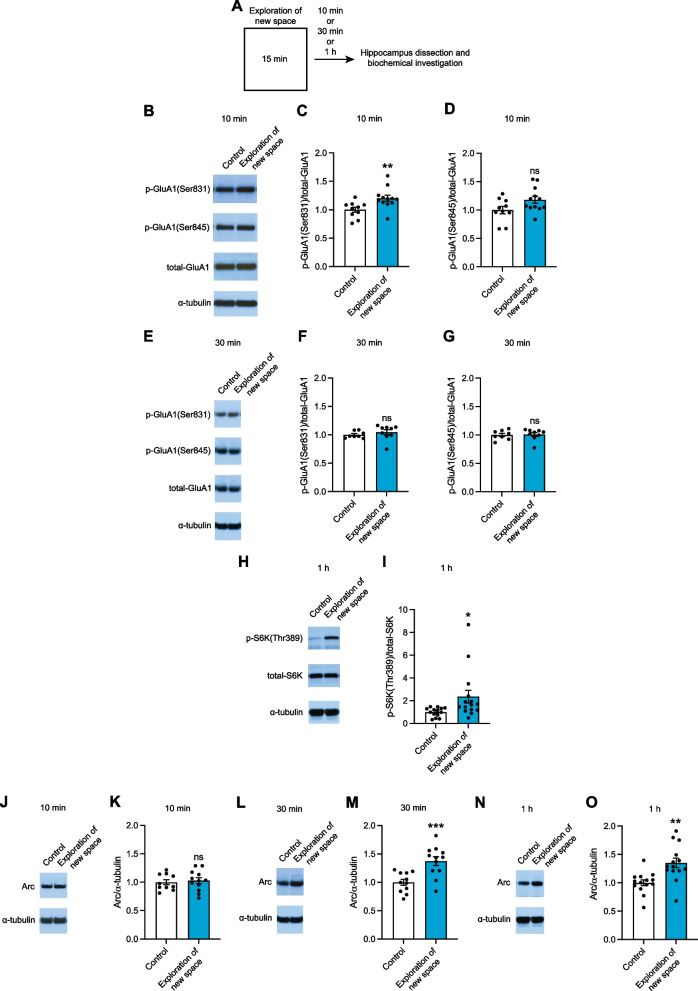 Figure 1
Peer Reviews
No public reviews on file for this paper yet. If you reviewed it on a platform where reviews are public (OpenReview, ICLR, NeurIPS, ICML), you can paste yours below so the community can read it here.
Videos
No videos yet. Explain this paper in a talk, walkthrough, or lecture? Add one.
Taxonomy
TopicsNeuroscience and Neuropharmacology Research · Memory and Neural Mechanisms · Photoreceptor and optogenetics research