The effects of different feeding strategies providing different levels of vitamin A on animal performance, carcass traits, and the conversion rate of subcutaneous fat color in cull-cows
J T Parkinson, H J Cochran, J D Kieffer, A E Relling, S L Boyles, R E Kopec, L G Garcia

TL;DR
Feeding cull cows a low vitamin A diet for 56 days reduces the yellow color of their fat, potentially increasing their market value by avoiding price discounts.
Contribution
This study identifies the impact of low vitamin A diets on subcutaneous fat color and animal performance in cull cows.
Findings
Cows fed a low vitamin A diet showed decreased subcutaneous fat yellowness and β-carotene concentrations.
Cows on the low vitamin A diet had increased live weights over time compared to those on the high vitamin A diet.
Diet affected objective color scores and 9-cis-β-carotene concentration in subcutaneous adipose tissue.
Abstract
Cull cows represent a significant percentage of revenue received from the U.S. beef industry; however, cull cows are heavily price discounted at time of slaughter. This experiment’s objective is to evaluate different feeding strategies and their effects on body condition score, subcutaneous fat color, and carcass yield and quality traits in cull cows. The central hypothesis is feeding a high-energy diet, with low levels of vitamin A, for 56 d will improve animal performance, carcass yield, and quality traits in addition to capturing the point (rate) of the conversion of yellow to white subcutaneous fat. In the present experiment 98 Angus crossbreed cows were utilized. Cows were fed either low vitamin A (LVA) diet consisting of whole shelled corn, soybean hulls, soybean meal, and a mineral-vitamin supplement or high vitamin A (HVA) diet, formulated using whole shelled corn, fescue hay,…
Genes, proteins, chemicals, diseases, species, mutations and cell lines named across the full text — each resolved to its canonical identifier and authoritative record.
Click any figure to enlarge with its caption.
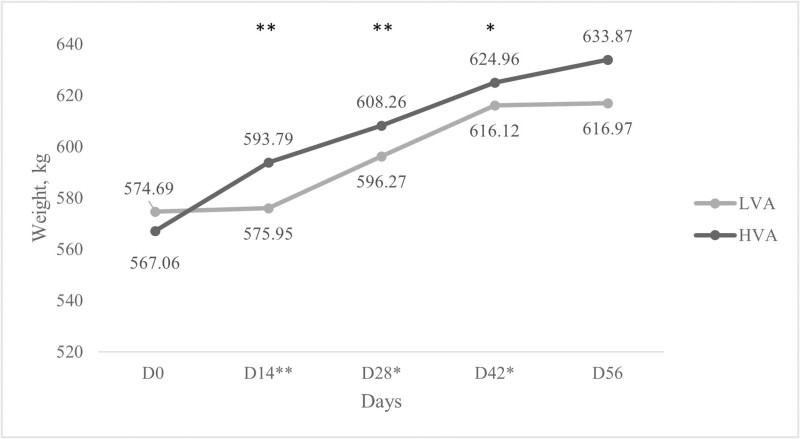 Figure 1
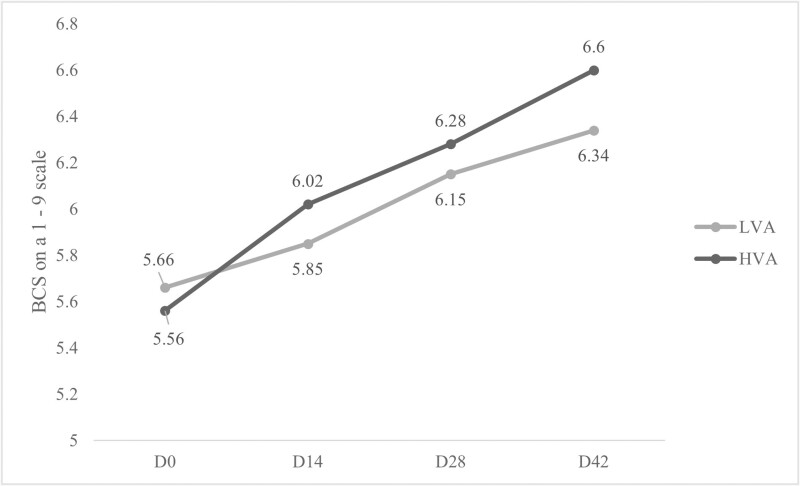 Figure 2
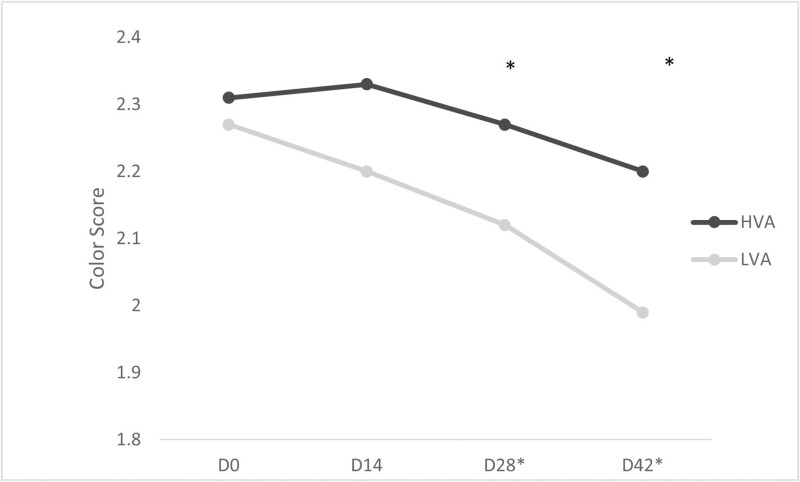 Figure 3
Peer Reviews
No public reviews on file for this paper yet. If you reviewed it on a platform where reviews are public (OpenReview, ICLR, NeurIPS, ICML), you can paste yours below so the community can read it here.
Videos
No videos yet. Explain this paper in a talk, walkthrough, or lecture? Add one.
Taxonomy
TopicsBiochemical effects in animals · Animal Nutrition and Physiology · Meat and Animal Product Quality