What is the role of circRNAs in the pathogenesis of cervical cancer? A systematic literature review
Ana Gabrielly de Melo Matos, Gyl Eanes Barros Silva, Eldevan da Silva Barbosa, Marcelo Souza de Andrade, Joyce Santos Lages, Rita da Graça Carvalhal Frazão Corrêa, Ana Gabriela Caldas Oliveira, Eliel Barbosa Teixeira, Marcelli Geisse de Oliveira Prata da Silva

TL;DR
This paper reviews how circular RNAs (circRNAs) may influence cervical cancer progression and could serve as potential biomarkers for diagnosis and treatment.
Contribution
The study systematically compiles and analyzes circRNA functions and their clinical relevance in cervical cancer.
Findings
Most circRNAs are overexpressed and regulate processes like invasion, cell proliferation, and migration.
CircRNAs are linked to metastasis, TNM staging, and interactions with microRNAs in cervical cancer.
Understanding circRNA roles could improve diagnosis, prognosis, and therapy accuracy in cervical cancer.
Abstract
Cervical Cancer (CC) is one of the most prevalent neoplasms among women, considered the leading cause of gynecological death worldwide, and the fourth most common type of cancer. Regional metastasis is closely related to the low effectiveness of treatment, and validating biomarkers can optimize accuracy in diagnosis and prognosis. Among the potential biomarkers associated with disease metastasis are circular RNAs (circRNAs), whose altered expression has been linked to CC progression. In this context, this systematic review aims to compile information on the clinical-pathological significance and describe the biological function of circRNAs. Inclusion and exclusion criteria were used to include relevant literature, followed by in silico analysis. Additionally, we employed the UALCAN tools to search for host genes of circRNAs and expression data, miRTargetLink 2.0 to predict interactions…
Genes, proteins, chemicals, diseases, species, mutations and cell lines named across the full text — each resolved to its canonical identifier and authoritative record.
Click any figure to enlarge with its caption.
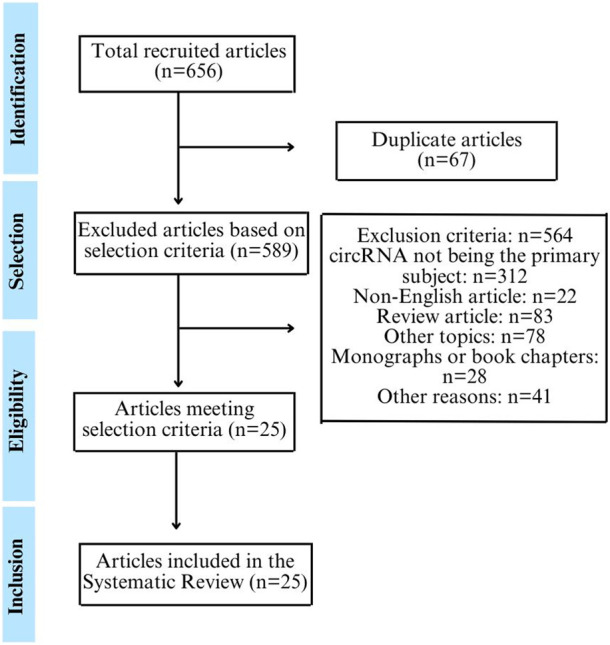 FIGURE 1
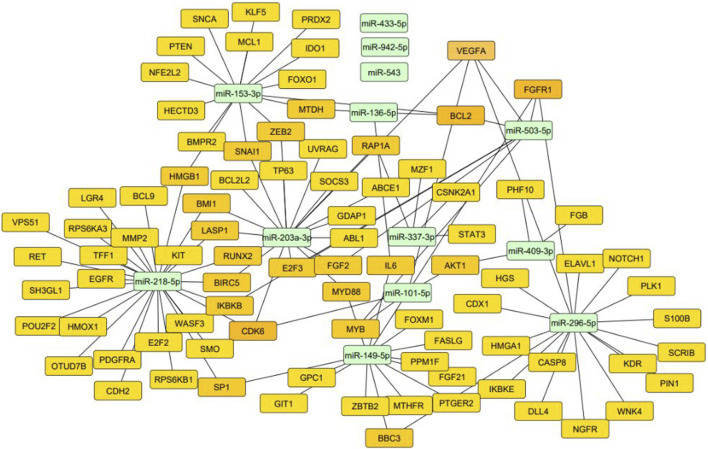 FIGURE 2
| Circular RNA | Clinical Significance | Diagnostic, Prognostic, and Therapeutic Indicators | Reference |
|---|---|---|---|
| circ_0000730 | Correlation with FIGO Stage III–IV ( | Prognostic biomarker |
|
| circ_0043280 | Lymph node metastasis ( | Diagnostic and therapeutic biomarkers |
|
| circ_0011385 | Correlation with FIGO Stage II ( | Prognostic biomarker |
|
| circRNA_101996 | Lymph node metastasis ( | Prognostic and diagnostic biomarkers |
|
| circCDKN2B-AS1 | Lymph node metastasis ( | Diagnostic biomarker |
|
| circ_0007364 | Lymph node metastasis ( | Prognostic and diagnostic biomarkers |
|
| circ_0018289 | Lymph node metastasis ( | Disease monitoring and prognostic biomarker |
|
| circAGFG1 | FIGO Stage III-IV ( | Diagnostic biomarker |
|
| circCLK3 | Metastasis. FIGO Stage II ( | Diagnostic biomarker and therapeutic target. |
|
| circ_0075341 | Lymph node metastasis | Diagnostic biomarker |
|
| circ_0005576 | Lymph node metastasis | Diagnostic biomarker |
|
| circEIF4G2 | Lymph node metastasis ( | Diagnostic biomarker |
|
| circRNA8924 | FIGO Stages IIA-IIB ( | Diagnostic biomarker |
|
| circ_0067934 | Lymph node metastasis ( | Diagnostic biomarker |
|
| circ-ATP8A2 | Lymph node metastasis ( | Diagnostic biomarker |
|
| circ_0001038 | Lymph node metastasis ( | Prognostic and diagnostic biomarkers |
|
| circRNA_101996 | Lymph node metastasis ( | Diagnostic biomarker |
|
| circ0001955 | FIGO Stages IA2 to IIA2, metastasis | Prognostic and diagnostic biomarkers |
|
| circ_0000388 | Lymph node metastasis ( | Diagnostic biomarker |
|
| circ_0087429 | Lymph node metastasis ( | Therapeutic target. |
|
| circ-E2F3 | Lymph node metastasis ( | Diagnostic biomarker |
|
| circSAMD11 | Overall Survival (OS) ( | Diagnostic biomarker |
|
| circFAT1 | Lymph node metastasis ( | Diagnostic biomarker |
|
| circSOS2 | FIGO Stage III ( | Diagnostic biomarker |
|
| circ_0109046 | Lymph node metastasis ( | Diagnostic biomarker |
|
| Circular RNA | Sample type | Host gene | Target miRNA | Biological function | Reference |
|---|---|---|---|---|---|
| circ_0000730 | *50 samples of cancerous and adjacent normal tissue | PITPNA | miR-942-5p | Inhibited |
|
| circ_0043280 | 140 samples of cancerous and adjacent normal tissue | N/A*** | miR-203a-3p | inhibit tumor growth and metastasis |
|
| circ_0011385 | **50 samples of cancerous and adjacent normal tissue | EIF3I | miR-149-5p |
|
|
| circRNA_101996 | 60 samples of cancerous and adjacent normal tissue | N/A | miR-1236-3p | Cellular proliferation, migration, and invasion |
|
| circCDKN2B-AS1 | 46 samples of normal cervical epithelial tissue, 41 samples of high-grade squamous intraepithelial lesions, and 75 samples of CC tissue | N/A | N/A | Cellular proliferation, migration, and invasion. Correlation with HK2 enzyme (a limiting enzyme in the aerobic glycolysis pathway) |
|
| circ_0007364 | 53 samples of cancerous and adjacent normal tissue | PTP4A2 | miR-101-5p | Cellular proliferation and invasion |
|
| circ_0018289 | 192 samples of cancerous and adjacent normal tissue | SYT15 | N/A | Cellular proliferation, migration, and invasion |
|
| circAGFG1 | 39 samples of cancerous tissues and adjacent normal tissues | N/A | N/A | Cellular proliferation, migration, and invasion suppress p53 |
|
| circCLK3 | 48 samples of cancerous tissues and adjacent normal tissues | N/A | miR-320a | Cell proliferation, migration, stromal invasion, and EMT. |
|
| circ_0075341 | 37 samples of cancerous tissues and adjacent normal tissues | MAPK9 | miR-149-5p | Cell proliferation and invasion |
|
| circ_0005576 | 68 samples of cancerous and adjacent normal tissues | CDC42 | miR-153-3p | Proliferation, migration, and invasion |
|
| circEIF4G2 | 20 samples of cancerous and adjacent normal tissues | N/A | miR-218 | Cell proliferation and migration |
|
| CircRNA8924 | 33 samples of cancerous and adjacent normal tissues | N/A | miR-519a-5p | Cell proliferation, migration, and invasion |
|
| circ_0067934 | 61 samples of cancerous tissues and 21 samples of adjacent normal tissues | PRKCI | miR-545 | Cell proliferation, colony formation, migration, invasion, and EMT |
|
| Circ-ATP8A2 | 46 samples of cancerous and adjacent normal tissues | N/A | miR-433 | Myometrial invasion |
|
| circ_0001038 | 55 samples of cancerous and adjacent normal tissues | POLR1A | miR-337-3p | Cellular proliferation, migration, and invasion |
|
| circ0001955 | 15 samples of cancerous and adjacent normal tissues | N/A | miR-188 | Proliferation, invasion, and migration |
|
| circRNA_101996 | 39 samples of cancerous and adjacent normal tissues | N/A | miR-8075 | Cellular proliferation, migration, and invasion |
|
| circ_0000388 | 40 samples of cancerous and adjacent normal tissues | N/A | miR-337-3p | Cellular proliferation, migration, depth, and invasion |
|
| circ_0087429 | 44 samples of cancerous and adjacent normal tissues | SPIN1 | miR-5003-3p | Inhibits migration, invasion, and angiogenesis |
|
| circ-E2F3 | 63 samples of cancerous and adjacent normal tissues | N/A | miR-296-5p | Proliferation, invasion, and migration. Increases Cyclin D1 expression |
|
| circSAMD11 | 62 samples of cancerous and adjacent normal tissues | N/A | miR-503 | Proliferation, invasion, and migration. Regulates the Wnt/β-catenin pathway |
|
| circFAT1 | 47 samples of cancerous and adjacent normal tissues | N/A | miR-409-3p | Activates the ERK1/2 pathway |
|
| circSOS2 | 53 samples of cancerous and adjacent normal tissues | ZNF700 | miR-543 | Proliferation, invasion, and migration |
|
| circ_0109046 | 50 samples of cancerous and adjacent normal tissues | N/A | miRNA-105 | Proliferation, invasion, and migration |
|
Peer Reviews
No public reviews on file for this paper yet. If you reviewed it on a platform where reviews are public (OpenReview, ICLR, NeurIPS, ICML), you can paste yours below so the community can read it here.
Videos
No videos yet. Explain this paper in a talk, walkthrough, or lecture? Add one.
Taxonomy
TopicsCircular RNAs in diseases · MicroRNA in disease regulation · Cancer-related molecular mechanisms research
1 Introduction
Cervical Cancer (CC) ranks among the most prevalent neoplasms in women, with Human Papillomavirus (HPV) infection as it primary risk factor (Ward et al., 2020). Despite the availability of vaccines, CC remains a significant cause of gynecological mortality globally and stands as the fourth most commonly diagnosed cancer (Sung et al., 2021). Importantly, metastasis constitutes the primary cause of cancer-related deaths in CC patients, leading to adverse prognoses and suboptimal therapeutic outcomes (Hsieh et al., 2021).
The utilization of biopsies, imaging examinations, and biomarkers has been acknowledged as a practical approach to cancer diagnosis (Vaidyanathan et al., 2018). From a clinical perspective, biomarker identification plays a pivotal role, as they serve as tools to evaluate neoplasia risk, facilitate early detection, and enable accurate patient diagnosis and prognosis, enhancing decision-making processes (Sarhadi and Armengol, 2022).
Among the potential biomarkers associated with disease metastasis are circular RNAs (circRNAs), circRNAs represent a class of non-coding RNAs (ncRNAs) generated through a specific type of alternative splicing known as back-splicing. These biomolecules function as competitive endogenous RNAs (ceRNA) binding to microRNAs (miRNAs) and creating a network of post-transcriptional gene regulation (Hosseini et al., 2017). Different combinations of sequences give rise to three categories of circRNAs: exonic circRNAs (EcRNA), intronic circRNAs (CiRNA), and exon-intron circRNAs (EIcRNA) (Anastasiadou et al., 2017).
CircRNAs play pivotal roles in critical processes of tumorigenesis, including cell proliferation, migration and invasion (Hong et al., 2019). Altered expression of circRNAs has been linked to cancer progression, exemplified by SMARCA5, a circRNA contributing to proliferation, invasion, and migration in bladder tumors (Tan et al., 2019), non-small cell lung cancer (Tong, 2020), prostate cancer (Kong et al., 2017), nasopharyngeal cancer (Wang et al., 2023) and CC (Tian et al., 2018). Another noteworthy circRNA is circ-MYBL2, characterized as an oncogene and associated with reduced overall survival in CC patients, making it a potential marker for CC (Wang et al., 2019).
In this context, this systematic review aims to compile information on the clinical-pathological significance and describe the biological function of circRNAs.
2 Methodology
2.1 Study design and protocol registration
This research is a systematic literature review registered with the International Prospective Register of Systematic Reviews (PROSPERO—https://www.crd.york.ac.uk/PROSPERO/) under registration number CRD42023402481. The study adhered meticulously to the Preferred Reporting Items for Systematic Reviews and Meta-Analyses (PRISMA—https://www.prisma-statement.org/) guidelines. For this systematic review, rigorous inclusion and exclusion criteria were applied, employing specific keywords.
2.2 In silico analysis
The exploration of host gene of circRNA the tool was used circinteractome (https://circinteractome.nia.nih.gov/index.html) (Dudekula and Panda, 2016) and their expression data was undertaken utilizing the online tool UALCAN (https://ualcan.path.uab.edu/analysis.html) (Chandrashekar et al., 2022), which is linked to TCGA, thus enabling comprehensive data analysis. To forecast plausible interactions of microRNA target genes regulated by the circRNAs identified in this systematic review, miRTargetLink 2.0 (https://ccb-compute.cs.uni-saarland.de/mirtargetlink2) was harnessed. It is worth highlighting that only strongly correlated target genes were considered, validated through techniques such as RT-qPCR, Western blot, cell assays, and/or luciferase reporter assays. Furthermore, Cytoscape (https://cytoscape.org/) was employed to predict potential interactions between microRNAs and target genes (Shannon et al., 2003).
2.3 Research question
The crux of this study rests upon the following query: “What are the roles of circular RNAs in the pathogenesis of cervical cancer?” In pursuit of this, the PRISMA-scR protocol was meticulously employed, with the PICOS acronym encompassing: Population—patients who have CC; Intervention - the efficacy of circRNA biomarkers; Comparison—inapplicable; Outcome—the relationship between biomarker expression; Study design—confined solely to experimental studies.
2.4 Eligibility criteria
Only original articles reporting experimental studies in English, published between 2018 and 2023, involving patients with anatomopathological diagnoses of CC, were deemed eligible. Moreover, this systematic review encompassed solely works providing tumor tissue samples and presenting clinical data, including TNM staging, metastasis, stage, cell differentiation pattern, and expression levels. Deliberation extended to the implications of circRNAs in proliferation, migration, invasion, cell cycle, apoptosis, participation in epithelial-mesenchymal transition, and whether these ncRNAs target microRNAs. The exclusion criteria encompassed texts presented in abstract, report, review, or monograph formats.
2.5 Data sources and strategies
Searches were diligently conducted across electronic databases, including the U.S. National Library of Medicine (PubMed), ScienceDirect and Cochrane. The selected descriptors included: “Circular RNA and Uterine Cervical Neoplasms,” “circRNA and cervical cancer,” and “circRNA and uterine cancer.”
2.6 Study selection and strategies
Data selection entailed the removal of duplicates and studies not conforming to the specified inclusion criteria. Information from each article was meticulously organized within a Microsoft Excel 2019 spreadsheet. Each study’s details encompassed clinicopathological characteristics (TNM staging, metastasis, stage, cell differentiation pattern, expression level); implications of circRNAs in proliferation, migration, invasion, cell cycle, apoptosis, involvement in epithelial-mesenchymal transition, whether these ncRNAs target microRNAs, genes and regulate pathways; clinical indicators (diagnostic indicators, prognostic indicators, biomarkers).
2.7 Assessment of methodological quality of included studies
The assessment of the methodological quality of the studies included was executed independently by researchers, utilizing the Joanna Institute Critical Appraisal Tools (JBI) checklist (JBI, 2020). Each criterion was meticulously classified as “yes,” “no,” “unclear,” or “not applicable.” The classification of bias risk was assigned based on scores: 1 to 3, “yes,” indicating high bias risk; 4 to 6, “yes,” indicating moderate bias risk; and 7 to 8, indicating low bias risk.
3 Results
Following the specified search strategy and study eligibility criteria, 656 articles were identified across the three databases, following the PRISMA guidelines. After removing duplicates (n = 39) and articles that did not meet the selection criteria (n = 589), only 25 articles remained for this systematic review, describing the circRNAs associated with CC and examining their potential roles in diagnosis, prognosis and treatment, as depicted in the study selection and identification flowchart following the PRISMA methodology (Figure 1).
Flowchart depicting the selection and identification of studies, following the methodological steps outlined in the PRISMA guidelines.
3.1 Roles of circRNAs in cervical cancer
CircRNAs play pivotal roles in tumor pathogenesis, encompassing proliferation, migration, invasion, metastasis, epithelial-mesenchymal transition (EMT), and cell cycle (Zhang et al., 2021). Through this systematic review, it was observed that the majority of analyzed circRNAs are linked to cell proliferation (n = 21), invasion (n = 22), migration (n = 20), circRNAs acting as circRNAs acting as ceRNA (n = 22), and those involved in processes like EMT (n = 3) and other pathways in CC (n = 3), as detailed in Table 1.
These ncRNAs exhibit differential expression between cancerous and healthy tissues (Salzman et al., 2013). Of the 25 circRNAs included in this study, 23 acted as oncogenes, while 02 acted as tumor suppressors, namely, circ_0000730 (Yuan et al., 2021) and circ_0087429 (YANG et al., 2022), as observed in Table 1.
In terms of clinical significance, circRNAs were associated with higher Federation of Gynecology and Obstetrics (FIGO) Stage (n = 22) and lymph node metastasis (n = 19) and linked to decreased survival, as seen in Table 1. Furthermore, based on this investigation, circRNAs were described as diagnostic biomarkers (n = 18), prognostic indicators (n = 3) and therapeutic targets (n = 6) (Table 1).
3.2 In silico analysis
The predicted target genes of these miRNAs were explored using the online platform miRTargetLink 2.0, yielding 2,527 target genes regulated by 17 miRNAs. After excluding weakly correlated target genes, only 208 target genes remained, regulated by miRNAs. Notably, three miRNAs lacked corresponding target genes among the analyzed miRNAs, as observed in Figure 2.
miRNA-Target Gene Interaction. Source: Cytoscape.
4 Discussion
4.1 CircRNAs involved in proliferation, invasion, migration, angiogenesis and microRNA sponges
CircRNAs play a significant role in the development of CC, as they can influence various processes related to tumor pathogenesis, such as proliferation, EMT, migration, invasion and angiogenesis. These characteristics can converge to trigger factors of worse prognosis (Yin et al., 2020; Zhang et al., 2021).
Among the articles included in this review that report the biological function of circRNAs in CC, the work of Zhang et al. (2020) stands out, which pointed out that the aberrant expression of circCDZN2B-AS1 induced the malignant phenotype in vivo and in vitro. Furthermore, in the cited study, it was also observed that this circRNA is correlated with CC progression and cell metabolic activity, interacting with the IMP3 protein. The IMP3 protein plays an essential role in cancer progression by acting as an mRNA stabilizer for the MEKK1 gene, activating the MEK1/ERK signaling pathway, and promoting cell growth and proliferation (Zhang et al., 2021).
The circ_0007364 was associated with the progression of this tumor type, mainly with cell proliferation, by regulating the expression of the MAT2A gene, with the underlying regulatory mechanism related to the inhibition of miRNA-101-5p, known as a tumor suppressor (Chen et al., 2020). In another study, increased expression of the MAT2A gene was related to cell growth in CC under glucose deprivation conditions, significantly correlating with poor prognosis and advanced stages of patients (Luo et al., 2022).
The role of these biomolecules as ceRNAs of miRNAs should also be considered. CeRNAs can inhibit miRNA expression, reducing miRNA-mRNA interaction (Wang et al., 2021). For example, the study by Hong et al. (2019) suggests that circCLK3 is a potential diagnostic biomarker, promoting proliferation, migration, EMT, and invasion, acting as a ceRNA for miR-320a by regulating the FoxM1 gene. Therefore, the circCLK3/miR-320a/FoxM1 axis may play a relevant role in CC progression. In another study, circRNA_101996 acted as a ceRNA, negatively regulating miR-1236-3p and inhibiting the expression of the tumor suppressor TRIM37, resulting in CC proliferation and progression (Song et al., 2021).
Additionally, circRNAs may be involved in regulating EMT and other vital pathways. EMT is a process by which neoplastic epithelial cells change their phenotypic characteristics, acquiring characteristics of mesenchymal cells. During EMT, epithelial cells lose adherence to each other and the extracellular matrix and gain mobility and invasive capacity (Pastushenko and Blanpain, 2019). Zhou et al. (2020) suggest that circFAT1 may activate the ERK1/2 signaling pathway (Extracellular Signal-Regulated Kinase 1/2) through negative regulation of the tumor suppressor miR-409-3p, thus inducing proliferation, migration, and cell invasion, all of which are related to CC progression. In another study, ERK1/2 pathway activation was responsible for cell cycle progression in HK2-modified cells, recognized as a critical regulator in malignant growth in various cancers (Cui et al., 2020).
A deeper understanding of all these biological functions may reveal potential therapeutic targets, such as circRNA_101996 (Song et al., 2021), circCLK3 (Hong et al., 2019), and circ_0001038 (Wang and Li, 2020), as observed in Table 1.
4.2 CircRNAs as potential diagnostic and prognostic biomarkers: differential expression in advanced tumor stages
The utilization of circRNAs as biomarkers holds significant promise across various diseases, owing to their unique attributes, including stability, resistance to degradation, sensitivity, precision and tissue-specific expression, which enable precise regulation of gene expression (Zhou et al., 2020). These molecules have attracted interest as biomarkers because their circular structure renders them highly resistant to exonuclease degradation, resulting in prolonged half-lives and remarkable stability, especially in cancer contexts. Moreover, their broad expression in human tissue samples further enhances their biomarker potential (Li et al., 2015; Enuka et al., 2016).
He et al. (2020) presented circRNA_0018289 as a potential biomarker. In this study, the authors analyzed 192 tumor samples and adjacent tissues, where the overexpression of this circRNA was associated with lymph node metastasis, reduced disease-free survival, and tumor size ≥4 cm. Additionally, with an AUC curve of 0.9, sensitivity (80.7%), and specificity (89.6%), this circRNA can differentiate between tumor and adjacent non-tumor tissues.
Another notable candidate, circAGFG1, was implicated in CC progression due to its suppressing p53, a pivotal tumor suppressor and regulator of cellular stress response. Mutations in the p53 gene can disrupt its tumor-suppressive function, contributing to the proliferation of abnormal cervical cells (Wang et al., 2020). In the study, circAGFG1’s overexpression correlated with higher tumor recurrence rates, extensive tumor invasion, and diminished overall patient survival.
These findings yield valuable insights into disease severity and CC progression. The identification of robust biomarkers is pivotal for early and accurate diagnosis. Current literature underscores the expansive clinical potential of RNA-based biomarkers, particularly their stable expression in bodily fluids, which provides efficient prognostic information for the perioperative period, often surpassing conventional clinical parameters such as tumor size and clinical-pathological stage (Ding and Zhang, 2019).
4.3 CircRNAs potential ferramenta in therapy: circRNA_101996 and circ_0007364
Research focused on exploring circRNAs for therapeutic purposes mainly utilizes RNA interference (siRNA) or antisense oligonucleotide (ASO) techniques (Zhang et al., 2021). Among these strategies, using siRNAs to trigger the degradation or reduction of circRNA expression is the most commonly employed therapeutic approach (Hsiao et al., 2017).
In a study by Song et al. (2021), the knockdown technique involving shRNA (a type of RNA interference) was employed to reduce the expression of circRNA_101996 significantly. This reduction led to a substantial decrease in cell proliferation, migration and invasion within neoplastic cells. These findings underscore the promising potential of inhibiting circRNA_101996 as a viable therapeutic strategy for treating CC (Table 2)
In a separate study, Chen et al. (2020) utilized shRNA to suppress the expression of circ_0007364. This suppression reduced the expression of the methionine adenosyltransferase II alpha (MAT2A) gene. Consequently, this suppression could impede cellular processes that play a role in CC progression.
RNA interference-based therapies hold intriguing possibilities and challenges within cancer treatment. They address the primary drivers of tumorigenesis, offering a unique ability to selectively modulate mRNA expression of genes critically involved in carcinogenesis (Cuciniello et al., 2021).
4.4 In silico analysis
The in silico analysis uncovered that one of the genes regulated by miRNAs and targeted by circRNAs governs the Vascular Endothelial Growth Factor (VEGF), as illustrated in Figure 2. VEGF holds the distinction of being a principal regulator of angiogenesis in disease development. Its influence extends to controlling both the physiological and pathological growth of blood vessels (Melly and Banfi, 2022).
The inhibition of VEGF serves as the foundation for anti-angiogenic therapies, which have been extensively studied in various conditions, including cancer. These strategies involve the application of monoclonal antibodies to block VEGF, effectively restraining the pathological angiogenesis occurring within the tumor microenvironment and thereby limiting neoplastic growth (Tan, 2019). In the study conducted by Zhang et al. (2018) and Guo et al. (2019), it was observed that circ_0023404 and VEGF were upregulated in CC. These elements positively regulated metastasis and chemoresistance through the miR-5047/VEGF pathway.
Extrinsic factors, encompassing the expression of angiogenic markers such as VEGF and HIF-1α, can impact resistance to chemoradiotherapy and tumor (Zhang and Brekken, 2022).
A more profound understanding of the regulatory mechanisms of circRNAs associated with enhanced resistance to chemotherapy could potentially unveil therapeutic targets that enhance treatment efficacy (Zhang et al., 2020).
5 Study limitations
This literature review maintains a focused approach, documenting marker types, research methodologies, action mechanisms, functions, expressions, sample sizes, and other circRNA indicators. Nevertheless, the study has its inherent limitations. Primarily, the analysis predominantly occurred in silico, curtailing new biomarkers’ tangible validation. Despite the significance of the employed bioinformatics tools, laboratory investigations are required to substantiate the findings. Additionally, due to the scarcity of literature, a comprehensive explication of every biological process governed by circRNAs was unattainable. Lastly, our scope encompassed only circRNAs associated with diagnostic, therapeutic and prognostic markers. Regarding the information on the association between expression. HPV and circRNA, among the articles included, only one circRNA (CircCDKN2B-AS1) exhibited overexpression in HPV16-positive cervical cancer, demonstrating statistical significance (Zhang et al., 2020).
Furthermore, only one study provided sensitivity and specificity data: He et al. (2020), which investigated circ_0018289. The circRNAs included in our analysis may only comprehensively represent part of the spectrum of circRNA studies. Nevertheless, our analysis thoroughly encompasses a significant portion of circRNAs as biomarkers in CC, sufficiently portraying the present state of circRNA research as markers for CC over the past 5 years.
6 Conclusion
In CC, the literature underscores the involvement of circRNAs in several stages of carcinogenesis, correlating with cell proliferation, migration and invasion. Moreover, they are associated with adverse prognostic factors, highlighting their potential for future applications, whether through non-invasive sample utilization or therapy, particularly those exhibiting significant specificity and sensitivity, such as circRNA_0018289. Despite this potential, only a limited number of studies delve into their investigation and potential utility, underscoring the necessity for further research to comprehensively understand the regulatory and functional roles of circRNAs in CC.
The reference list from the paper itself. Each links out to its DOI / PubMed record.
- 1Anastasiadou E. Jacob L. S. Slack F. J. (2017). Non-coding RNA networks in cancer. Nat. Rev. câncer 18 (1), 5–18. 10.1038/nrc.2017.99 29170536 PMC 6337726 · doi ↗ · pubmed ↗
- 2Cao X. Ma Q. Wang B. Qian Q. Xi Y. (2022). Circ-E 2F 3 promotes cervical cancer progression by inhibiting micro RNA-296-5p and increasing STAT 3 nuclear translocation. Ann. N. Y. Acad. Sci. 1507 (1), 84–98. 10.1111/nyas.14653 34468993 · doi ↗ · pubmed ↗
- 3Chandrashekar D (2022). UALCAN: an update to the integrated cancer data analysis platform. Neoplasia 25, 18–27. 10.1016/j.neo.2022.01.001 35078134 PMC 8788199 · doi ↗ · pubmed ↗
- 4Chen Y. J. Chen C. Y. Mai T. L. Chuang C. F. Chen Y. C. Gupta S. K. (2020). Genome-wide, integrative analysis of circular RNA dysregulation and the corresponding circular RNA-micro RNA-m RNA regulatory axes in autism. Genome Res. 30 (3), 375–391. 10.1101/gr.255463.119 32127416 PMC 7111521 · doi ↗ · pubmed ↗
- 5Cuciniello R. Filosa S. Crispi S. (2021). Novel approaches in cancer treatment: preclinical and clinical development of small non-coding RNA therapeutics. J. Exp. Clin. Cancer Res. 40 (1), 383. 10.1186/s 13046-021-02193-1 34863235 PMC 8642961 · doi ↗ · pubmed ↗
- 6Cui N. Li L. Feng Q. Ma H. Lei D. Zheng P. (2020). Hexokinase 2 promotes cell growth and tumor formation through the raf/MEK/ERK signaling pathway in cervical cancer. Front. Oncol. 10, 581208. 10.3389/fonc.2020.581208 33324557 PMC 7725710 · doi ↗ · pubmed ↗
- 7Ding L. Zhang H. (2019). Circ-ATP 8A 2 promotes cell proliferation and invasion as a ce RNA to target EGFR by sponging mi R-433 in cervical cancer. Gene 705, 103–108. 10.1016/j.gene.2019.04.068 31029604 · doi ↗ · pubmed ↗
- 8Dudekula D. B. Panda A. C. Grammatikakis I. De S. Abdelmohsen K. Gorospe M. (2016). A web tool for exploring circular RN As and their interacting proteins and micro RN As. RNA Biol. 13 (1), 34–42. 10.1080/15476286.2015.1128065 26669964 PMC 4829301 · doi ↗ · pubmed ↗