Lysins as a powerful alternative to combat Bacillus anthracis
Aleksandra Nakonieczna, Karolina Abramowicz, Magdalena Kwiatek, Ewelina Kowalczyk

TL;DR
This paper reviews lysins, which are enzymes from bacteriophages, as a potential treatment for Bacillus anthracis infections, offering an alternative to antibiotics.
Contribution
The paper compiles and categorizes multiple lysins with activity against Bacillus anthracis, highlighting their potential for therapeutic use.
Findings
More than a dozen lysins with activity against Bacillus anthracis have been identified.
Most of these lysins are amidases and can be grouped based on sequence similarity.
Lysins show promise as a treatment option for B. anthracis infections in animal models.
Abstract
This review gathers all, to the best of our current knowledge, known lysins, mainly bacteriophage-derived, that have demonstrated activity against Bacillus anthracis strains. B. anthracis is a spore-forming, toxin-producing bacteria, naturally dwelling in soil. It is best known as a potential biowarfare threat, an etiological agent of anthrax, and a severe zoonotic disease. Anthrax can be treated with antibiotics (ciprofloxacin, penicillin, doxycycline); however, their administration may take up even to 60 days, and different factors can compromise their effectiveness. Bacterial viruses, bacteriophages (phages), are natural enemies of bacteria and use their lytic enzymes, endolysins (lysins), to specifically kill bacterial cells. Harnessing the potential of lysins to combat bacterial infections holds promise for diminishing antibiotic usage and, consequently, addressing the escalating…
Genes, proteins, chemicals, diseases, species, mutations and cell lines named across the full text — each resolved to its canonical identifier and authoritative record.
Click any figure to enlarge with its caption.
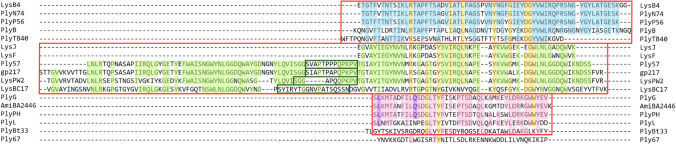 Figure 1
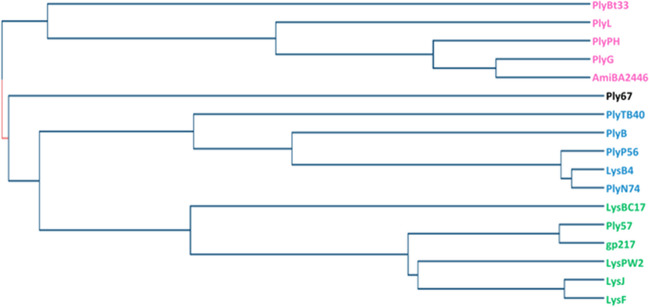 Figure 2
Peer Reviews
No public reviews on file for this paper yet. If you reviewed it on a platform where reviews are public (OpenReview, ICLR, NeurIPS, ICML), you can paste yours below so the community can read it here.
Videos
No videos yet. Explain this paper in a talk, walkthrough, or lecture? Add one.
Taxonomy
TopicsBacillus and Francisella bacterial research · Bacteriophages and microbial interactions · Probiotics and Fermented Foods