Unveiling the Extraordinary: A Rare Type IIIA Infra-Popliteal Arterial Variation in a Free Fibula Osteocutaneous Flap for Mandibular Reconstruction
Akash Doshi, Firoz Borle, Nitin Bhola

TL;DR
This paper describes a rare arterial variation encountered during a surgical procedure for jaw reconstruction using a fibula flap.
Contribution
The study presents a rare Type IIIA infra-popliteal arterial variation encountered during mandibular reconstruction using a free fibula flap.
Findings
A Type IIIA infra-popliteal arterial variation was successfully managed during mandibular reconstruction.
The variation was not detected by preoperative vascular examination of the leg.
Successful surgical outcomes were achieved despite the anatomical surprise.
Abstract
The free fibula flap (FFF), based on the peroneal artery (PA) system, is the gold standard for mandibular reconstruction. Various anatomical variations in the infra-popliteal lower limb vascular system exist. These variations present as an intraoperative surprise to surgeons even after an unremarkable clinical vascular examination of the leg. Here, we report one such case, where we performed successful mandibular reconstruction after encountering a Type IIIA variation of infra-popliteal arterial vasculature.
Genes, proteins, chemicals, diseases, species, mutations and cell lines named across the full text — each resolved to its canonical identifier and authoritative record.
Click any figure to enlarge with its caption.
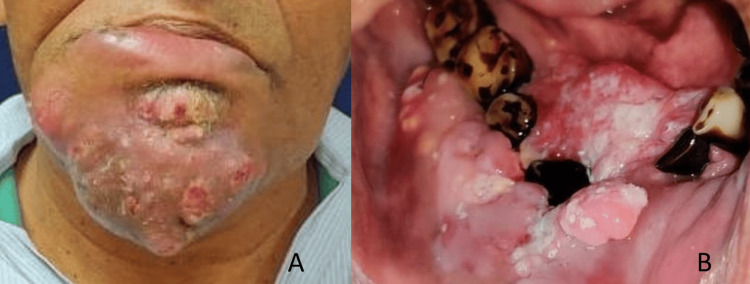 Figure 1
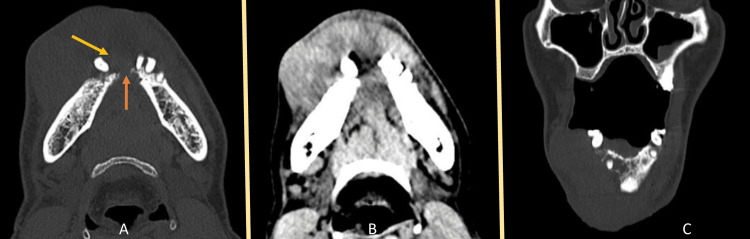 Figure 2
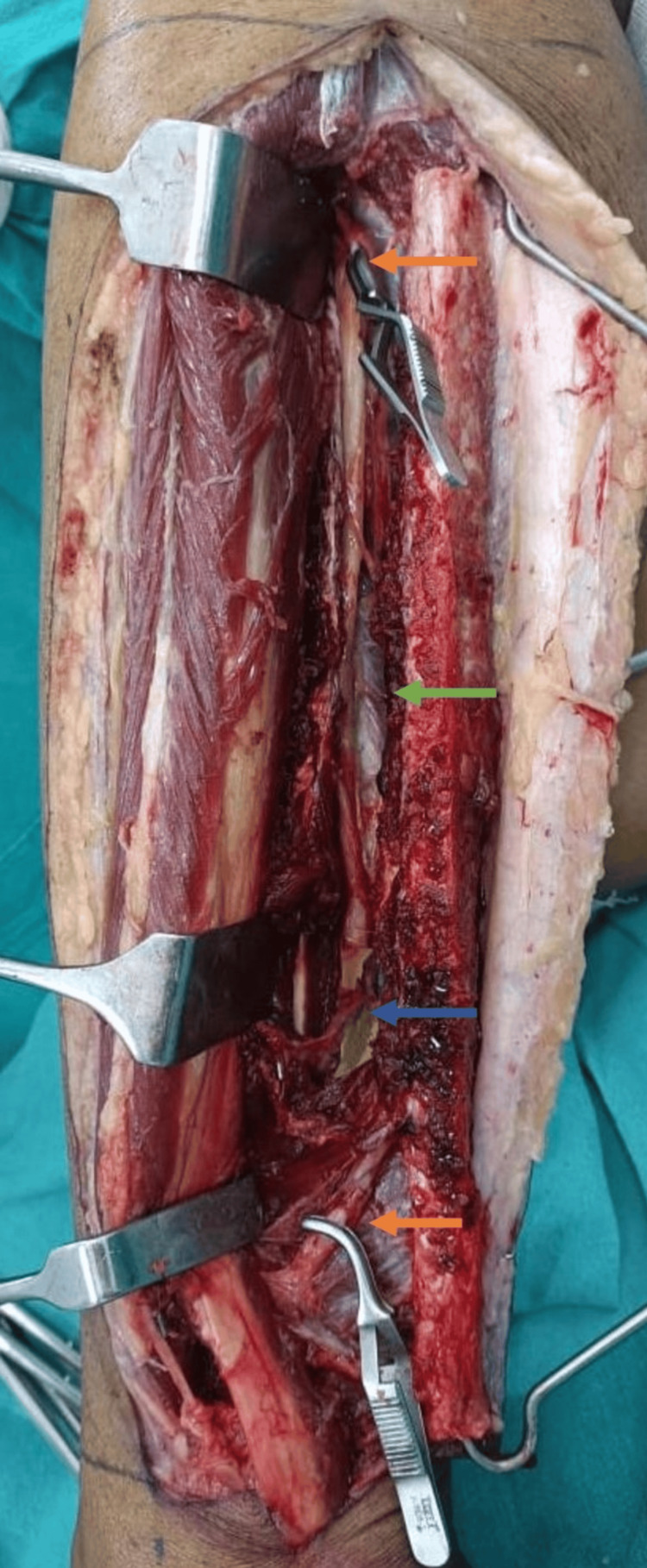 Figure 3
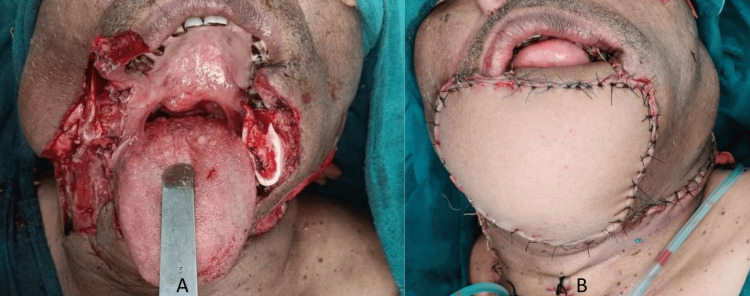 Figure 4
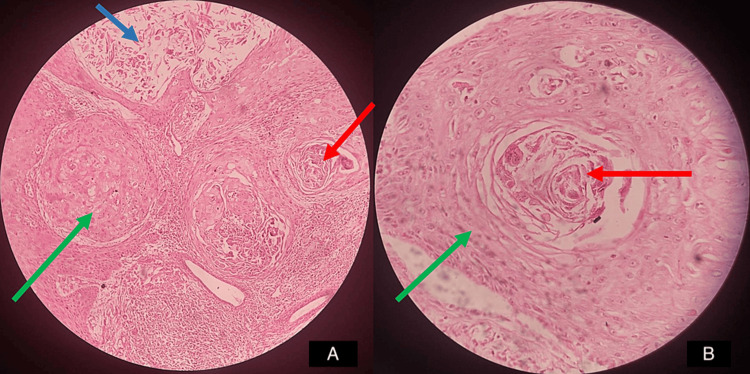 Figure 5
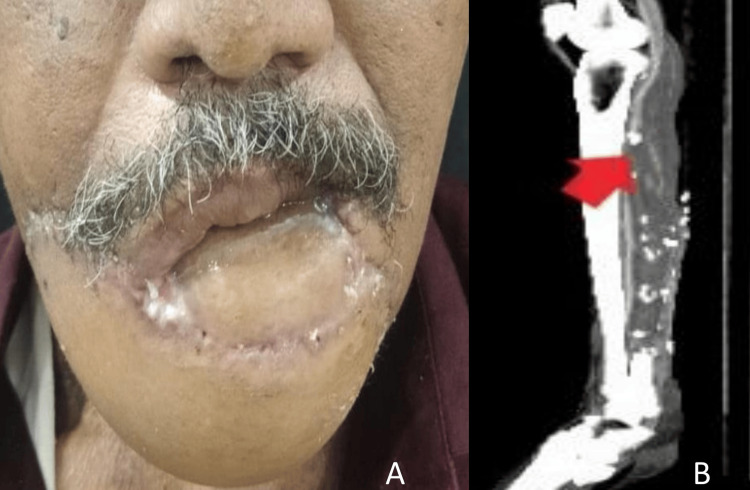 Figure 6
Peer Reviews
No public reviews on file for this paper yet. If you reviewed it on a platform where reviews are public (OpenReview, ICLR, NeurIPS, ICML), you can paste yours below so the community can read it here.
Videos
No videos yet. Explain this paper in a talk, walkthrough, or lecture? Add one.
Taxonomy
TopicsReconstructive Surgery and Microvascular Techniques · Orthopedic Surgery and Rehabilitation · Reconstructive Facial Surgery Techniques