Predictive value of plasma ephrinB2 levels for amputation risk following endovascular revascularization in peripheral artery disease
Pengcheng Guo, Lei Chen, Dafeng Yang, Lei Zhang, Chang Shu, Huande Li, Jieting Zhu, Jienan Zhou, Xin Li

TL;DR
This study finds that higher plasma ephrinB2 levels in peripheral artery disease patients are linked to increased amputation risk after surgery.
Contribution
The study introduces ephrinB2 as a potential biomarker for predicting amputation risk in PAD patients undergoing endovascular revascularization.
Findings
Plasma ephrinB2 levels are significantly higher in PAD patients compared to healthy controls.
Combining ephrinB2 levels with NLR improves amputation prediction accuracy (AUC of 0.811).
Higher ephrinB2 levels correlate with increased amputation risk within 30 months post-surgery.
Abstract
The aim of this study is to investigate the expression levels of ephrinB2 in patients with lower extremity peripheral arterial disease (PAD) and explore its association with the severity of the disease and the risk of amputation after endovascular revascularization. During the period from March 2021 to March 2023, this study collected blood samples and clinical data from 133 patients diagnosed with lower extremity PAD and 51 healthy volunteer donors. The severity of lower extremity PAD patients was classified using the Rutherford categories. The expression of ephrin-B2 in plasma samples was detected using the Western Blotting. Compared to the control group, the levels of serum ephrinB2 in patients were significantly elevated (p < 0.001). Moreover, the plasma EphrinB2 levels were positively correlated with white blood cell counts (r = 0.204, p = 0.018), neutrophil counts (r = 0.174, p…
Genes, proteins, chemicals, diseases, species, mutations and cell lines named across the full text — each resolved to its canonical identifier and authoritative record.
Click any figure to enlarge with its caption.
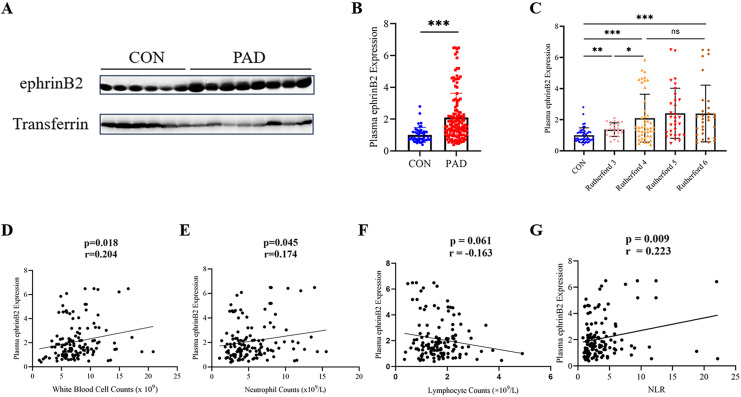 Figure 1
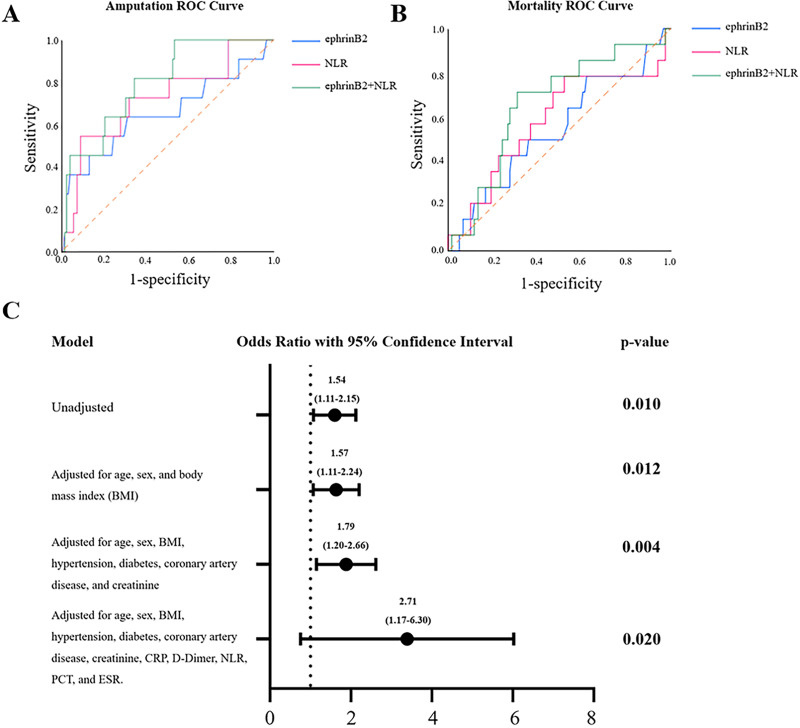 Figure 2
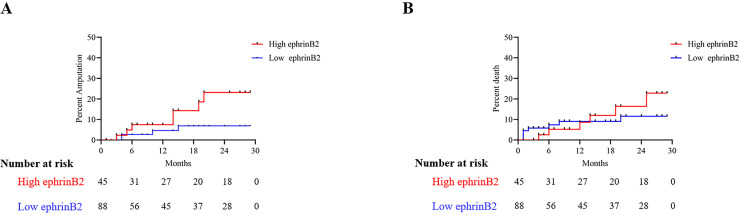 Figure 3
 Figure 4
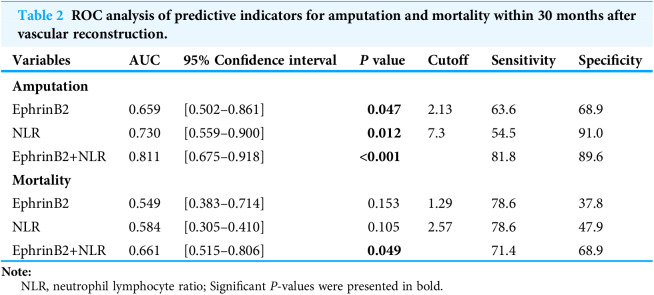 Figure 5
 Figure 6
Peer Reviews
No public reviews on file for this paper yet. If you reviewed it on a platform where reviews are public (OpenReview, ICLR, NeurIPS, ICML), you can paste yours below so the community can read it here.
Videos
No videos yet. Explain this paper in a talk, walkthrough, or lecture? Add one.
Taxonomy
TopicsAngiogenesis and VEGF in Cancer · Coronary Interventions and Diagnostics · Antiplatelet Therapy and Cardiovascular Diseases