Identification of nutrition factors in the metabolic syndrome and its progression over time in older adults: analysis of the TUDA cohort
Oonagh C. Lyons, Maeve A. Kerr, Mary A. T. Flynn, Leane Hoey, Catherine F. Hughes, Aoife Caffrey, Eamon Laird, Katie Moore, Kirsty M. Porter, Conal Cunningham, Kevin McCarroll, Anne M. Molloy, Fergal Tracey, Maurice O’Kane, J. J. Strain, Mary Ward, Helene McNulty

TL;DR
This study found that higher protein and monounsaturated fat intake may reduce the risk of metabolic syndrome in older adults.
Contribution
The study identifies specific dietary factors linked to metabolic syndrome progression in older adults.
Findings
Higher protein and monounsaturated fatty acid intake were associated with lower risk of metabolic syndrome.
Participants with metabolic syndrome consumed more low-quality protein and less high-quality protein.
Waist circumference and triglyceride levels at baseline predicted metabolic syndrome development.
Abstract
Nutrition is recognized as playing an important role in the metabolic syndrome (MetS), but the dietary components involved are unclear. We aimed to investigate nutrition factors in relation to MetS and its progression in older adults over a follow-up period of 5.4 years. Community-dwelling adults (≥ 60y) from the Trinity-Ulster-Department-of-Agriculture study, sampled at baseline (2008–12) and follow-up (2014–18; n 953), were classified as ‘with MetS’ by having three or more of: waist circumference (≥ 102 cm, males; ≥ 88 cm, females); HDL-cholesterol (< 1.0 mmol/L, males; < 1.3 mmol/L, females); triglycerides (≥ 1.7 mmol/L); blood pressure (systolic ≥ 130 and/or diastolic ≥ 85 mmHg); and hemoglobin A1c (≥ 39 mmol/mol). MetS was identified in 67% of participants, increasing to 74% at follow-up. Predictors at baseline for the development of metabolic syndrome (MetS) at follow-up were…
Genes, proteins, chemicals, diseases, species, mutations and cell lines named across the full text — each resolved to its canonical identifier and authoritative record.
Click any figure to enlarge with its caption.
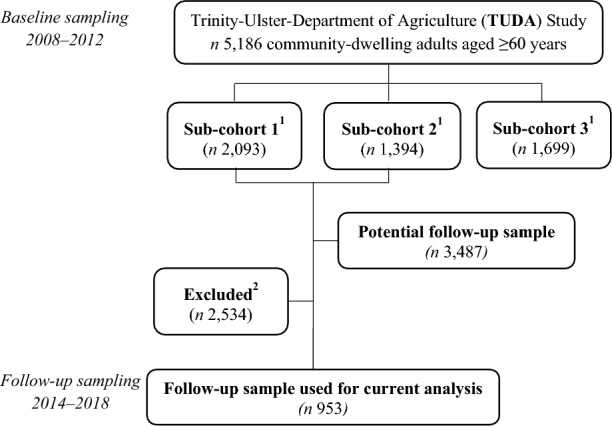 Figure 1
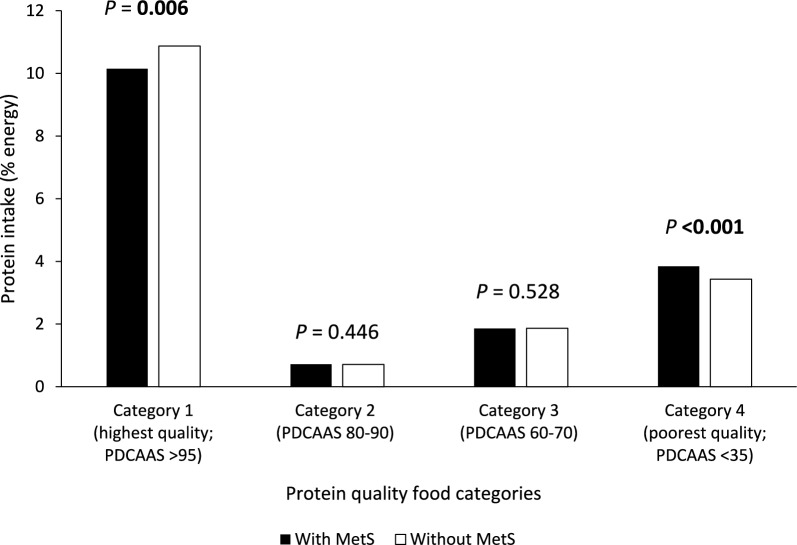 Figure 2
Peer Reviews
No public reviews on file for this paper yet. If you reviewed it on a platform where reviews are public (OpenReview, ICLR, NeurIPS, ICML), you can paste yours below so the community can read it here.
Videos
No videos yet. Explain this paper in a talk, walkthrough, or lecture? Add one.
Taxonomy
TopicsNutrition and Health in Aging · Nutritional Studies and Diet · Obesity, Physical Activity, Diet