Microvesicles-delivering Smad7 have advantages over microvesicles in suppressing fibroblast differentiation in a model of Peyronie’s disease
Wenting Wang, Fengchun Wan, Tianxi Yu, Shuang Wu, Xin Cui, Chongjun Xiang, Monong Li, Qingzuo Liu, Chunhua Lin

TL;DR
This study shows that microvesicles delivering Smad7 are more effective than regular microvesicles in reducing fibroblast activity in a model of Peyronie’s disease.
Contribution
The study demonstrates that Smad7-loaded microvesicles have superior anti-fibrotic effects compared to standard microvesicles in Peyronie’s disease.
Findings
Smad7-MVs suppressed fibroblast differentiation more effectively than regular MVs in a Peyronie’s disease model.
Both MVs and Smad7-MVs reduced macrophage M1 polarization and fibroblast differentiation in vitro and in vivo.
Smad7-MVs showed a distinct advantage in reducing fibrosis in the tunica albuginea of treated rats.
Abstract
This study compared the differences of microvesicles (MVs) and microvesicles-delivering Smad7 (Smad7-MVs) on macrophage M1 polarization and fibroblast differentiation in a model of Peyronie’s disease (PD). Overexpression of Smad7 in rat BMSCs was obtained by pCMV5-Smad7 transfection. MVs were collected from rat BMSCs using ultracentrifugation. In cells, 100 µg/mL of MVs or Smad7-MVs were used to treat the 100 ng/mL of lipopolysaccharide (LPS)-induced RAW264.7 cells or 10 ng/mL of recombinant transforming growth factor-β1 (TGF-β1)-induced fibroblasts. The pro-inflammatory cytokines and markers of M1 macrophages were measured in RAW264.7 cells, and the migration and markers of fibroblast differentiation were measured in fibroblasts. In rats, 50 µg of MVs or Smad7-MVs were used to treat the TGF-β1-induced animals. The pathology of tunica albuginea (TA), the markers of M1 macrophages and…
Genes, proteins, chemicals, diseases, species, mutations and cell lines named across the full text — each resolved to its canonical identifier and authoritative record.
Click any figure to enlarge with its caption.
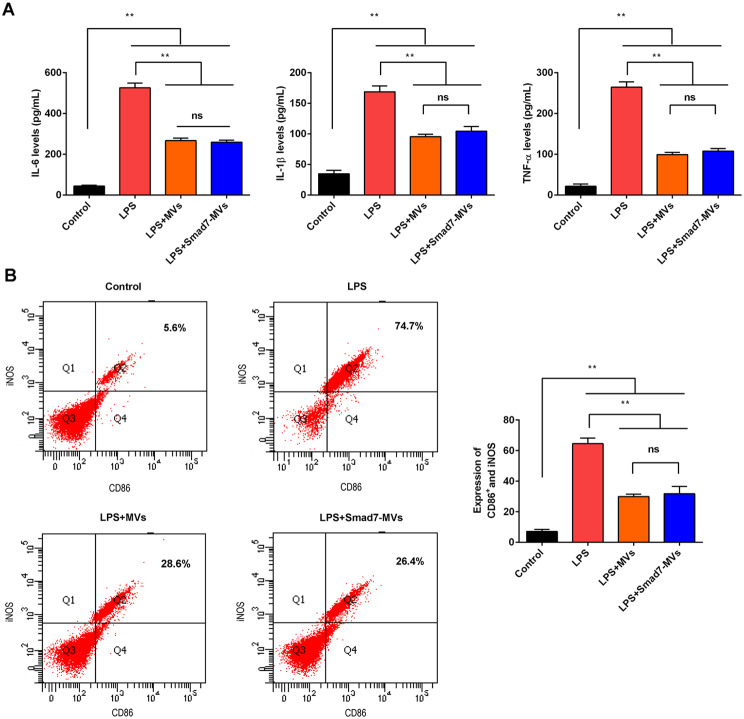 Figure 1
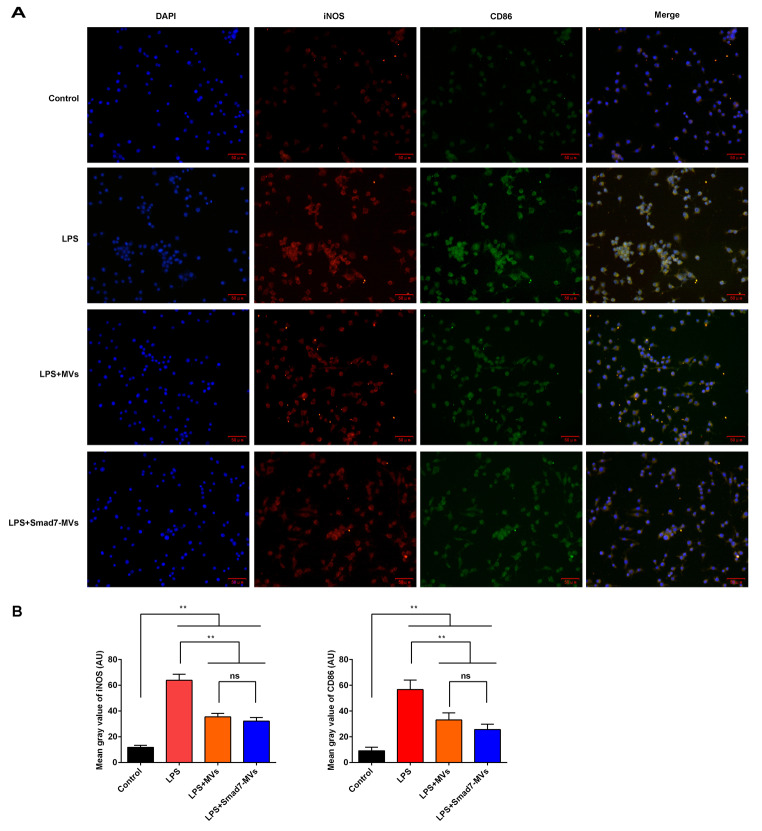 Figure 2
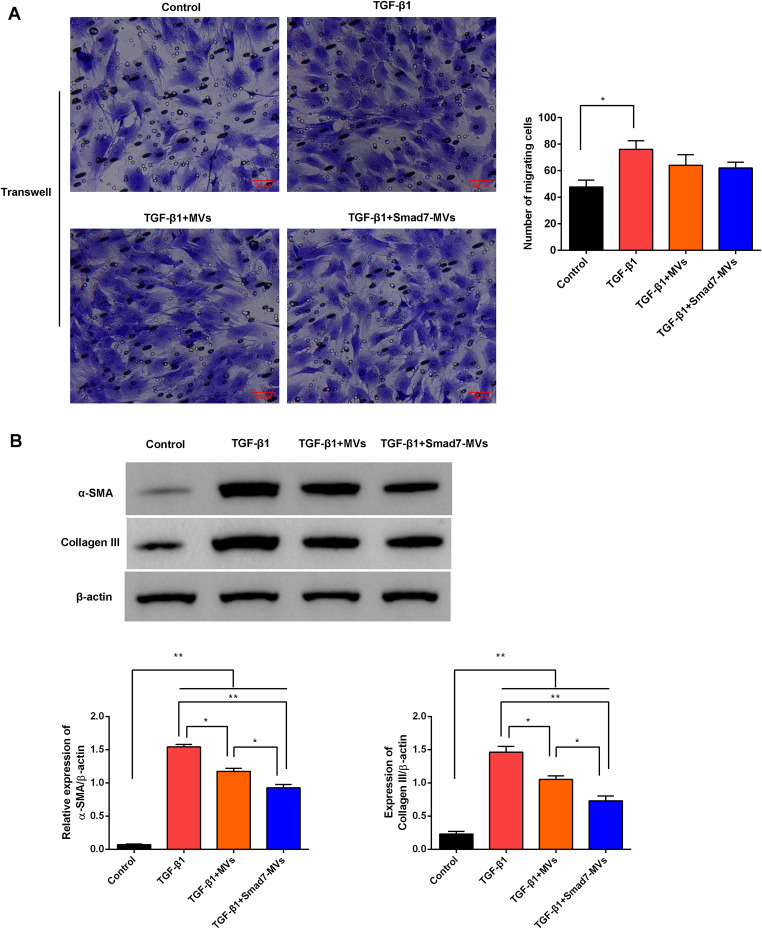 Figure 3
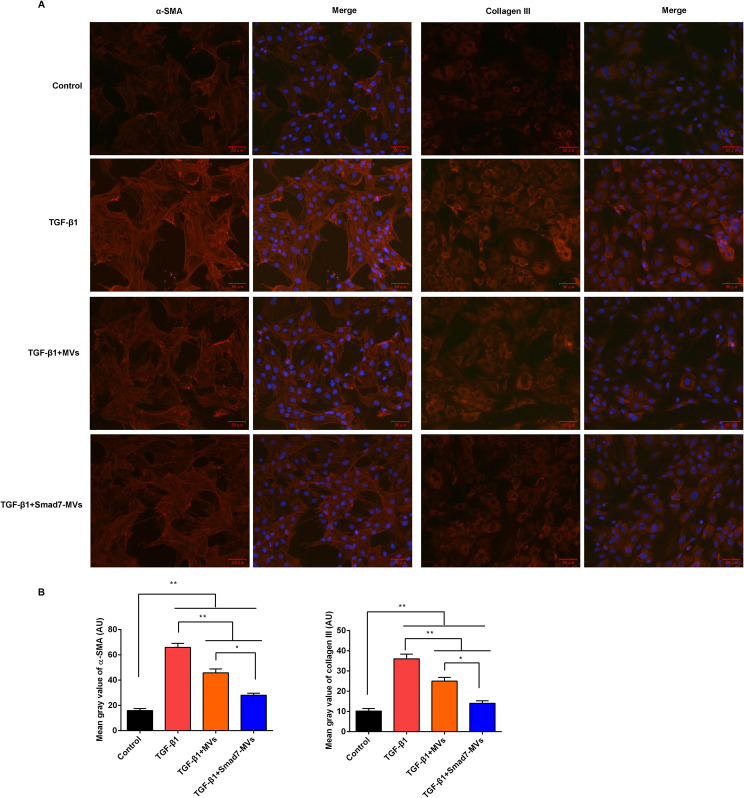 Figure 4
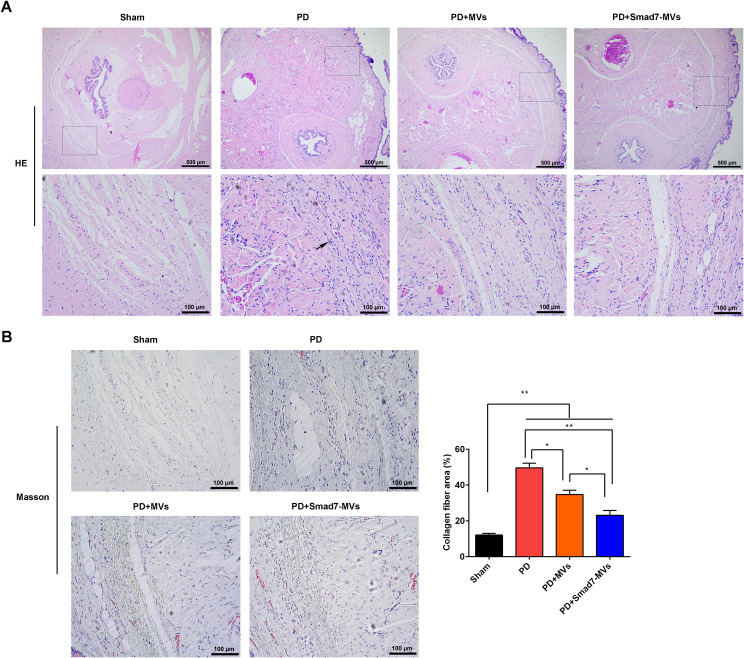 Figure 5
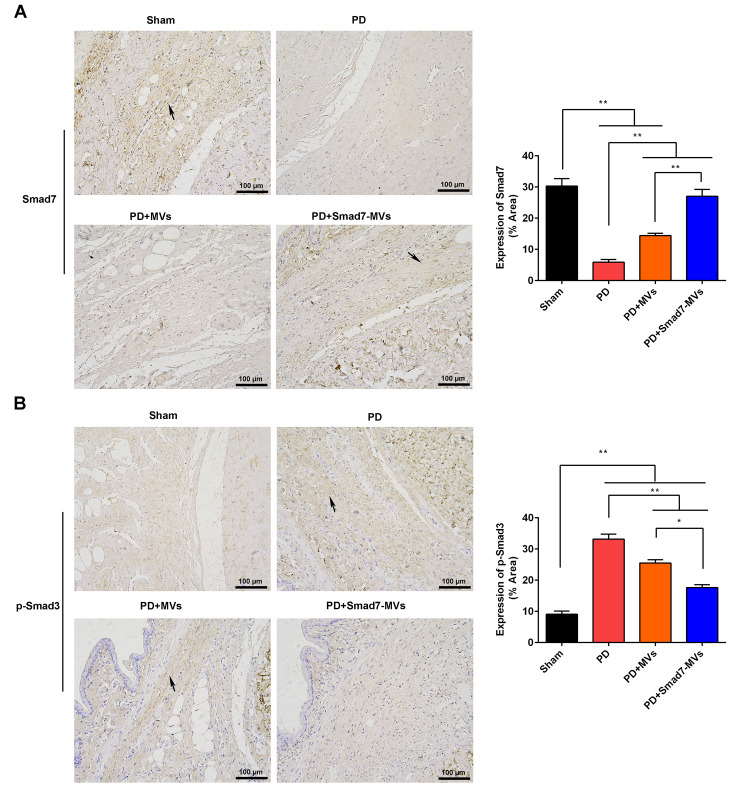 Figure 6
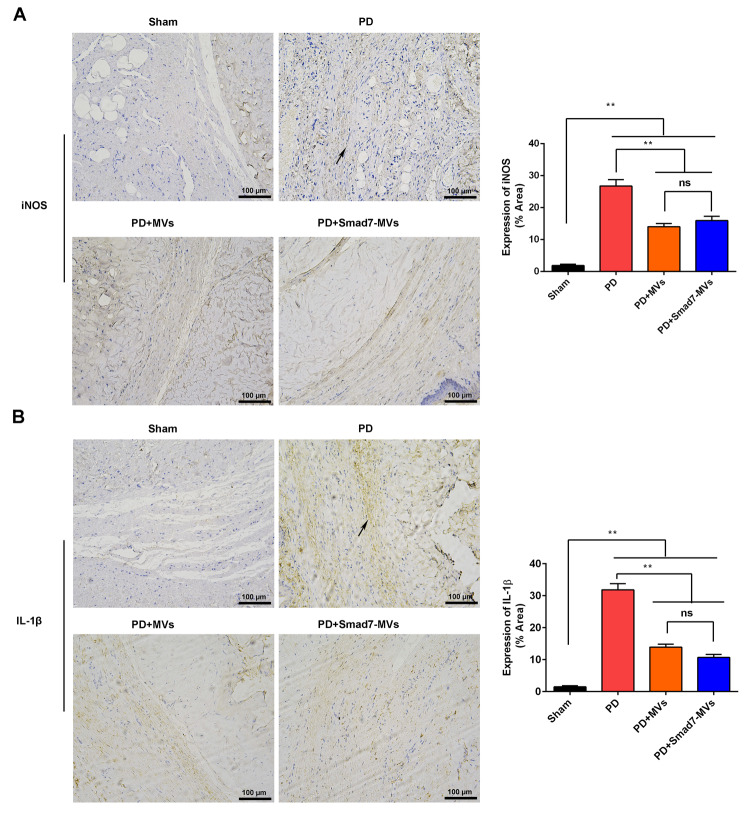 Figure 7
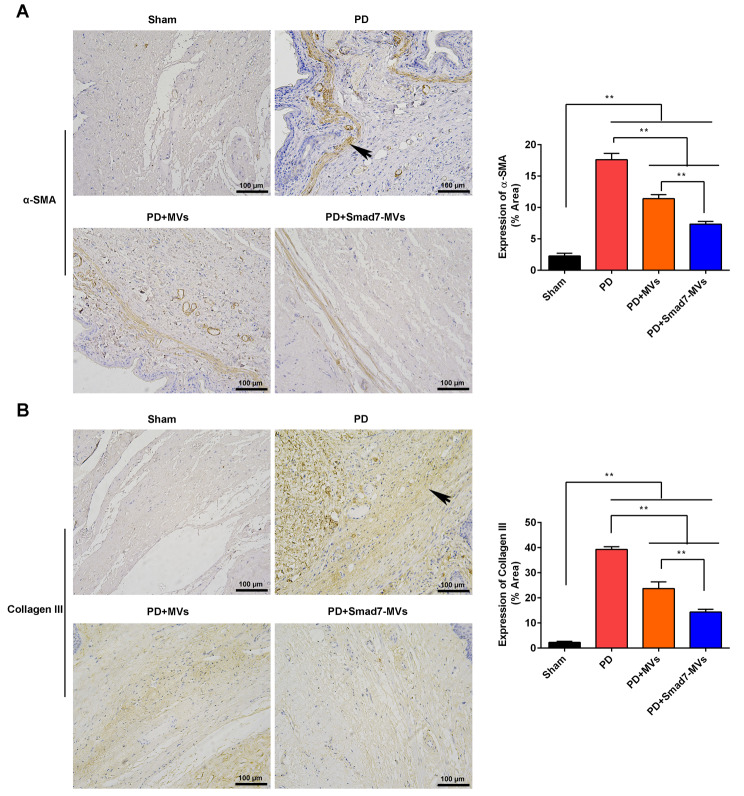 Figure 8
Peer Reviews
No public reviews on file for this paper yet. If you reviewed it on a platform where reviews are public (OpenReview, ICLR, NeurIPS, ICML), you can paste yours below so the community can read it here.
Videos
No videos yet. Explain this paper in a talk, walkthrough, or lecture? Add one.
Taxonomy
TopicsSexual function and dysfunction studies · Urinary Bladder and Prostate Research · Pelvic floor disorders treatments