Necrotizing enterocolitis in a term newborn after spontaneous cerebral parenchymal hemorrhage: a case report
Lijuan Zhang, Weifeng Lu

TL;DR
A full-term newborn with a brain hemorrhage developed necrotizing enterocolitis, suggesting a possible link through the brain-gut connection.
Contribution
This is the first report linking cerebral parenchymal hemorrhage in full-term newborns to an increased risk of necrotizing enterocolitis.
Findings
A full-term newborn with spontaneous cerebral hemorrhage developed early-stage NEC.
Brain parenchymal hemorrhage may alter intestinal function through the brain-gut axis, increasing NEC risk.
Clinicians should be cautious about NEC in infants with parenchymal hemorrhage.
Abstract
Necrotizing enterocolitis (NEC) and intracranial hemorrhage are severe emergencies in the neonatal period. The two do not appear to be correlated. However, our report suggests that parenchymal brain hemorrhage in full-term newborns may put patients at risk for NEC by altering intestinal function through the brain-gut axis. We present a case of spontaneous parenchymal cerebral hemorrhage in a full-term newborn who developed early-stage NEC on Day 15. It is possible to consider brain parenchymal hemorrhage as a risk factor for the appearance of NEC. Clinicians should be highly cautious about NEC in infants who have experienced parenchymal hemorrhage. This article is the first to discuss the relationship between parenchymal hemorrhage and NEC in full-term newborns.
Genes, proteins, chemicals, diseases, species, mutations and cell lines named across the full text — each resolved to its canonical identifier and authoritative record.
Click any figure to enlarge with its caption.
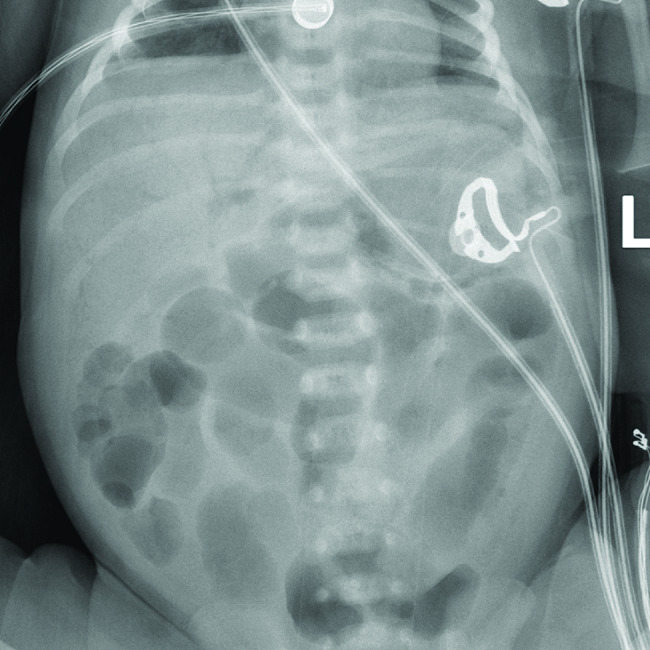 Figure 1
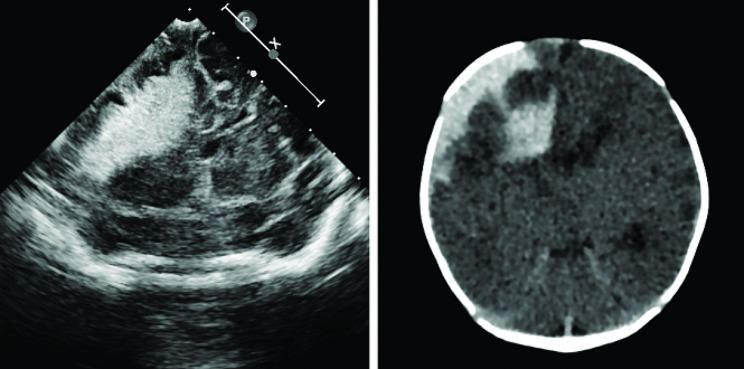 Figure 2
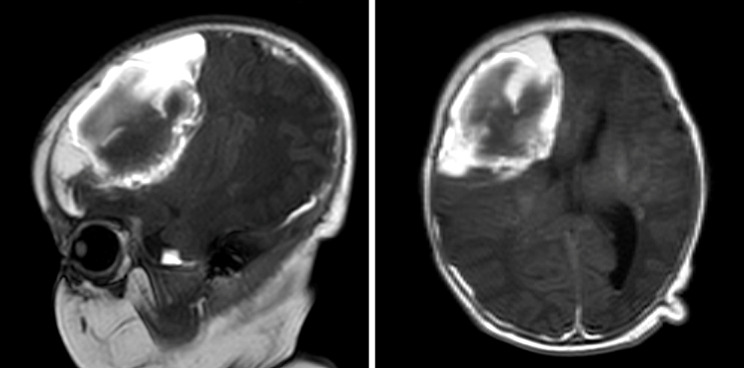 Figure 3
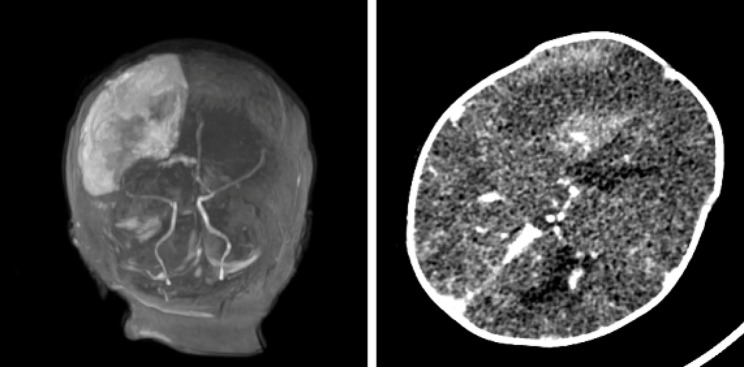 Figure 4
Peer Reviews
No public reviews on file for this paper yet. If you reviewed it on a platform where reviews are public (OpenReview, ICLR, NeurIPS, ICML), you can paste yours below so the community can read it here.
Videos
No videos yet. Explain this paper in a talk, walkthrough, or lecture? Add one.
Taxonomy
TopicsInfant Nutrition and Health · Neonatal Respiratory Health Research · Infant Development and Preterm Care