More Satisfaction, Less Equality: Distributive Effects of Transparent Needs in a Laboratory Experiment
Bernhard Kittel, Sabine Neuhofer, Manuel C. Schwaninger

TL;DR
This study shows that making individual needs transparent in a negotiation can help those with higher needs but hurt those with lower needs, creating an unequal outcome.
Contribution
The paper empirically demonstrates the ambivalent effects of need transparency on distributive outcomes in a controlled network exchange game.
Findings
Transparency increases need satisfaction for high-need individuals but decreases their share when needs are low.
Opaque conditions lead to higher allocations but lower overall need satisfaction.
Transparency has minimal impact on those with the most influence in the decision.
Abstract
Societies are confronted with the dilemma that need satisfaction requires transparent individual needs. We study the effect of information about others’ needs on the distribution of a joint endowment in a three-player network exchange game in a laboratory experiment. Need levels are exogenously given and either transparent (known to all three network members) or opaque (only known to the players themselves). The three players negotiate in dyads until two players agree on a distribution. We expect that the transparency of need thresholds raises need satisfaction but lowers equality. The results suggest that the members of the dyad who agree on the distribution can satisfy their own need thresholds even when information about thresholds is opaque. The effect of transparency on the remaining network member is antithetical: while transparency increases the rate of need satisfaction, it…
Genes, proteins, chemicals, diseases, species, mutations and cell lines named across the full text — each resolved to its canonical identifier and authoritative record.
Click any figure to enlarge with its caption.
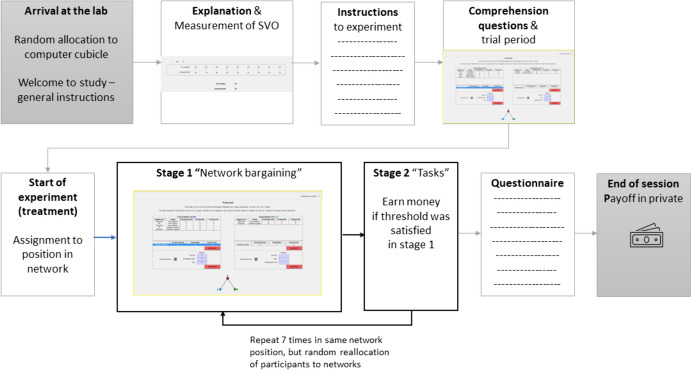 Figure 1
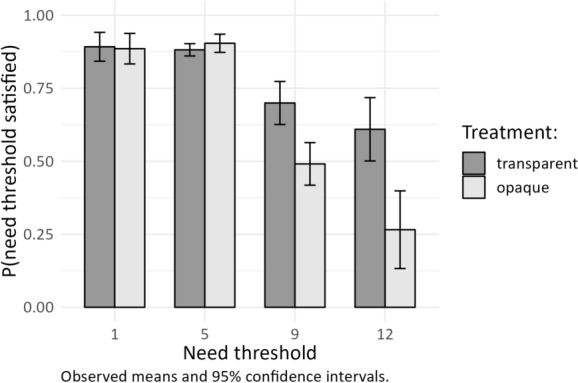 Figure 2
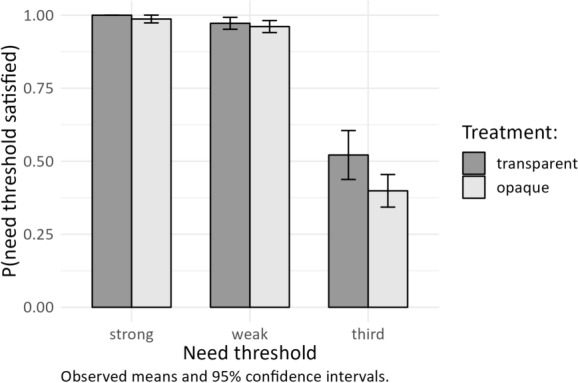 Figure 3
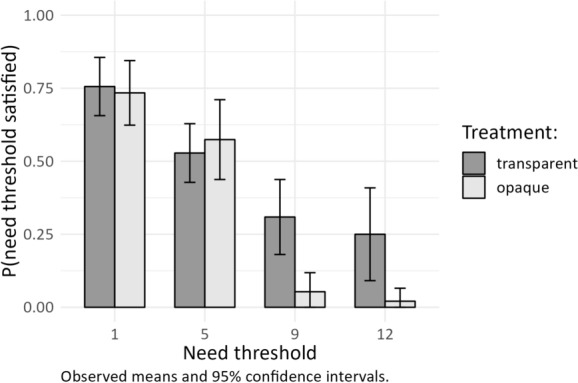 Figure 4
Peer Reviews
No public reviews on file for this paper yet. If you reviewed it on a platform where reviews are public (OpenReview, ICLR, NeurIPS, ICML), you can paste yours below so the community can read it here.
Videos
No videos yet. Explain this paper in a talk, walkthrough, or lecture? Add one.
Taxonomy
TopicsExperimental Behavioral Economics Studies · Social and Intergroup Psychology · Decision-Making and Behavioral Economics