Application of elementary probability models for text homogeneity and segmentation: A case study of Bible
Berhane Abebe, Roy Cerqueti, Roy Cerqueti, Roy Cerqueti, Roy Cerqueti

TL;DR
This study uses probability models to analyze the structure of Bible translations in Tigrigna, Amharic, and English, finding that they are made up of heterogeneous segments.
Contribution
The paper applies newly developed probability models to detect text homogeneity and change points in religious texts.
Findings
Bible translations in Tigrigna, Amharic, and English show heterogeneous concatenation of different books or genres.
The Pauline letters in the English Bible are found to be heterogeneous, composed of two homogeneous segments.
Abstract
For the purpose of this study, A statistical test of Biblical books was conducted using the recently discovered probability models for text homogeneity and text change point detection. Accordingly, translations of Biblical books of Tigrigna and Amharic (major languages spoken in Eritrea and Ethiopia) and English were studied. A Zipf-Mandelbrot distribution with a parameter range of 0.55 to 0.88 was obtained in these three Bibles. According to the statistical analysis of the texts’ homogeneity, the translation of Bible in each of these three languages was a heterogeneous concatenation of different books or genres. Furthermore, an in-depth examination of the text segmentation of prat of a single genre—the English Bible letters revealed that the Pauline letters are heterogeneous concatenations of two homogeneous segments.
Genes, proteins, chemicals, diseases, species, mutations and cell lines named across the full text — each resolved to its canonical identifier and authoritative record.
Click any figure to enlarge with its caption.
 Figure 1
 Figure 2
 Figure 3
 Figure 4
 Figure 5
 Figure 6
 Figure 7
 Figure 8
 Figure 9
 Figure 10
 Figure 11
 Figure 12
 Figure 13
 Figure 14
 Figure 15
 Figure 16
 Figure 17
 Figure 18
 Figure 19
 Figure 20
 Figure 21
 Figure 22
 Figure 23
 Figure 24
 Figure 25
 Figure 26
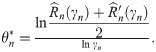 Figure 27
 Figure 28
 Figure 29
 Figure 30
 Figure 31
 Figure 32
 Figure 33
 Figure 34
 Figure 35
 Figure 36
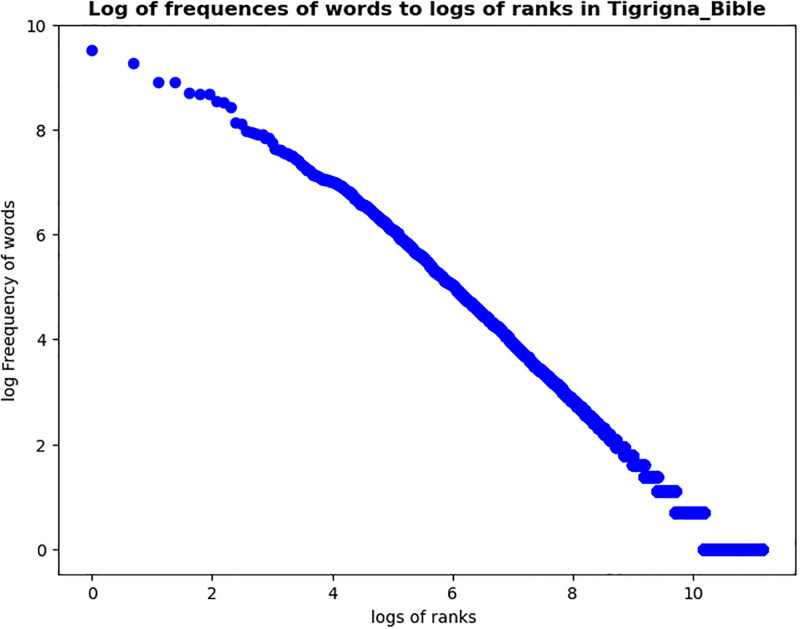 Figure 37
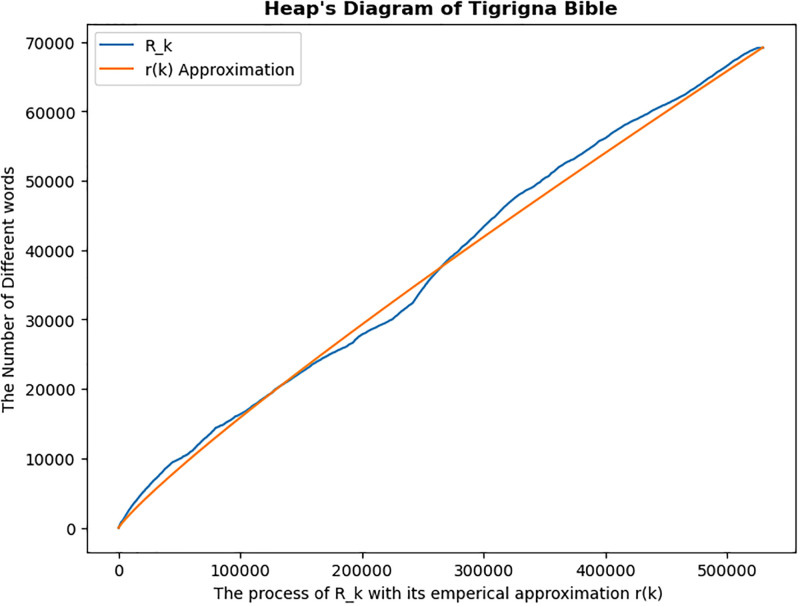 Figure 38
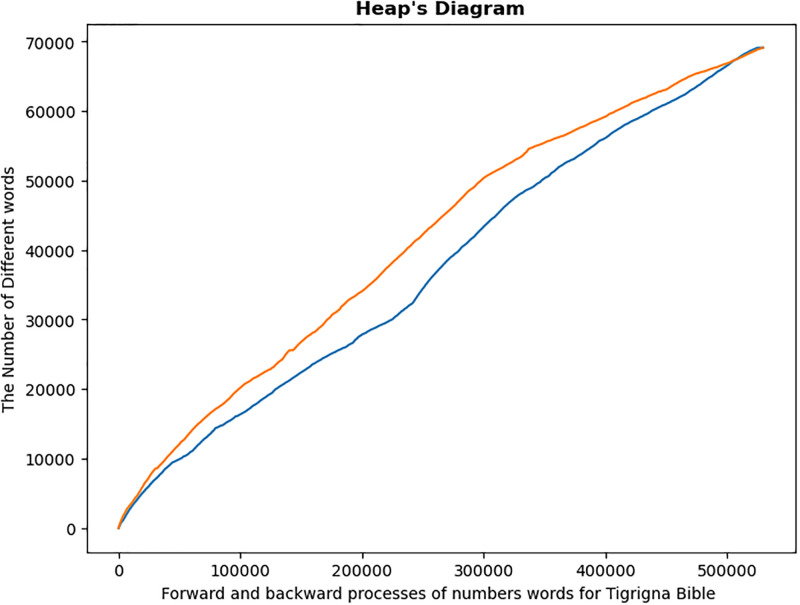 Figure 39
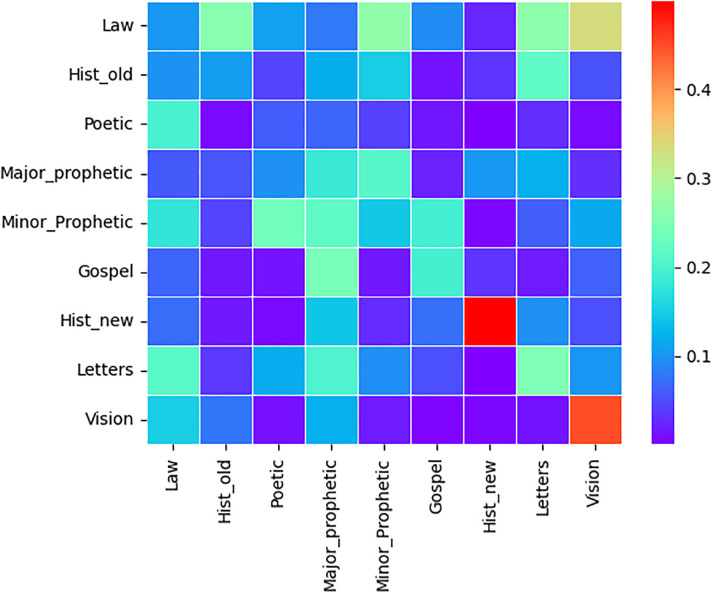 Figure 40
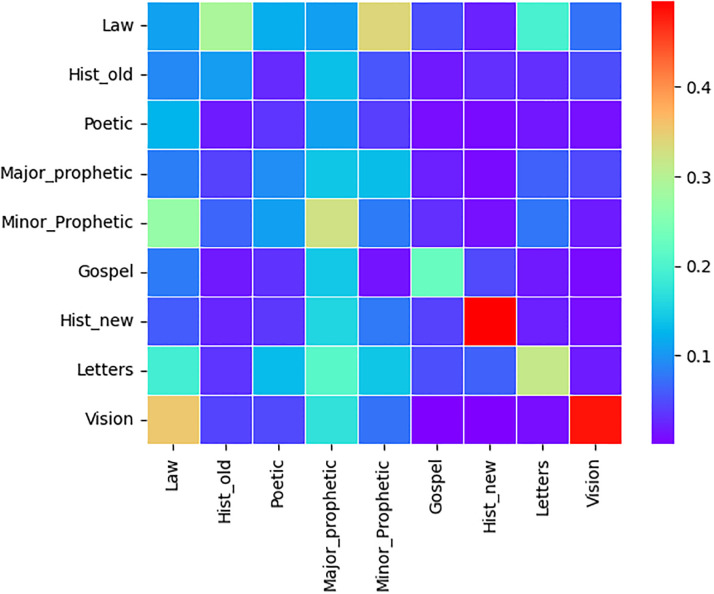 Figure 41
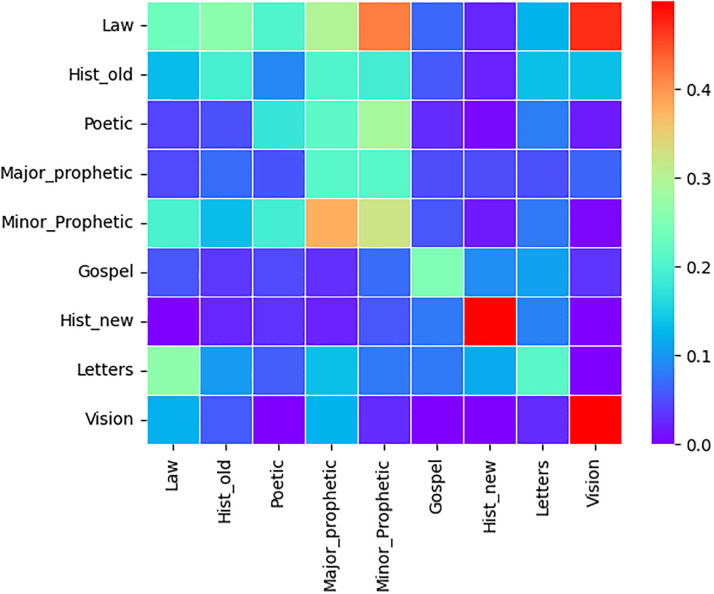 Figure 42
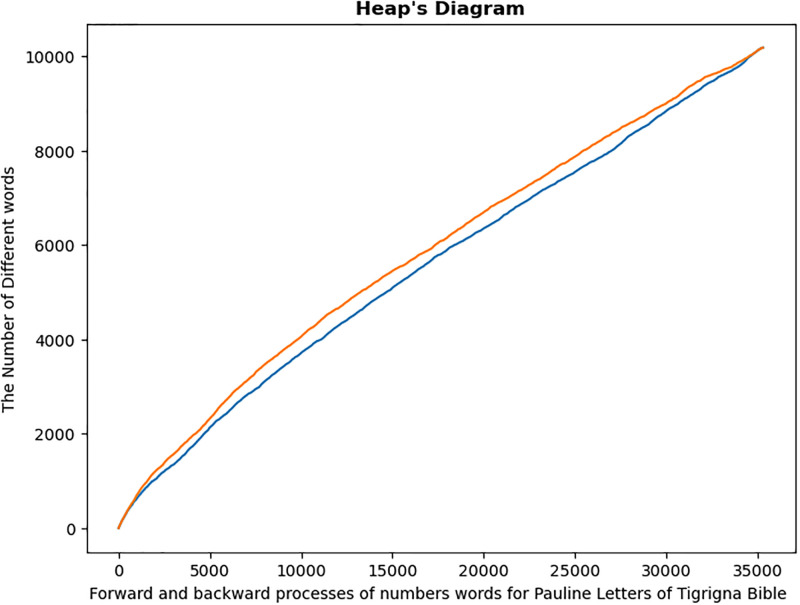 Figure 43
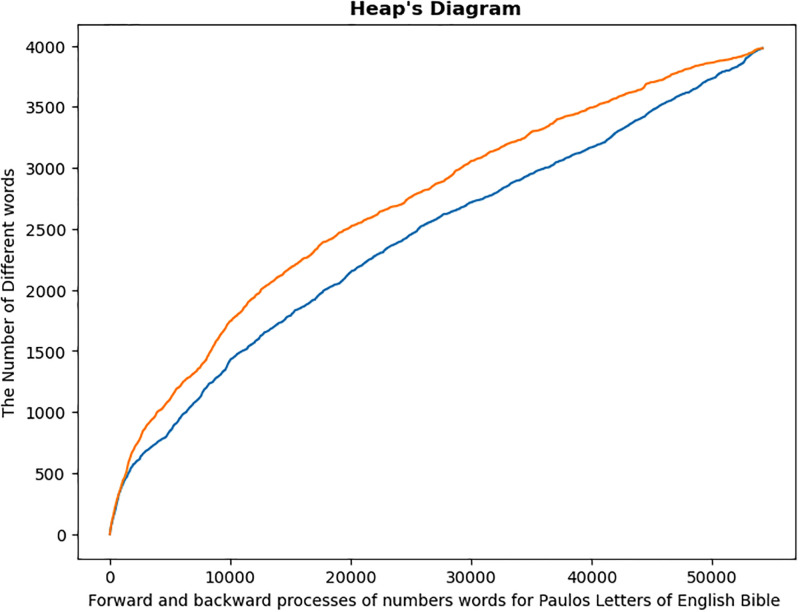 Figure 44
 Figure 45
 Figure 46
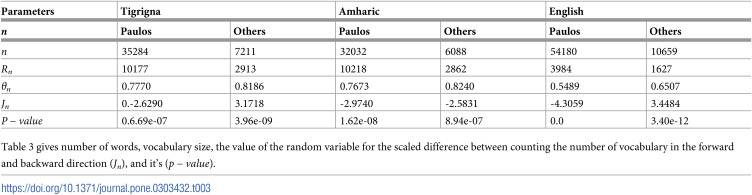 Figure 47
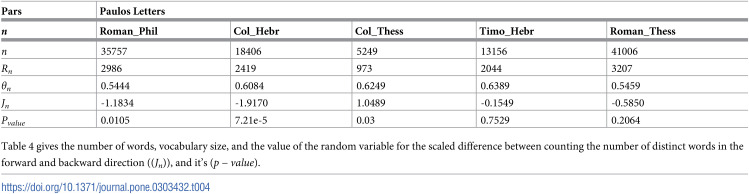 Figure 48
Peer Reviews
No public reviews on file for this paper yet. If you reviewed it on a platform where reviews are public (OpenReview, ICLR, NeurIPS, ICML), you can paste yours below so the community can read it here.
Videos
No videos yet. Explain this paper in a talk, walkthrough, or lecture? Add one.
Taxonomy
TopicsNatural Language Processing Techniques · Advanced Text Analysis Techniques · Text and Document Classification Technologies