Limited Immunogenicity of an HLA-A*03:01-restricted Epitope of Erv-k-env in Non-hiv-1 Settings: Implications for Adoptive Cell Therapy in Cancer
Erin E. Grundy, Lauren C. Shaw, Loretta Wang, Daniel J. Powell, Mario Ostrowski, R. Brad Jones, C. Russell Y. Cruz, Heather Gordish-Dressman, Catherine M. Bollard, Katherine B. Chiappinelli

TL;DR
This study shows that a specific T cell receptor targeting an ERV-K-Env epitope has limited effectiveness in non-HIV-1 cancer settings like ovarian cancer.
Contribution
The study reveals the limited immunogenicity of an HLA-A*03:01-restricted ERV-K-Env epitope in non-HIV-1 contexts.
Findings
Transduced T cells showed antigen specificity only with HLA-A*03:01 B lymphoblastoid cells.
T cells were not specific for HLA-A*03:01+ ovarian cancer cells or cognate peptides in HLA-matched systems.
The epitope has low immunogenicity and limited potential for adoptive cell therapy in ovarian cancer.
Abstract
Repetitive elements (REs) are often expressed at higher levels in tumor cells than normal cells, implicating these genomic regions as an untapped pool of tumor-associated antigens. In ovarian cancer (OC), protein from the RE ERV-K is frequently expressed by tumor cells. Here we determined whether the targeting of a previously identified immunogenic epitope in the envelope gene (env) of ERV-K resulted in target antigen specificity in non-HIV-1 settings. We found that transducing healthy donor T cells with an ERV-K-Env-specific T cell receptor construct resulted in antigen specificity only when co-cultured with HLA-A*03:01 B lymphoblastoid cells. Furthermore, these transduced T cells were not specific for HLA-A*03:01 + OC cells nor for the cognate peptide in HLA-matched systems from multiple healthy donors. These data suggest that the ERV-K-Env epitope recognized by this T cell receptor…
Genes, proteins, chemicals, diseases, species, mutations and cell lines named across the full text — each resolved to its canonical identifier and authoritative record.
Click any figure to enlarge with its caption.
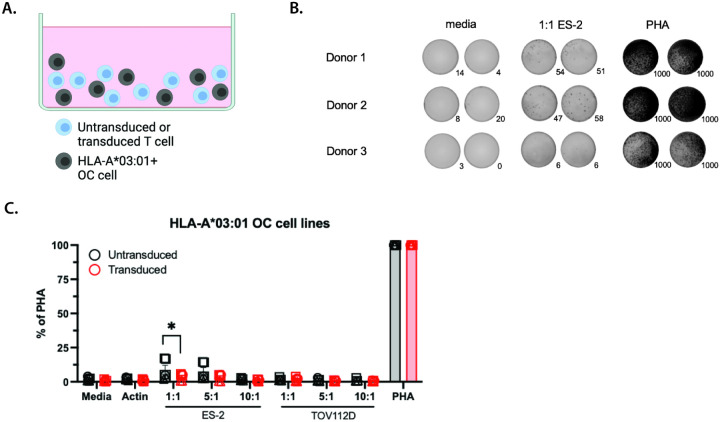 Figure 1
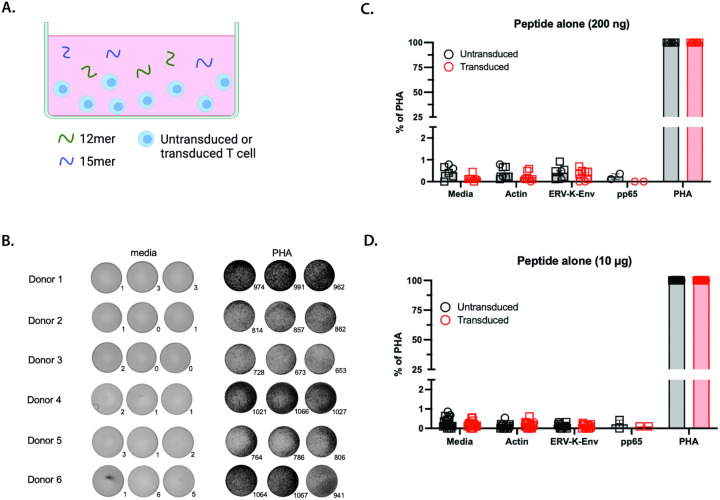 Figure 2
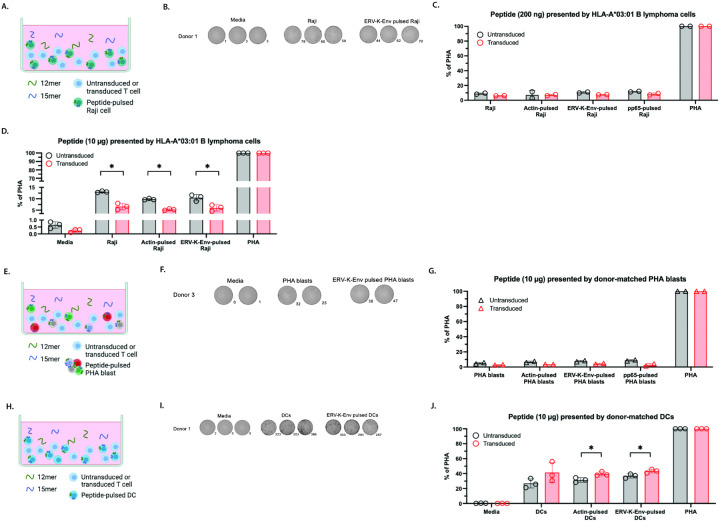 Figure 3
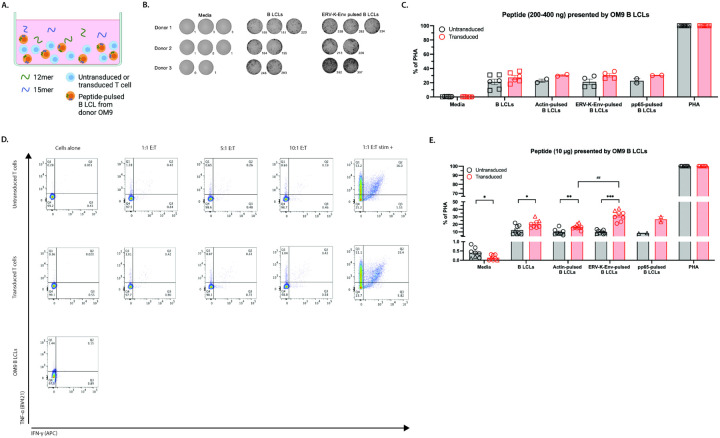 Figure 4
 Figure 5
Peer Reviews
No public reviews on file for this paper yet. If you reviewed it on a platform where reviews are public (OpenReview, ICLR, NeurIPS, ICML), you can paste yours below so the community can read it here.
Videos
No videos yet. Explain this paper in a talk, walkthrough, or lecture? Add one.
Taxonomy
TopicsCAR-T cell therapy research · Immunotherapy and Immune Responses · Cytomegalovirus and herpesvirus research