PET Imaging of Sphingosine-1-Phosphate Receptor 1 with [18F]TZ4877 in Nonhuman Primates
Jiwei Gu, Ming-Qiang Zheng, Daniel Holden, Krista Fowles, Lin Qiu, Zachary Felchner, Li Zhang, Jim Ropchan, Robert J Gropler, Richard E Carson, Zhude Tu, Yiyun Huang, Ansel T Hillmer

TL;DR
This study evaluates [18F]TZ4877, a potential PET radiotracer for S1PR1, in nonhuman primates, finding it has fast kinetics but limited utility due to low free fraction.
Contribution
The study provides preclinical validation of [18F]TZ4877 for S1PR1 PET imaging in nonhuman primates.
Findings
[18F]TZ4877 showed fast kinetics and was best modeled by a reversible 2-tissue compartment model.
TZ82112 reduced [18F]TZ4877 VT/fP in a dose-dependent manner, while ponesimod and endotoxin had negligible effects.
The gallbladder was identified as the critical organ for radiation dose in dosimetry studies.
Abstract
The sphingosine-1-phosphate receptor-1 (S1PR1) is involved in regulating responses to neuroimmune stimuli. There is a need for S1PR1-specific radioligands with clinically suitable brain pharmcokinetic properties to complement existing radiotracers. This work evaluated a promising S1PR1 radiotracer, [18F]TZ4877, in nonhuman primates. [18F]TZ4877 was produced via nucleophilic substitution of tosylate precursor with K[18F]/F− followed by deprotection. Brain PET imaging data were acquired with a Focus220 scanner in two Macaca mulatta (6, 13 years old) for 120–180 min following bolus injection of 118–163 MBq [18F]TZ4877, with arterial blood sampling and metabolite analysis to measure the parent input function and plasma free fraction (fP). Each animal was scanned at baseline, 15–18 min after 0.047–0.063 mg/kg of the S1PR1 inhibitor ponesimod, 33 min after 0.4–0.8 mg/kg of the S1PR1-specific…
Genes, proteins, chemicals, diseases, species, mutations and cell lines named across the full text — each resolved to its canonical identifier and authoritative record.
Click any figure to enlarge with its caption.
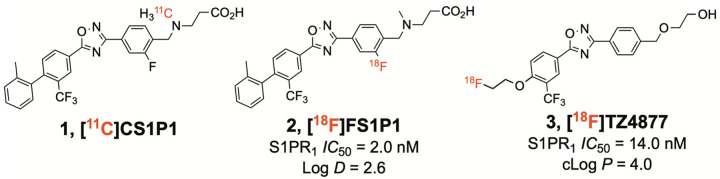 Figure 1
 Figure 2
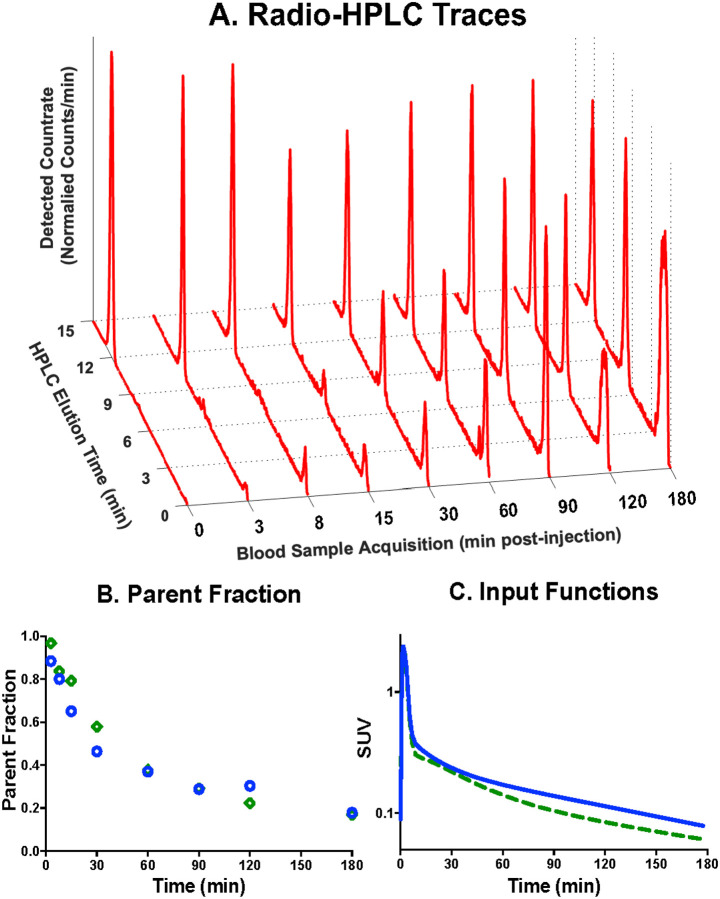 Figure 3
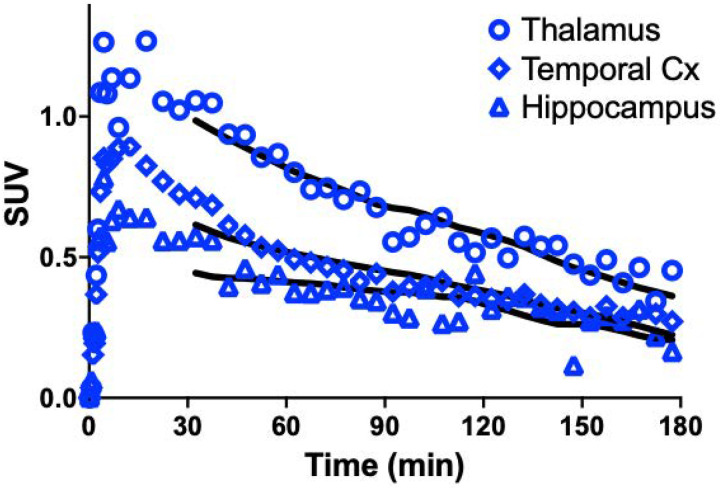 Figure 4
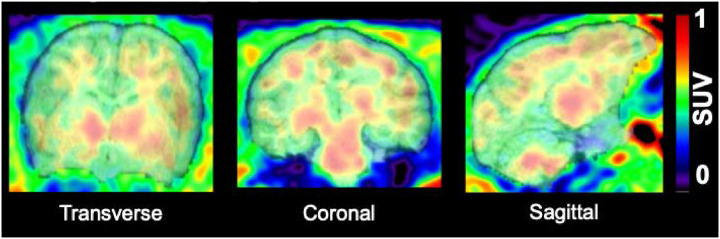 Figure 5
Peer Reviews
No public reviews on file for this paper yet. If you reviewed it on a platform where reviews are public (OpenReview, ICLR, NeurIPS, ICML), you can paste yours below so the community can read it here.
Videos
No videos yet. Explain this paper in a talk, walkthrough, or lecture? Add one.
Taxonomy
TopicsSphingolipid Metabolism and Signaling · Lipid Membrane Structure and Behavior · Caveolin-1 and cellular processes