Clinical application of plasma P-tau217 to assess eligibility for amyloid-lowering immunotherapy in memory clinic patients with early Alzheimer’s disease
Matthew D. Howe, Karysa J. Britton, Hannah E. Joyce, William Menard, Sheina Emrani, Zachary J. Kunicki, Melanie A. Faust, Brittany C. Dawson, Meghan C. Riddle, Edward D. Huey, Shorena Janelidze, Oskar Hansson, Stephen P. Salloway

TL;DR
This study shows plasma P-tau217 can effectively identify Alzheimer's patients eligible for amyloid-lowering treatments, potentially replacing invasive methods like PET scans.
Contribution
The study introduces optimized cutoffs for plasma P-tau217 to assess eligibility for aducanumab treatment in early Alzheimer’s patients.
Findings
Plasma P-tau217 accurately predicted cerebral amyloid positivity with an AUC of 0.97.
Using site-specific cutoffs, most aducanumab-treated patients would have been deemed eligible based on P-tau217 alone.
A small subset of patients had borderline P-tau217 levels requiring confirmatory testing.
Abstract
With the approval of disease-modifying treatments (DMTs) for early Alzheimer’s disease (AD), there is an increased need for efficient and non-invasive detection methods for cerebral amyloid-β (Aβ) pathology. Current methods, including positron emission tomography (PET) and cerebrospinal fluid (CSF) analysis, are costly and invasive methods that may limit access to new treatments. Plasma tau phosphorylated at threonine-217 (P-tau217) presents a promising alternative, yet optimal cutoffs for treatment eligibility with DMTs like aducanumab require further investigation. This study evaluates the efficacy of one- and two-cutoff strategies for determining DMT eligibility at the Butler Hospital Memory & Aging Program (MAP). In this retrospective, cross-sectional diagnostic cohort study, we first developed P-tau217 cutoffs using site-specific training data and BioFINDER-2, which were then…
Genes, proteins, chemicals, diseases, species, mutations and cell lines named across the full text — each resolved to its canonical identifier and authoritative record.
Click any figure to enlarge with its caption.
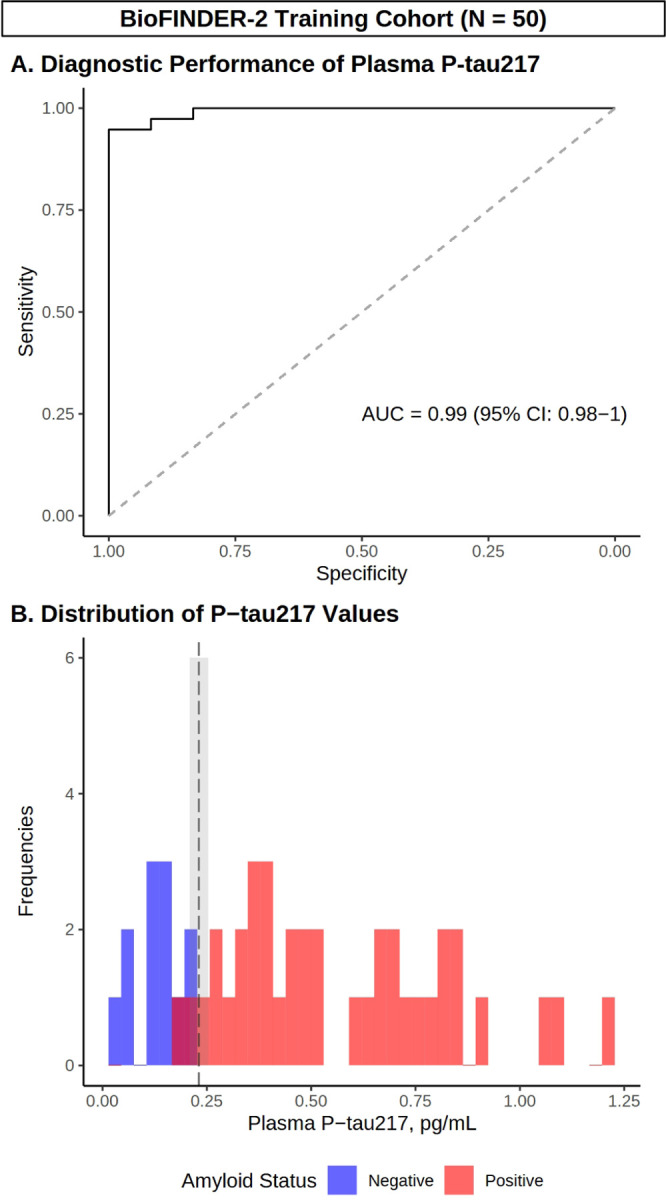 Figure 1
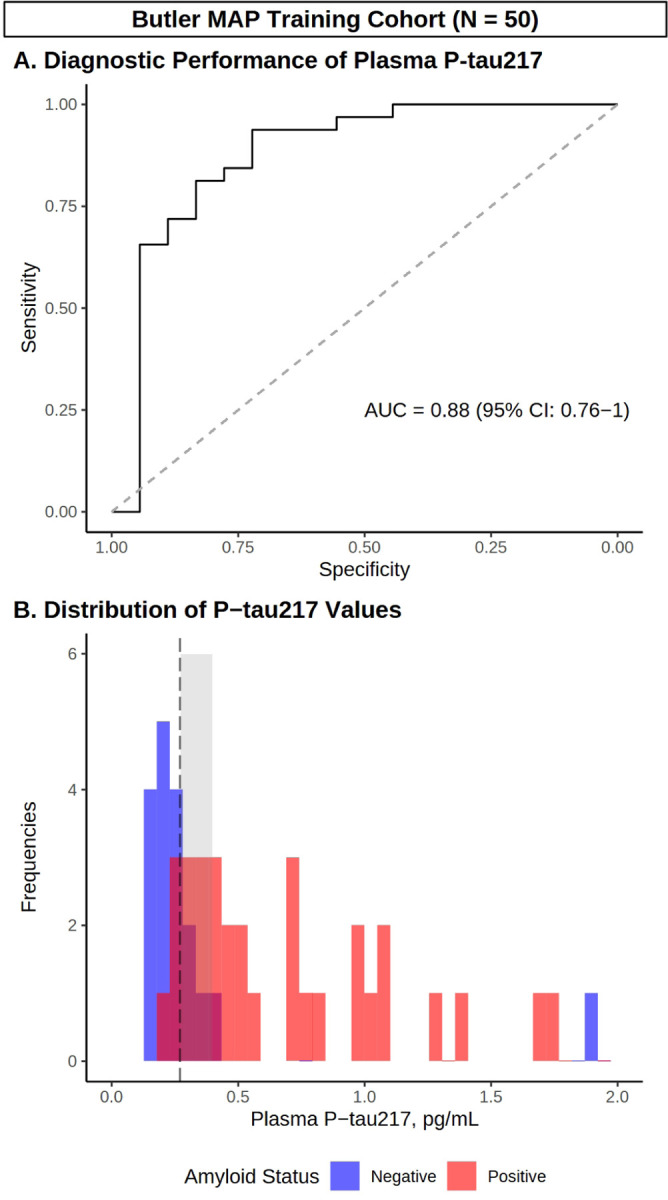 Figure 2
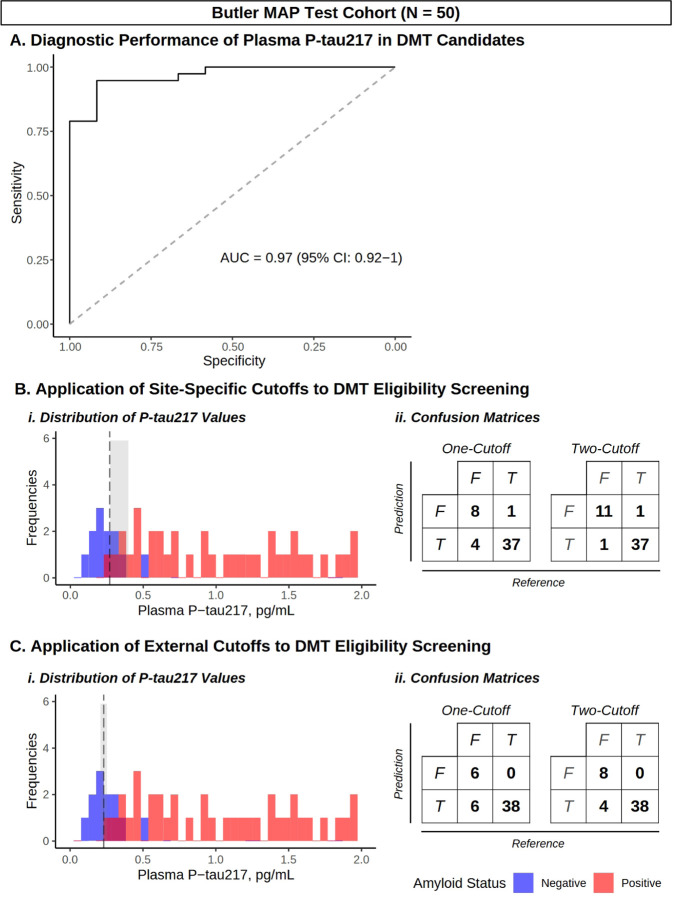 Figure 3
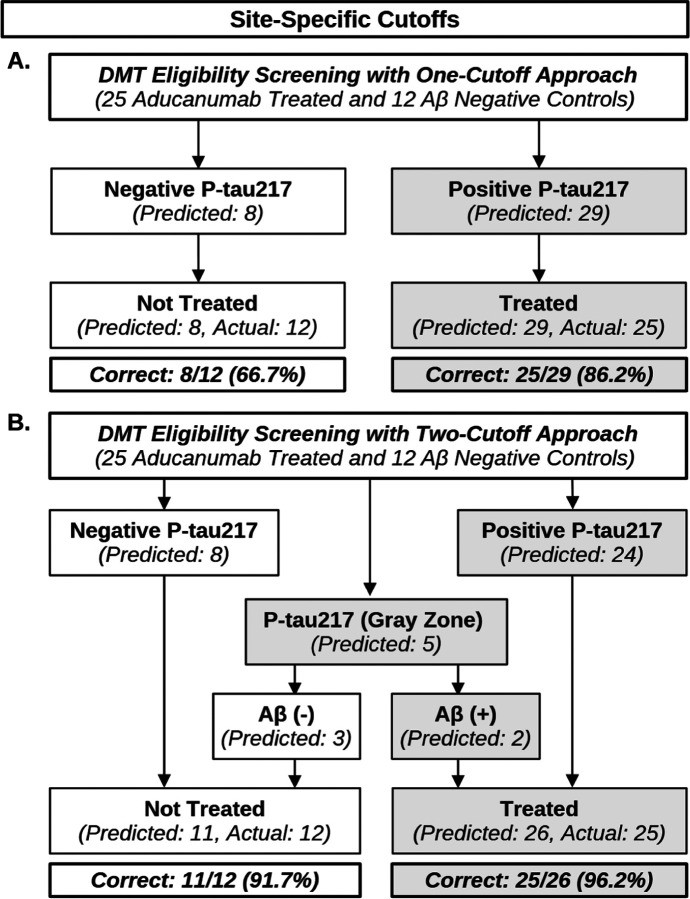 Figure 4
Peer Reviews
No public reviews on file for this paper yet. If you reviewed it on a platform where reviews are public (OpenReview, ICLR, NeurIPS, ICML), you can paste yours below so the community can read it here.
Videos
No videos yet. Explain this paper in a talk, walkthrough, or lecture? Add one.
Taxonomy
TopicsAlzheimer's disease research and treatments · Dementia and Cognitive Impairment Research · Neuroinflammation and Neurodegeneration Mechanisms