Temporal Interactions between Neural Proxies forMemory Recall, Negative Affect, and EmotionRegulation in Major Depression
Christina Michel, Mike Schmidt, J. John Mann, Sarah Herzog, Kevin Ochsner, Lila Davachi, Noam Schneck

TL;DR
This study explores how memory, negative emotions, and emotion regulation interact in real time in people with major depression using brain activity patterns.
Contribution
The study introduces a novel approach using machine learning-based neural signatures to dynamically assess emotion regulation and memory in depression.
Findings
In MDD, hippocampal activity during memory tasks predicts increased negative affect but not emotion regulation.
Healthy volunteers show increased emotion regulation after memory reactivation during distancing, unlike individuals with MDD.
MDD is characterized by a persistent link between memory engagement and negative affect without effective emotion regulation.
Abstract
Dysfunction in emotion regulation (ER) and autobiographical memory are components of major depressive disorder (MDD). However, little is known about how they mechanistically interact with mood disturbances in real time. Using machine learning-based neural signatures, we can quantify negative affect (NA), ER, and memory continuously to evaluate how these processes dynamically interact in MDD. Unmedicated individuals with MDD (N=45) and healthy volunteers (HV; N=38) completed a negative autobiographical memory functional magnetic resonance imaging task wherein they recalled, distanced from (an ER strategy), and immersed into memories. We used a negative affect signature (PINES) and an emotion regulation signature (ERS) to quantify moment-to-moment NA and ER. We then examined whether memory engagement, indexed by hippocampal activity, predicted subsequent change in PINES and ERS over time.…
Genes, proteins, chemicals, diseases, species, mutations and cell lines named across the full text — each resolved to its canonical identifier and authoritative record.
Click any figure to enlarge with its caption.
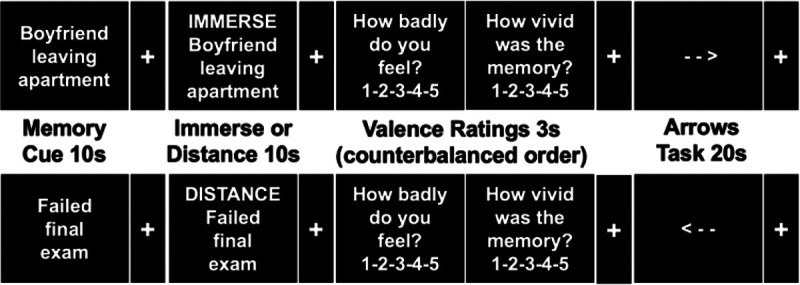 Figure 1
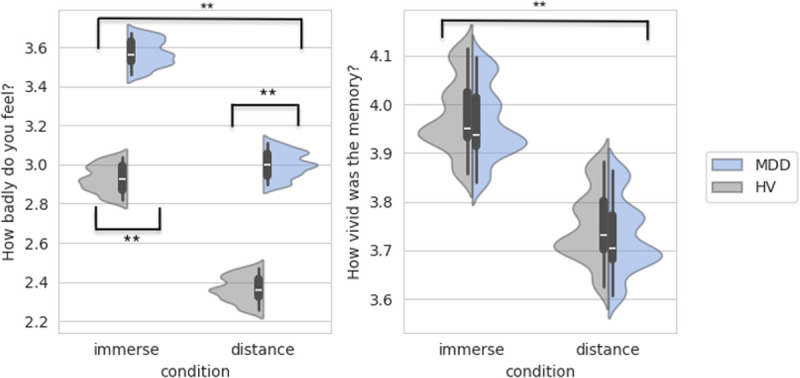 Figure 2
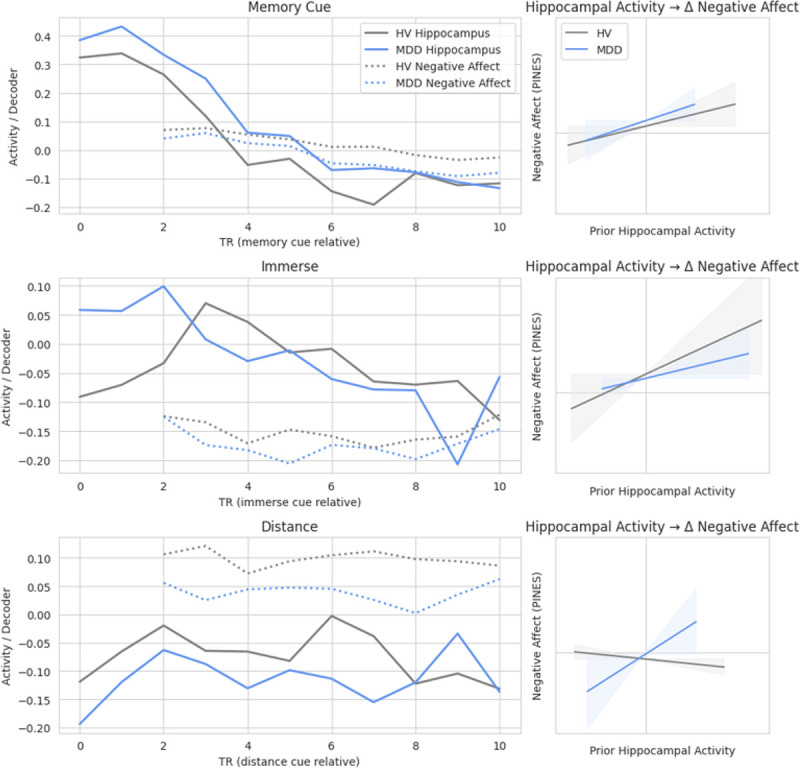 Figure 3
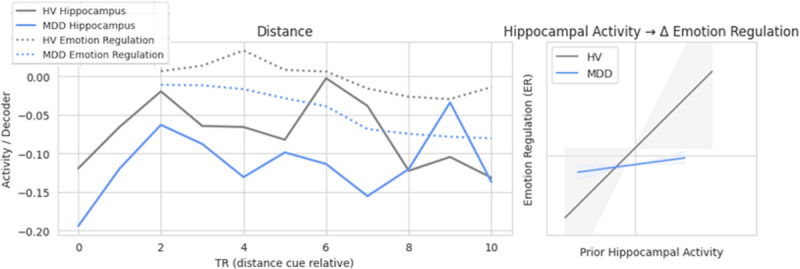 Figure 4
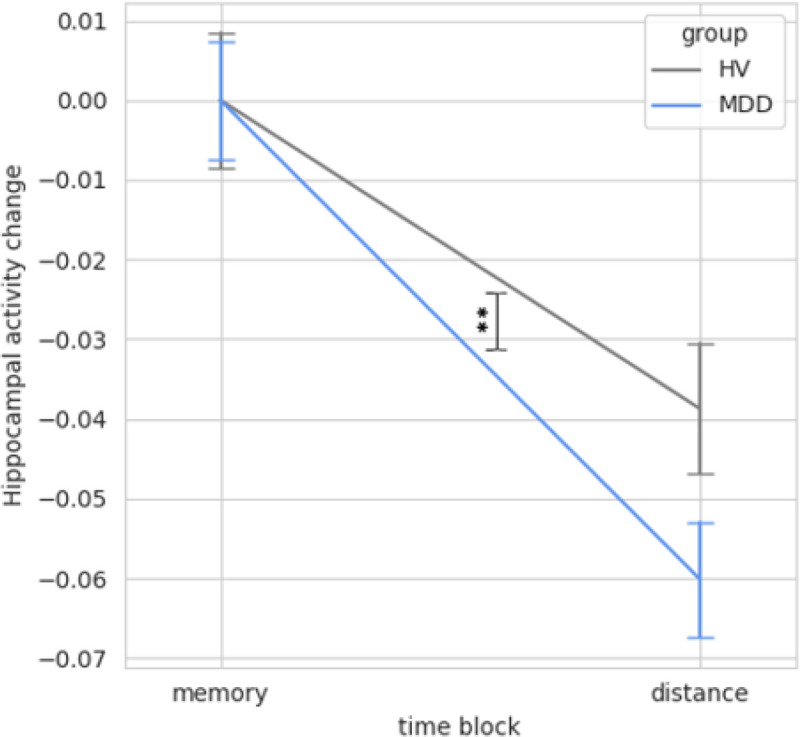 Figure 5
Peer Reviews
No public reviews on file for this paper yet. If you reviewed it on a platform where reviews are public (OpenReview, ICLR, NeurIPS, ICML), you can paste yours below so the community can read it here.
Videos
No videos yet. Explain this paper in a talk, walkthrough, or lecture? Add one.
Taxonomy
TopicsIdentity, Memory, and Therapy · Mental Health Research Topics · Cognitive Abilities and Testing