Comparison of various approaches to tagging for the inflectional Slovak language
Lubomír Benko, Dasa Munkova, Mária Pappová, Michal Munk

TL;DR
This paper compares six automatic taggers for the inflectional Slovak language, finding that different taggers perform best for literary and non-literary texts.
Contribution
The study identifies optimal taggers for literary and non-literary Slovak texts, highlighting UDPipe2 and RNNTagger as top performers.
Findings
UDPipe2 outperformed other taggers in seven out of nine tagset positions for literary texts.
RNNTagger showed the highest performance in eight out of nine tagset positions for non-literary texts.
RNNTagger is recommended for both text types due to its strong inflectional handling.
Abstract
Morphological tagging provides essential insights into grammar, structure, and the mutual relationships of words within the sentence. Tagging text in a highly inflectional language presents a challenging task due to word ambiguity. This research aims to compare six different automatic taggers for the inflectional Slovak language, seeking for the most accurate tagger for literary and non-literary texts. Our results indicate that it is useful to differentiate texts into literary and non-literary and subsequently, based on the text style to deploy a tagger. For literary texts, UDPipe2 outperformed others in seven out of nine examined tagset positions. Conversely, for non-literary texts, the RNNTagger exhibited the highest performance in eight out of nine examined tagset positions. The RNNTagger is recommended for both types of the text, the best captures the inflection of the Slovak…
Genes, proteins, chemicals, diseases, species, mutations and cell lines named across the full text — each resolved to its canonical identifier and authoritative record.
Click any figure to enlarge with its caption.
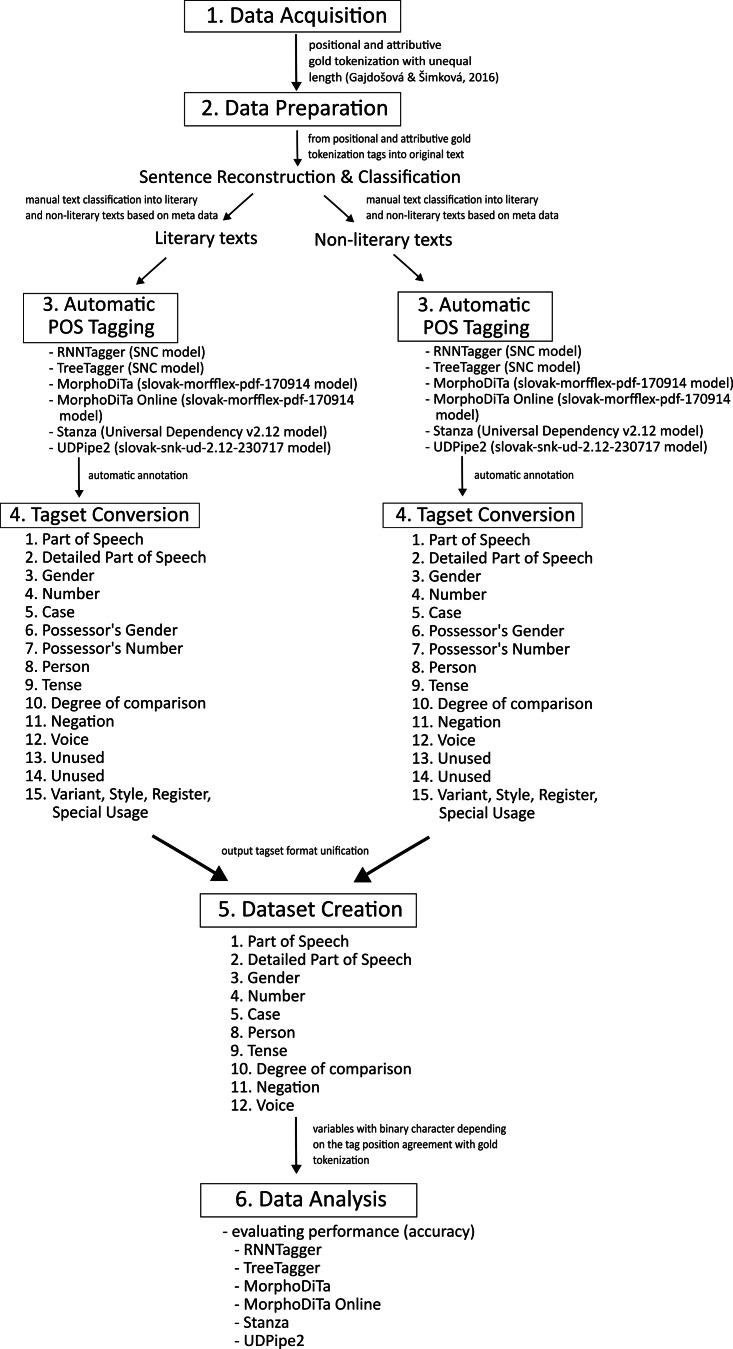 Figure 1
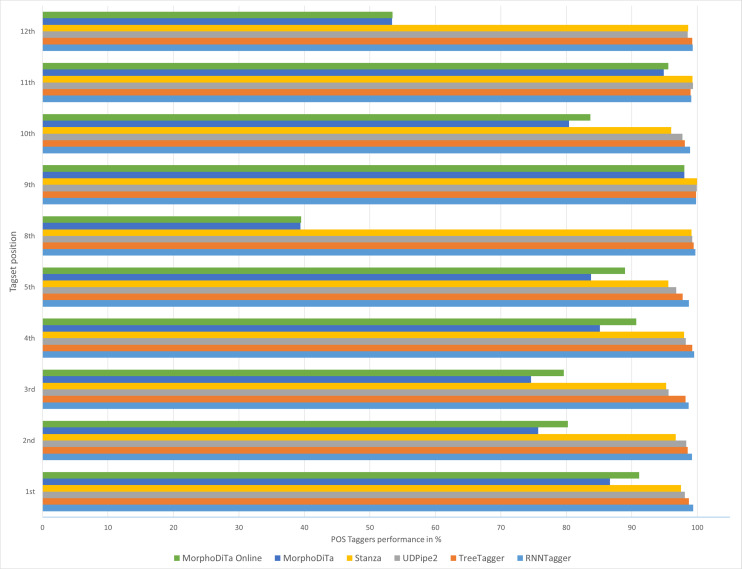 Figure 2
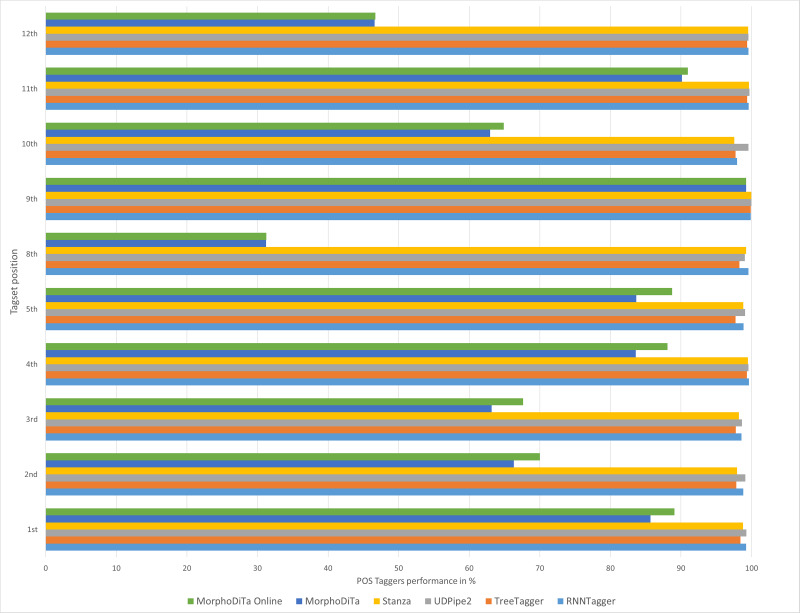 Figure 3
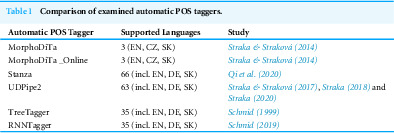 Figure 4
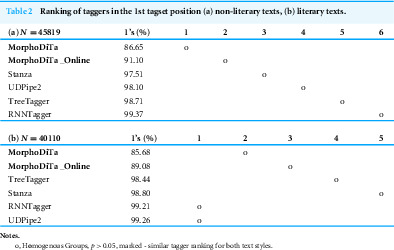 Figure 5
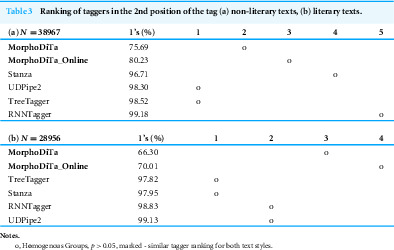 Figure 6
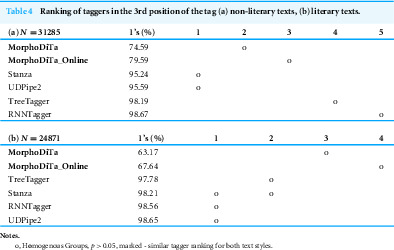 Figure 7
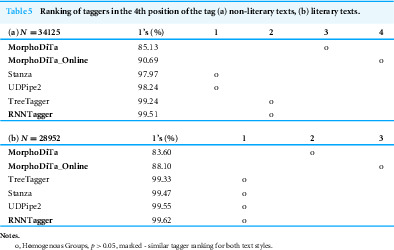 Figure 8
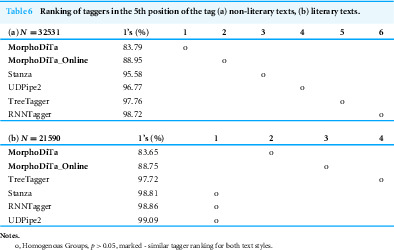 Figure 9
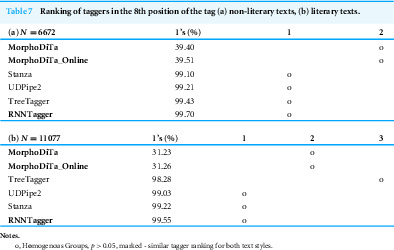 Figure 10
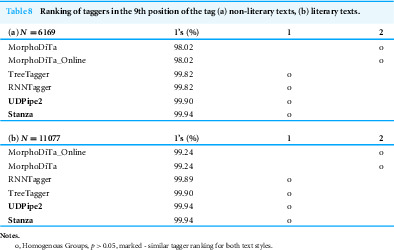 Figure 11
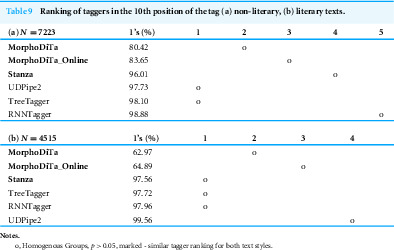 Figure 12
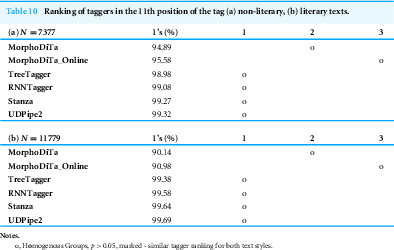 Figure 13
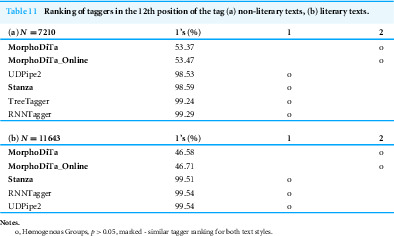 Figure 14
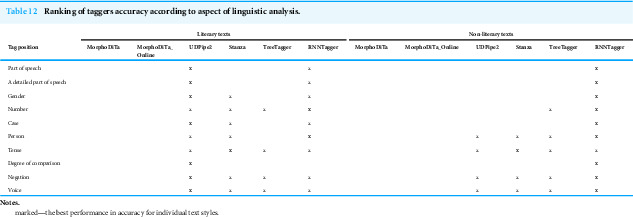 Figure 15
 Figure 16
 Figure 17
 Figure 18
 Figure 19
 Figure 20
 Figure 21
Peer Reviews
No public reviews on file for this paper yet. If you reviewed it on a platform where reviews are public (OpenReview, ICLR, NeurIPS, ICML), you can paste yours below so the community can read it here.
Videos
No videos yet. Explain this paper in a talk, walkthrough, or lecture? Add one.
Taxonomy
TopicsNatural Language Processing Techniques · Topic Modeling · Advanced Text Analysis Techniques