Successful Conservative Management of a Patient With Symptomatic Cervical Perineural Cysts: A Case Report
Stavros Stamiris, Christos Karampalis, Dimitrios Stamiris, Elissavet Anestiadou, Pavlos Christodoulou

TL;DR
A 56-year-old woman with cervical perineural cysts improved significantly with conservative treatment, showing that non-surgical approaches can be effective.
Contribution
This case report demonstrates successful conservative management of symptomatic cervical perineural cysts, a rare and understudied condition.
Findings
The patient experienced significant symptom reduction and full neurological recovery after conservative treatment.
Conservative management, including corticosteroids and activity restrictions, was effective for mildly symptomatic cervical perineural cysts.
This case adds to the limited literature on non-surgical treatment options for cervical perineural cysts.
Abstract
Perineural cysts, also known as Tarlov cysts, are rare benign cerebrospinal fluid-filled cysts usually located at the junction of the posterior nerve root and the dorsal root ganglion and are usually asymptomatic. They are most commonly found in the sacral region and are uncommon in the cervical spine. Despite their rarity, symptomatic cases may present with neurological symptoms due to the compression of adjacent neurological structures. Symptomatic cervical perineural cysts are extremely rare, and there is limited consensus on management strategies. We present the case of a 56-year-old woman who presented with a four-week history of radicular symptoms involving the right C7 and C8 nerve roots, including neck and arm pain, paresthesias, and mild triceps weakness. Magnetic resonance imaging revealed two perineural cysts at the C6-C7 and C7-T1 levels. A conservative approach was chosen…
Genes, proteins, chemicals, diseases, species, mutations and cell lines named across the full text — each resolved to its canonical identifier and authoritative record.
Click any figure to enlarge with its caption.
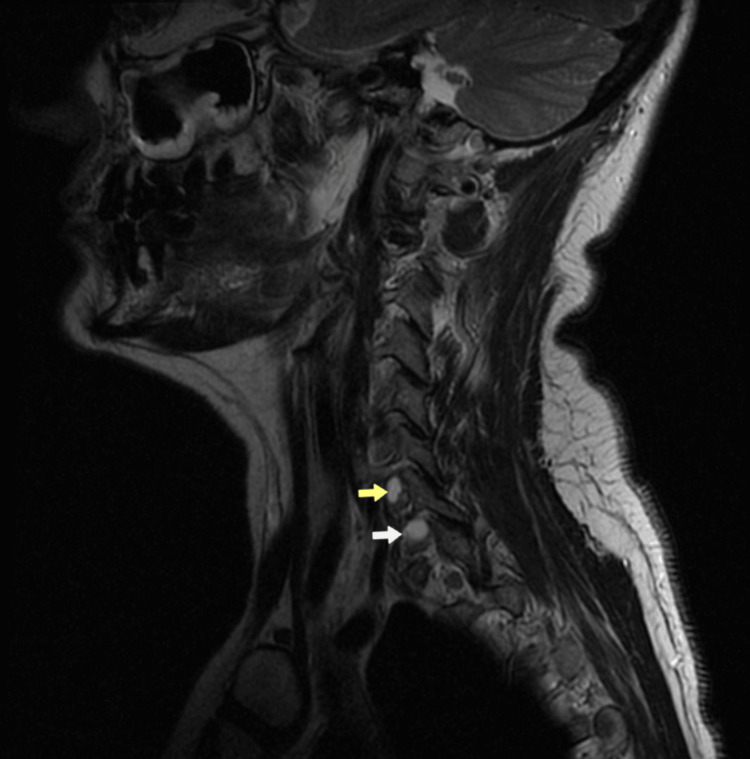 Figure 1
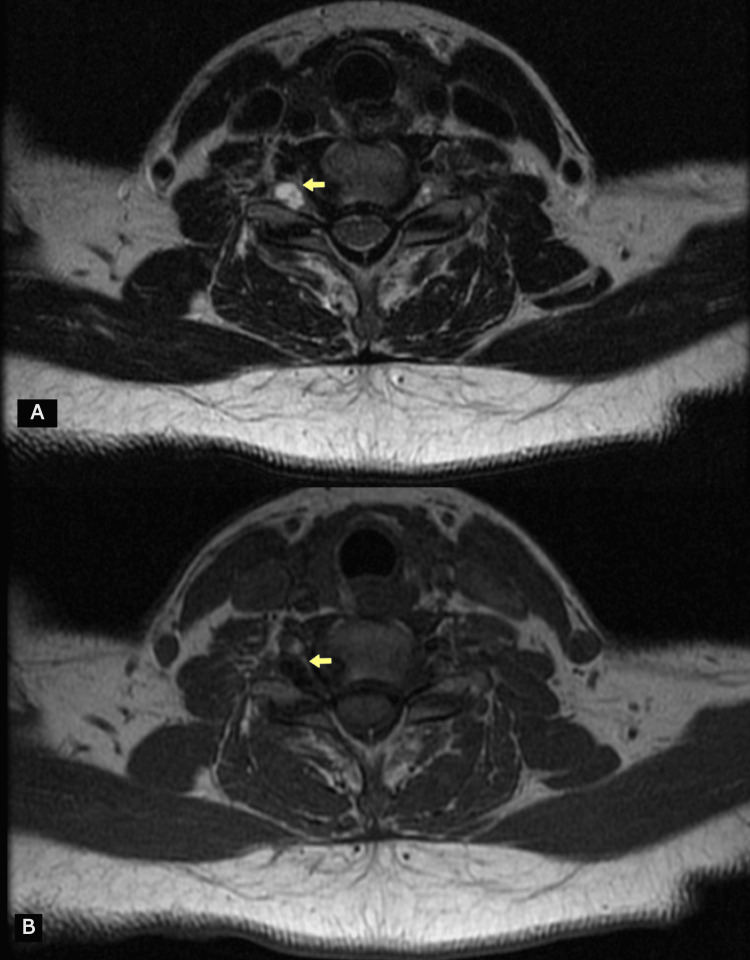 Figure 2
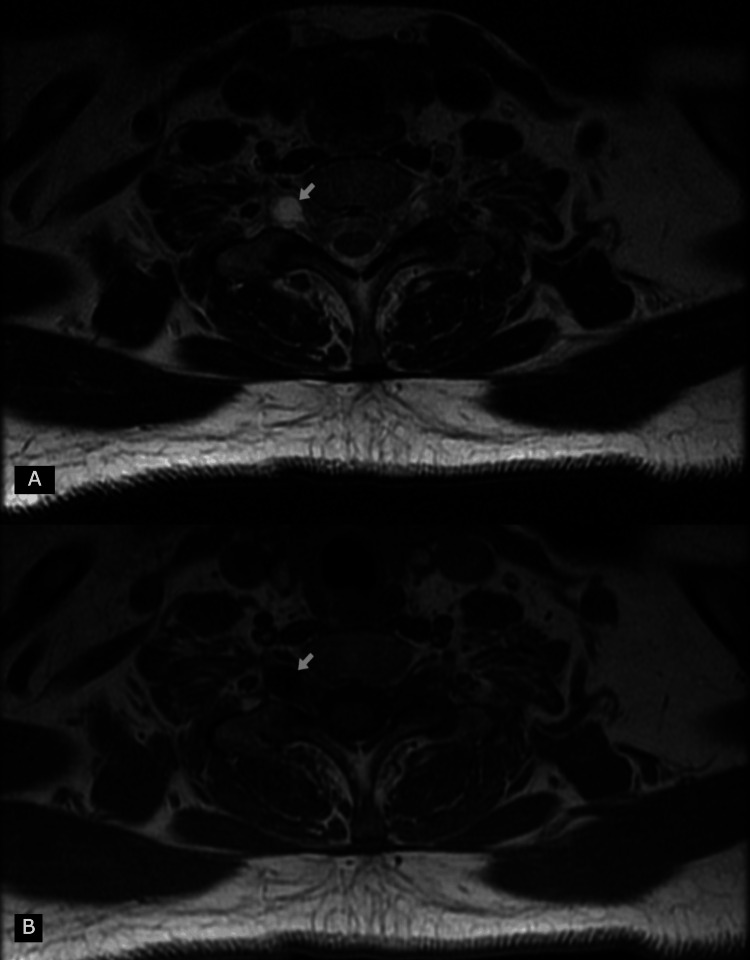 Figure 3
Peer Reviews
No public reviews on file for this paper yet. If you reviewed it on a platform where reviews are public (OpenReview, ICLR, NeurIPS, ICML), you can paste yours below so the community can read it here.
Videos
No videos yet. Explain this paper in a talk, walkthrough, or lecture? Add one.
Taxonomy
TopicsSpinal Dysraphism and Malformations · Spinal Fractures and Fixation Techniques · Spinal Hematomas and Complications