An evolutionary case for plant rarity: Eucalyptus as a model system
Alivia G. Nytko, John K. Senior, Rachel C. Wooliver, Julianne O'Reilly‐Wapstra, Jennifer A. Schweitzer, Joseph K. Bailey

TL;DR
This study shows that plant rarity in Tasmanian eucalypts is not random but results from evolutionary traits like biomass and habitat specialization.
Contribution
The study provides empirical evidence that plant rarity is shaped by natural selection on performance traits, not just environmental constraints.
Findings
Rare eucalypt species have 70% lower biomass than common species.
Rare species allocate more biomass aboveground compared to common species.
There is a negative phylogenetic autocorrelation in biomass between rare and common species.
Abstract
Species rarity is a common phenomenon across global ecosystems that is becoming increasingly more common under climate change. Although species rarity is often considered to be a stochastic response to environmental and ecological constraints, we examined the hypothesis that plant rarity is a consequence of natural selection acting on performance traits that affect a species range size, habitat specificity, and population aggregation; three primary descriptors of rarity. Using a common garden of 25 species of Tasmanian Eucalyptus, we find that the rarest species have 70% lower biomass than common species. Although rare species demonstrate lower biomass, rare species allocated proportionally more biomass aboveground than common species. There is also a negative phylogenetic autocorrelation underlying the biomass of rare and common species, indicating that traits associated with rarity…
Genes, proteins, chemicals, diseases, species, mutations and cell lines named across the full text — each resolved to its canonical identifier and authoritative record.
Click any figure to enlarge with its caption.
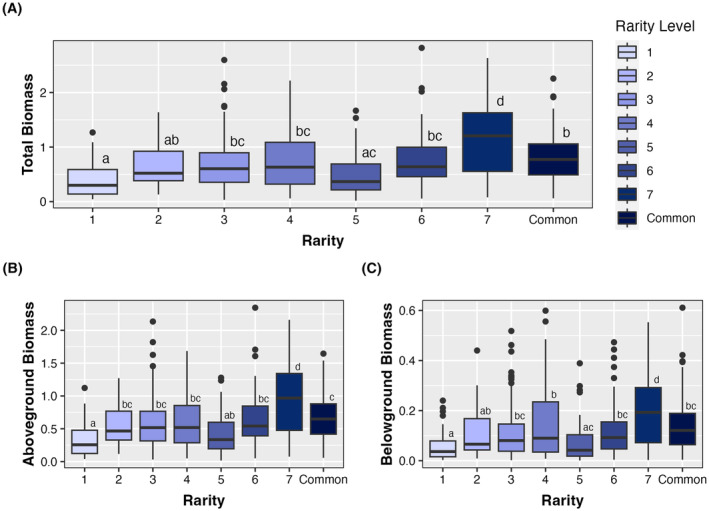 Figure 1
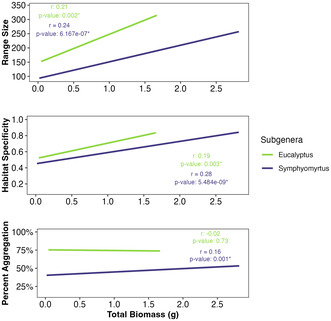 Figure 2
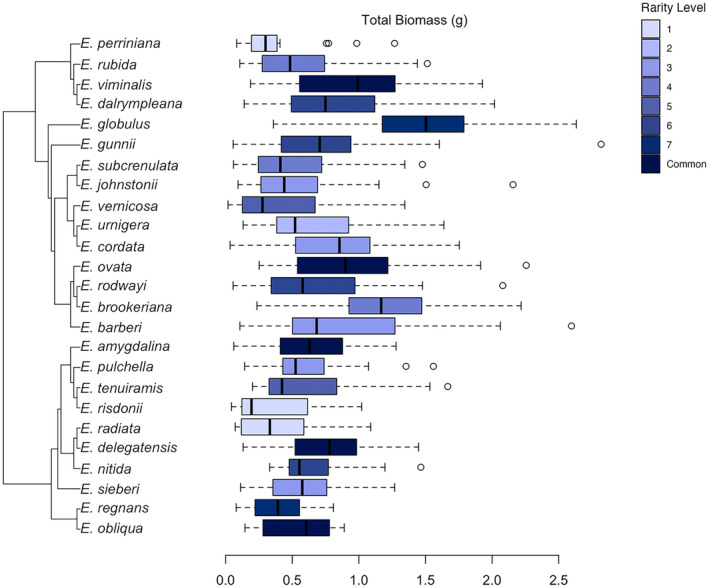 Figure 3
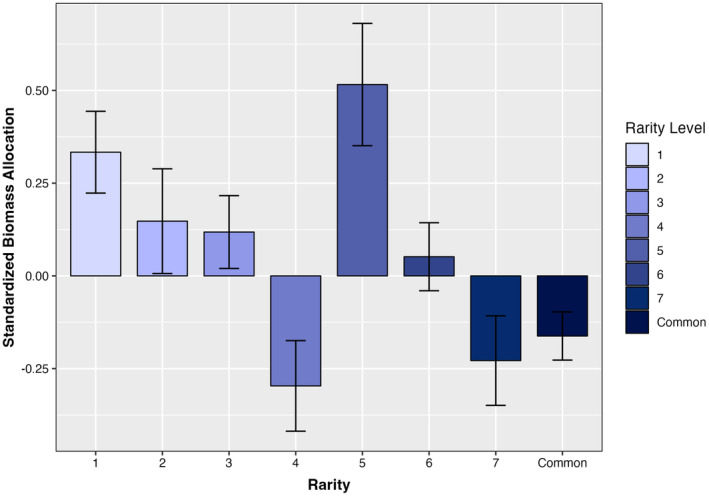 Figure 4
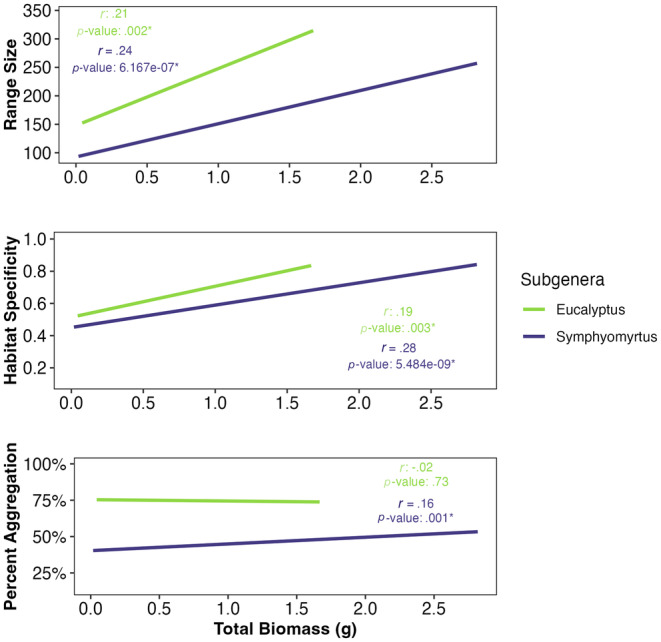 Figure 5
Peer Reviews
No public reviews on file for this paper yet. If you reviewed it on a platform where reviews are public (OpenReview, ICLR, NeurIPS, ICML), you can paste yours below so the community can read it here.
Videos
No videos yet. Explain this paper in a talk, walkthrough, or lecture? Add one.
Taxonomy
TopicsEcology and Vegetation Dynamics Studies · Forest ecology and management · Plant and animal studies