A Comparative Evaluation of Unilateral and Bilateral Sequential Lung Isolation for Vertebral Body Tethering: A Retrospective Propensity Matched Analysis
B Randall Brenn, Gregory M Disilvio, Evan Yarnall, Jessica Steindler, Suhail Tarazi, Alexander Rompala, Kyrillos Akhnoukh, Dinesh K Choudhry

TL;DR
This study compares lung isolation techniques during a spinal surgery in adolescents, finding that bilateral lung isolation requires more ventilatory support and leads to longer hospital stays.
Contribution
The study provides a novel comparative analysis of unilateral and bilateral lung isolation in vertebral body tethering using a propensity-matched cohort.
Findings
Bilateral lung isolation required higher peak inspiratory pressures and tidal volumes compared to unilateral.
Bilateral lung isolation was associated with higher alveolar to arterial oxygen tension gradients, indicating more acute lung injury.
Patients with bilateral lung isolation had longer hospital stays but similar intensive care lengths of stay.
Abstract
Background: Vertebral body tethering (VBT) requires a thoracoscopic approach to visualize the vertebral bodies. Lung collapse and re-expansion have the potential to cause acute lung injury, resulting in increased oxygen and ventilation requirements. Aims: We compared the intraoperative ventilator management, intra- and postoperative blood gas determinations, and hospital stay information between adolescents undergoing unilateral versus bilateral lung isolation for vertebral body tethering. Methods: A study cohort of 132 propensity-matched cases (66 unilateral and 66 bilateral) was derived from 351 consecutive VBT cases. Patient demographic information, case information, fluid administration, ventilatory settings data, blood gas parameters, and complete blood count and differential data were entered into a datasheet. Derived parameters included values calculated from the alveolar gas…
Genes, proteins, chemicals, diseases, species, mutations and cell lines named across the full text — each resolved to its canonical identifier and authoritative record.
Click any figure to enlarge with its caption.
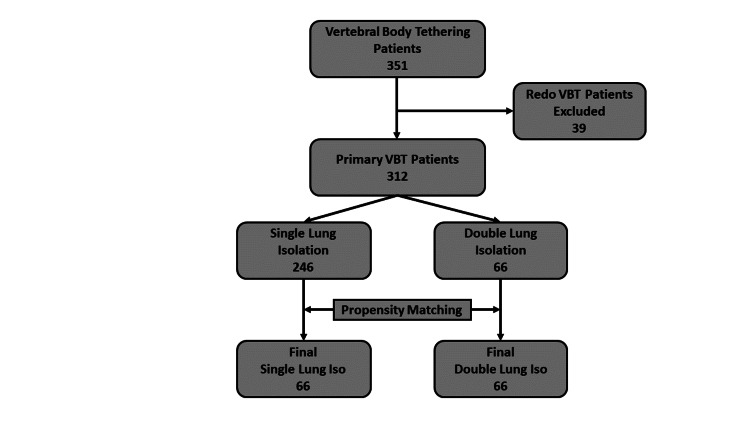 Figure 1
Peer Reviews
No public reviews on file for this paper yet. If you reviewed it on a platform where reviews are public (OpenReview, ICLR, NeurIPS, ICML), you can paste yours below so the community can read it here.
Videos
No videos yet. Explain this paper in a talk, walkthrough, or lecture? Add one.
Taxonomy
TopicsRespiratory Support and Mechanisms · Congenital Diaphragmatic Hernia Studies · Neonatal Respiratory Health Research