Low serum lipase levels in mothers of children with stunted growth indicate the possibility of low calcium absorption during pregnancy: A cross-sectional study in North Sumatra, Indonesia
Dina Keumala Sari, Rina Amelia, Dewi Masyithah, Kraichat Tantrakarnapa, Lorena Verduci, Marianne Clemence, Dhruba Shrestha, Dhruba Shrestha

TL;DR
Low serum lipase in mothers of stunted children suggests poor calcium absorption during pregnancy, which may increase the risk of stunted growth in children.
Contribution
This study links low maternal serum lipase levels to increased risk of stunted growth in children, suggesting a role in calcium absorption during pregnancy.
Findings
Mothers of stunted children had significantly lower serum lipase levels compared to mothers of children with normal growth.
Low serum calcium levels were observed in mothers of stunted children compared to those with normal growth.
All study participants were found to be vitamin D deficient.
Abstract
Stunting is caused by various factors, including low nutritional intake in the first two years of life. This study aimed to investigate the differences in sociodemographic factors and mineral, vitamin, and enzyme parameters in mothers associated with the occurrence of stunting in children. We conducted a cross-sectional study from September to November 2020 on North Sumatra Island, Indonesia. The data collected included sociodemographic characteristics, pregnancy history, birth history, food intake, and laboratory examinations, including measurements of calcium, iron, zinc, vitamin D, pancreatic amylase, and serum lipase levels. This study included 50 healthy mothers aged 18–50 years old with children aged 2 to 60 months. There was a significant difference in serum calcium levels between the groups of mothers of children with normal and stunted growth (p = 0.03, mean difference±standard…
Genes, proteins, chemicals, diseases, species, mutations and cell lines named across the full text — each resolved to its canonical identifier and authoritative record.
Click any figure to enlarge with its caption.
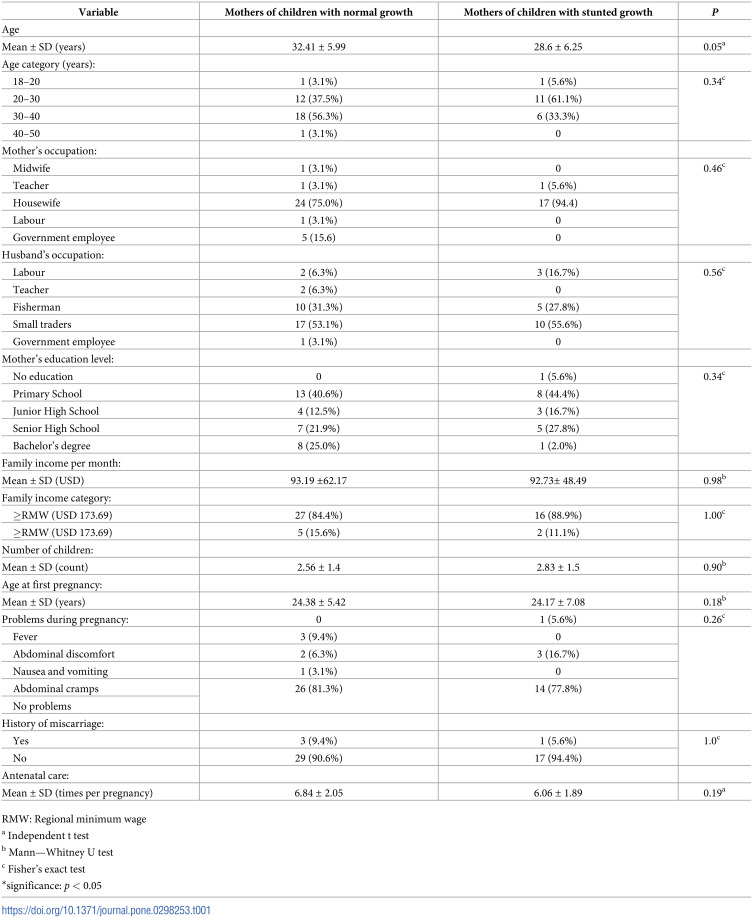 Figure 1
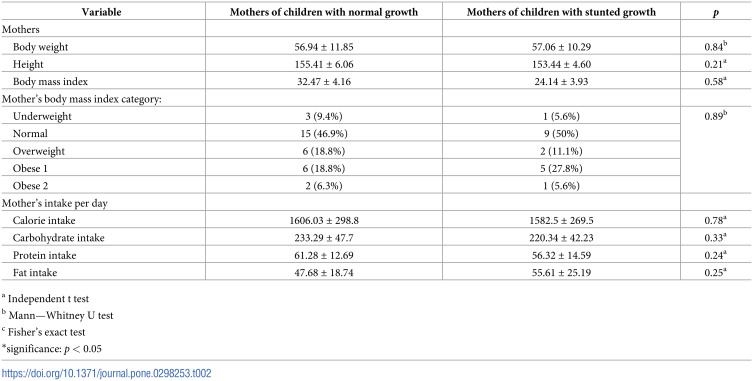 Figure 2
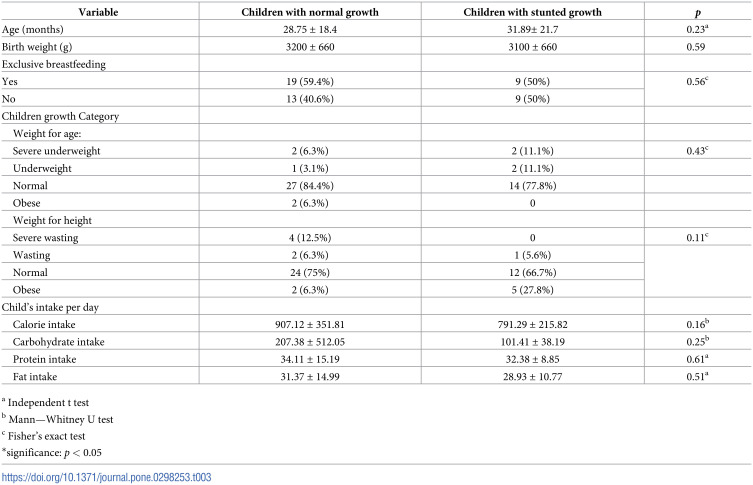 Figure 3
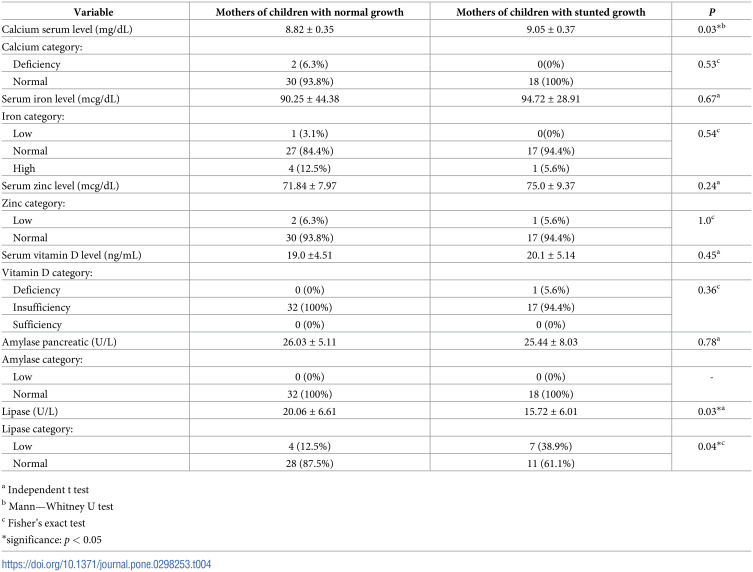 Figure 4
Peer Reviews
No public reviews on file for this paper yet. If you reviewed it on a platform where reviews are public (OpenReview, ICLR, NeurIPS, ICML), you can paste yours below so the community can read it here.
Videos
No videos yet. Explain this paper in a talk, walkthrough, or lecture? Add one.
Taxonomy
TopicsBirth, Development, and Health · Child Nutrition and Water Access · Obesity, Physical Activity, Diet