Sparse Blind Spherical Deconvolution of diffusion weighted MRI
Clément Fuchs, Quentin Dessain, Nicolas Delinte, Manon Dausort, Benoît Macq

TL;DR
This paper introduces a new blind spherical deconvolution method for diffusion MRI to estimate fiber orientations without needing a predefined response function.
Contribution
The novel algorithm assumes axial symmetry of the response function and estimates ODF peaks and signals without explicit response function knowledge.
Findings
The algorithm achieved lower angular errors than constrained spherical deconvolution on synthetic data.
It was outperformed by state-of-the-art methods on in-vivo data for orientation retrieval.
Combined with other methods, it showed potential for deriving per-voxel per-direction metrics on both synthetic and in-vivo data.
Abstract
Diffusion-weighted magnetic resonance imaging provides invaluable insights into in-vivo neurological pathways. However, accurate and robust characterization of white matter fibers microstructure remains challenging. Widely used spherical deconvolution algorithms retrieve the fiber Orientation Distribution Function (ODF) by using an estimation of a response function, i.e., the signal arising from individual fascicles within a voxel. In this paper, an algorithm of blind spherical deconvolution is proposed, which only assumes the axial symmetry of the response function instead of its exact knowledge. This algorithm provides a method for estimating the peaks of the ODF in a voxel without any explicit response function, as well as a method for estimating signals associated with the peaks of the ODF, regardless of how those peaks were obtained. The two stages of the algorithm are tested on…
Genes, proteins, chemicals, diseases, species, mutations and cell lines named across the full text — each resolved to its canonical identifier and authoritative record.
Click any figure to enlarge with its caption.
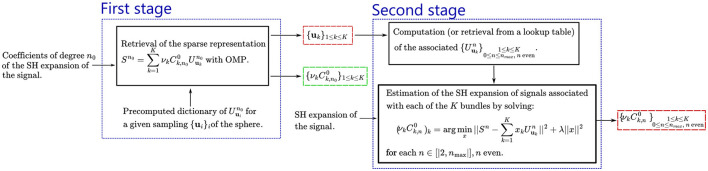 Figure 1
 Figure 2
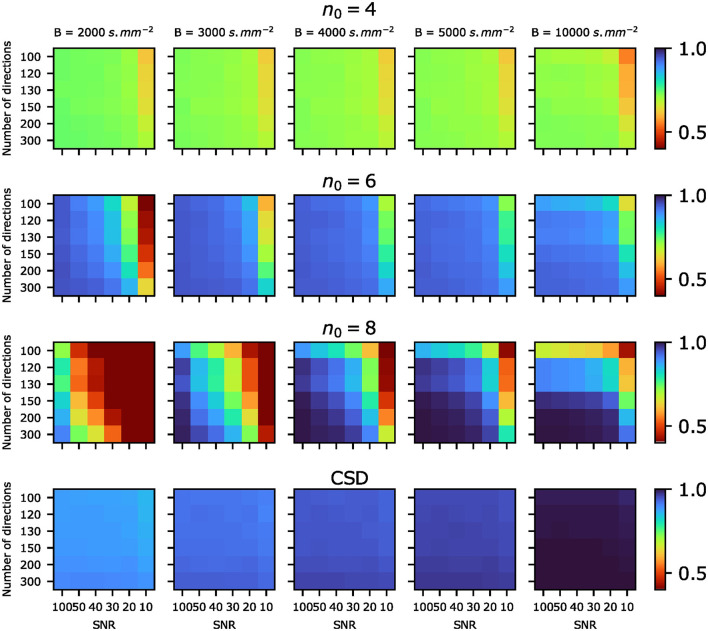 Figure 3
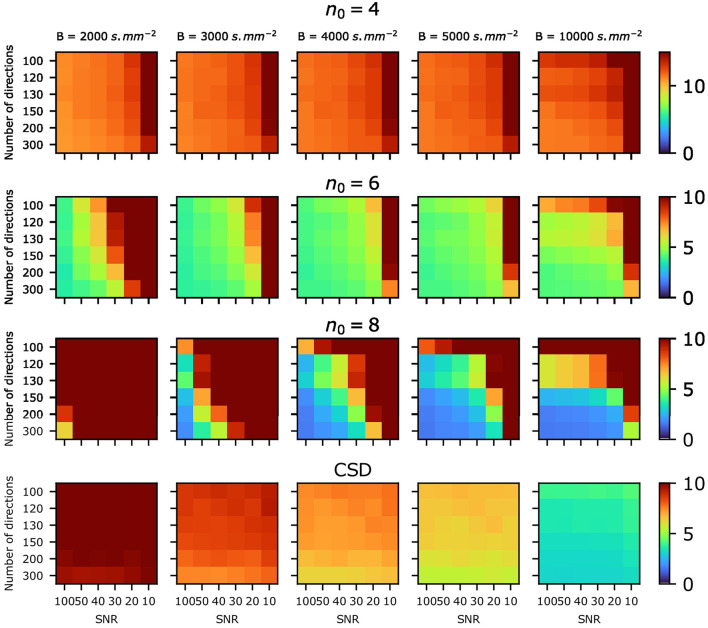 Figure 4
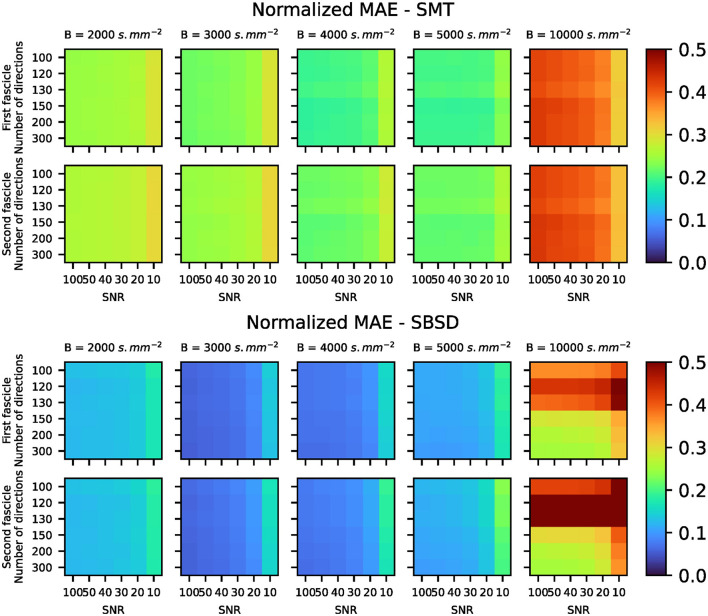 Figure 5
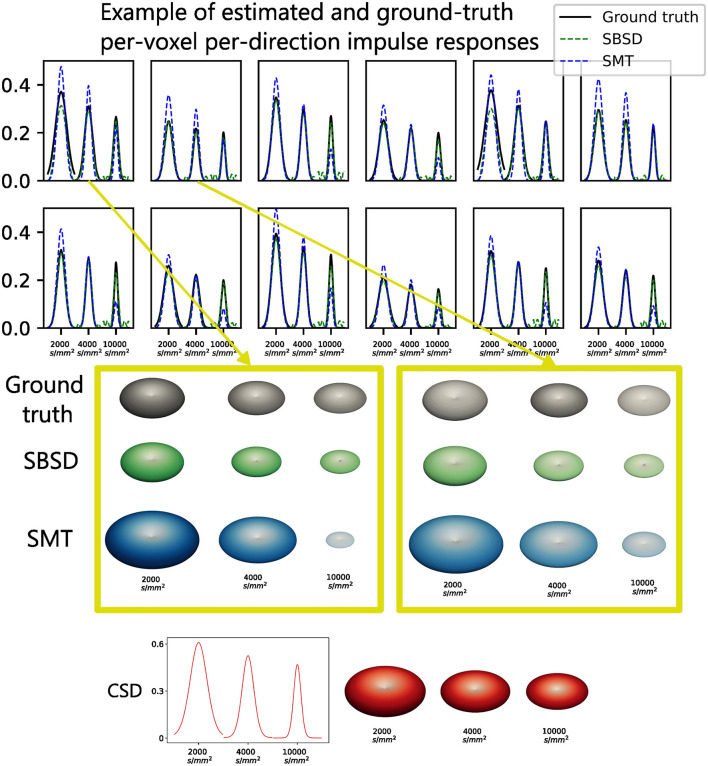 Figure 6
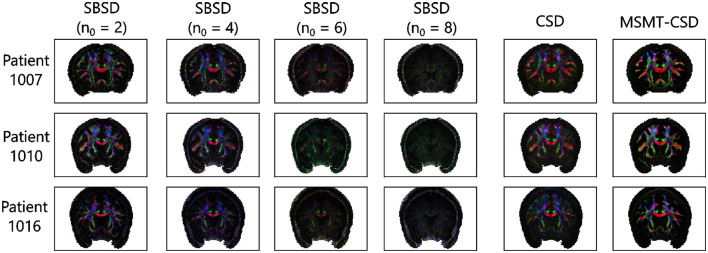 Figure 7
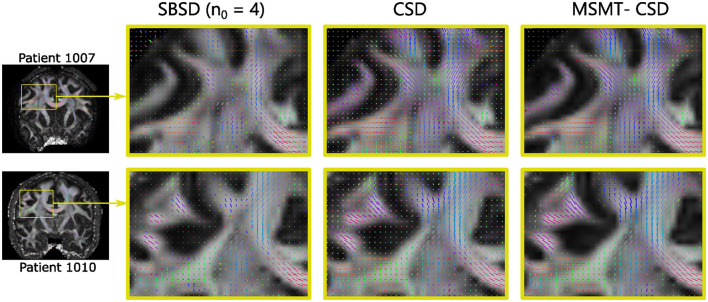 Figure 8
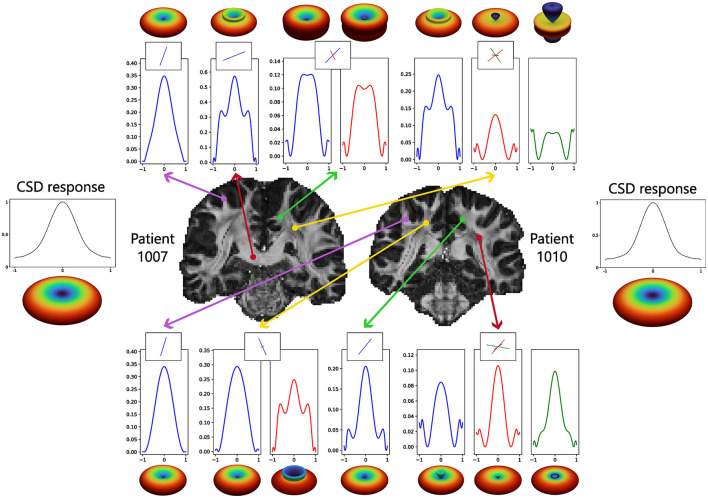 Figure 9
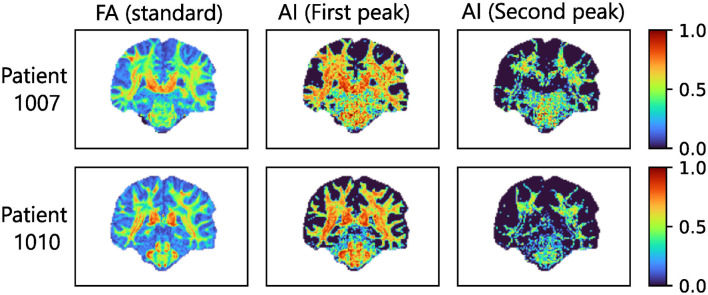 Figure 10
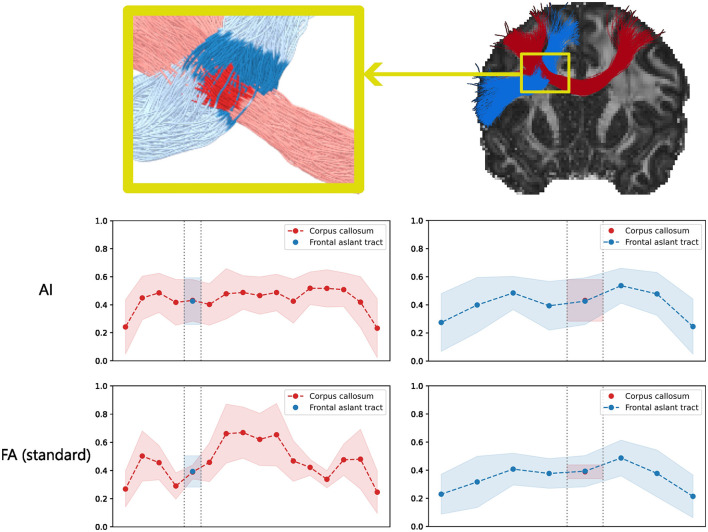 Figure 11
Peer Reviews
No public reviews on file for this paper yet. If you reviewed it on a platform where reviews are public (OpenReview, ICLR, NeurIPS, ICML), you can paste yours below so the community can read it here.
Videos
No videos yet. Explain this paper in a talk, walkthrough, or lecture? Add one.
Taxonomy
TopicsAdvanced Neuroimaging Techniques and Applications · Advanced MRI Techniques and Applications · Fetal and Pediatric Neurological Disorders