Experimental guide wire placement for total shoulder arthroplasty in glenoid models: higher precision for patient-specific aiming guides compared to standard technique without learning curve
Jana F. Schader, Tobias Helfen, Volker Braunstein, Ben Ockert, Florian Haasters, Ralph Hertel, Norbert Südkamp, Stefan Milz, Christoph M. Sprecher

TL;DR
This study shows that patient-specific aiming devices improve the accuracy of guide wire placement in shoulder surgery models, especially for deformed glenoids.
Contribution
The study demonstrates that patient-specific aiming devices outperform standard guides in precision for complex glenoid models without a learning curve.
Findings
PSAD reduced version deviation in B- and C-glenoids from 20.3° to 4.8°.
PSAD showed significantly less inclination deviation (3.7° vs. 20.0°) in standard guide comparisons.
Entry point deviation was consistently under 5.0 mm with PSAD compared to up to 7.7 mm with standard guides.
Abstract
Patient-specific aiming devices (PSAD) may improve precision and accuracy of glenoid component positioning in total shoulder arthroplasty, especially in degenerative glenoids. The aim of this study was to compare precision and accuracy of guide wire positioning into different glenoid models using a PSAD versus a standard guide. Three experienced shoulder surgeons inserted 2.5 mm K-wires into polyurethane cast glenoid models of type Walch A, B and C (in total 180 models). Every surgeon placed guide wires into 10 glenoids of each type with a standard guide by DePuy Synthes in group (I) and with a PSAD in group (II). Deviation from planned version, inclination and entry point was measured, as well as investigation of a possible learning curve. Maximal deviation in version in B- and C-glenoids in (I) was 20.3° versus 4.8° in (II) (p < 0.001) and in inclination was 20.0° in (I) versus 3.7°…
Genes, proteins, chemicals, diseases, species, mutations and cell lines named across the full text — each resolved to its canonical identifier and authoritative record.
Click any figure to enlarge with its caption.
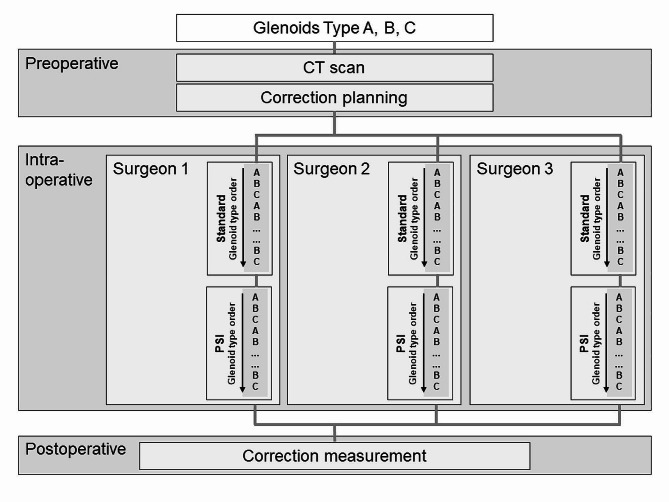 Figure 1
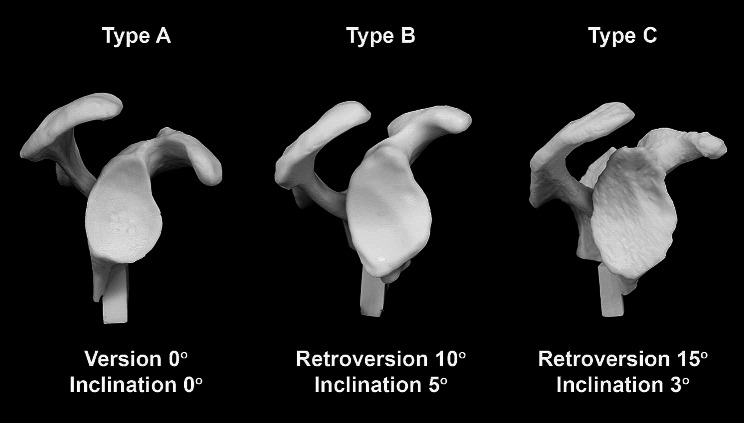 Figure 2
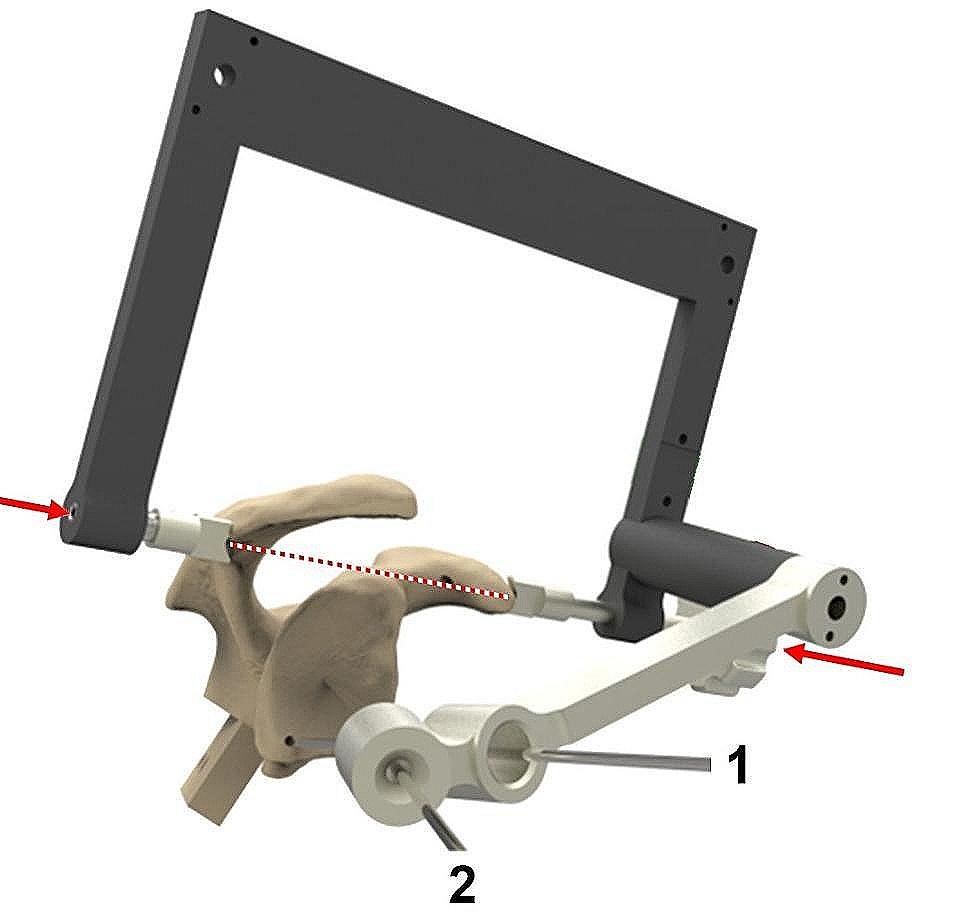 Figure 3
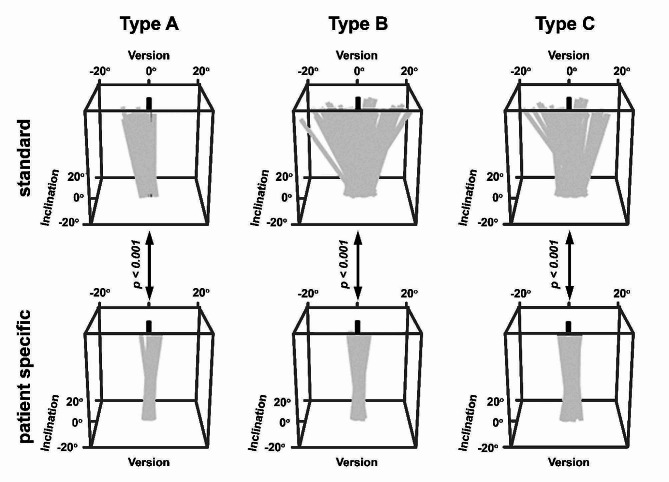 Figure 4
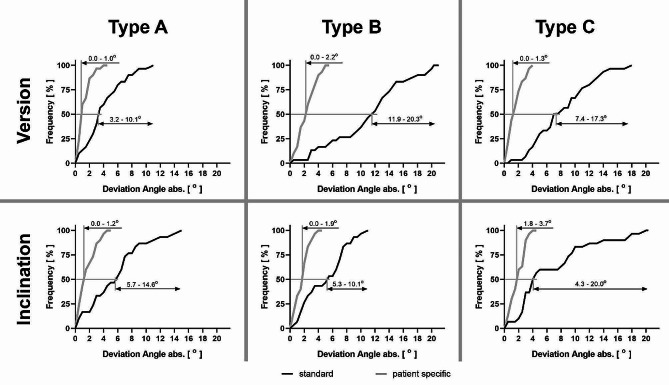 Figure 5
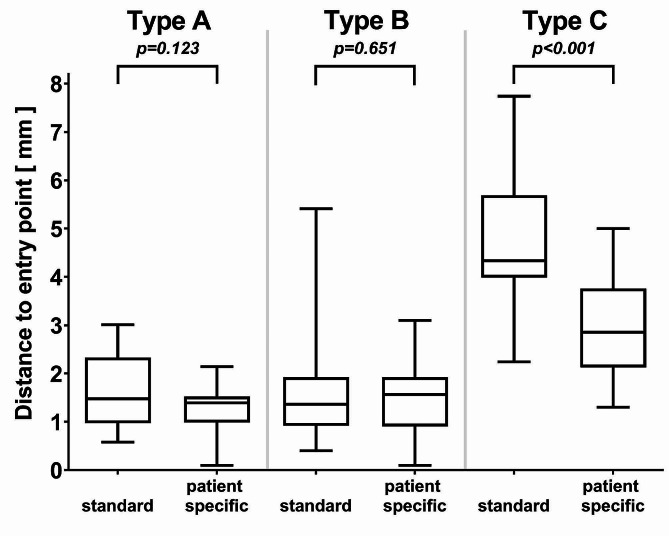 Figure 6
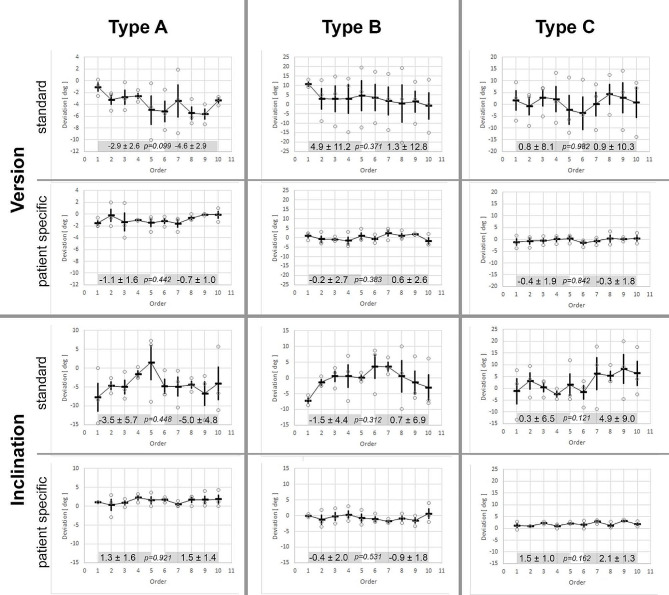 Figure 7
Peer Reviews
No public reviews on file for this paper yet. If you reviewed it on a platform where reviews are public (OpenReview, ICLR, NeurIPS, ICML), you can paste yours below so the community can read it here.
Videos
No videos yet. Explain this paper in a talk, walkthrough, or lecture? Add one.
Taxonomy
TopicsShoulder Injury and Treatment · Shoulder and Clavicle Injuries · Nerve Injury and Rehabilitation