The relationship between body composition and left ventricular performance in women with breast, lymphoma, or sarcoma cancer
Leila Mabudian, Kerry Reding, Ralph B. D’Agostino, Emily M. Heiston, Moriah P. Bellissimo, Kristine Olson, William O. Ntim, Heidi D. Klepin, Emily V. Dressler, Tonya Moore, Jennifer H. Jordan, Nathaniel S. O’Connell, Amy Ladd, Kathryn E. Weaver, Bonnie Ky, Lynne I. Wagner

TL;DR
This study explores how body composition affects heart function in women with cancer undergoing chemotherapy.
Contribution
The study identifies BMI as a key factor in heart function decline during chemotherapy, beyond traditional risk factors.
Findings
Higher BMI, IAT, and SAT were linked to declines in left ventricular ejection fraction (LVEF) after 3 months of treatment.
After adjusting for cardiovascular risk factors, BMI remained the only significant predictor of LVEF decline.
Abdominal fat and traditional risk factors may not fully explain heart function changes in these patients.
Abstract
To understand how body composition in those with elevated body mass index impacts left ventricular function decline during cancer treatment, we determined the association between baseline body mass index (BMI), intra-abdominal adipose tissue (IAT) and subcutaneous adipose tissue (SAT) with baseline to 3-month left ventricular ejection fraction (LVEF) change among women receiving potentially cardiotoxic chemotherapy for breast cancer, lymphoma, or sarcoma. Women underwent potentially cardiotoxic chemotherapy, such as doxorubicin, cyclophosphamide, paclitaxel, and trastuzumab, for treatment of breast cancer, lymphoma, or sarcoma. We obtained magnetic resonance images (MRIs) of body composition and cardiac function prior to treatment, and then a repeat MRI for cardiac function assessment at three months into treatment. Analyses and assessment of abdominal adipose tissue volumes and LVEF…
Genes, proteins, chemicals, diseases, species, mutations and cell lines named across the full text — each resolved to its canonical identifier and authoritative record.
Click any figure to enlarge with its caption.
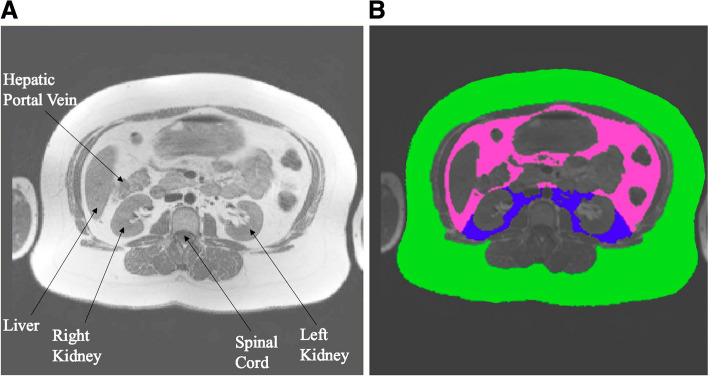 Figure 1
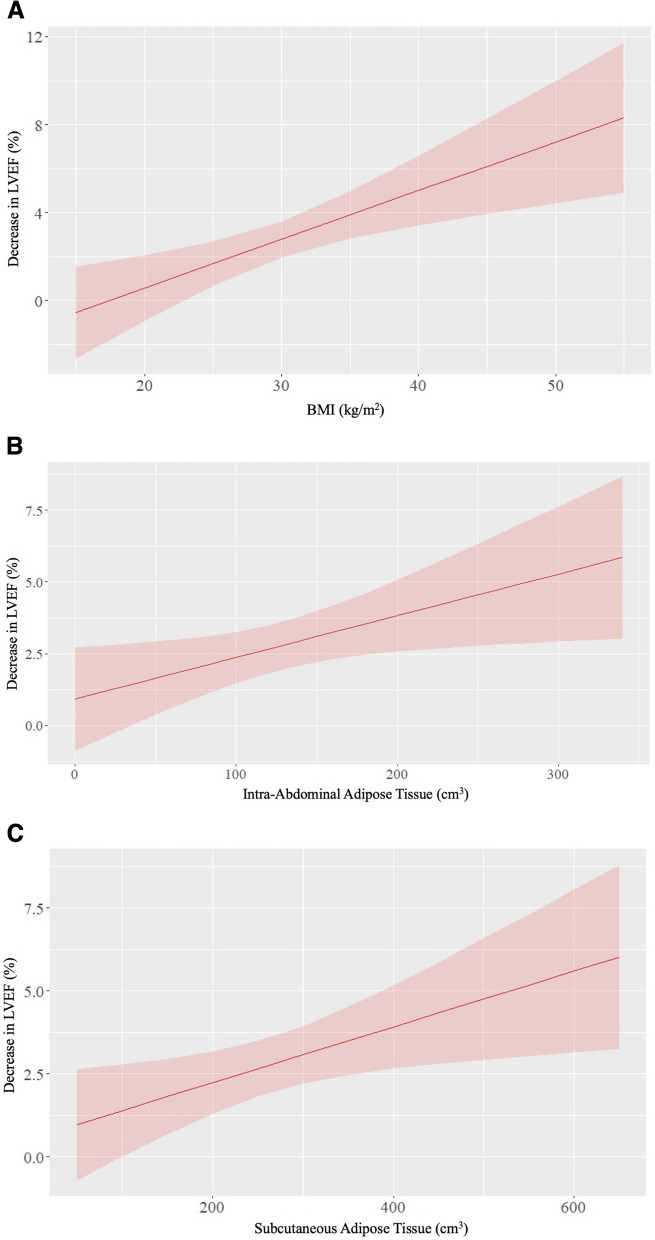 Figure 2
Peer Reviews
No public reviews on file for this paper yet. If you reviewed it on a platform where reviews are public (OpenReview, ICLR, NeurIPS, ICML), you can paste yours below so the community can read it here.
Videos
No videos yet. Explain this paper in a talk, walkthrough, or lecture? Add one.
Taxonomy
TopicsNutrition and Health in Aging · Chemotherapy-induced cardiotoxicity and mitigation · Cancer Risks and Factors