The receipt of health information on neonatal dangers signs during the immediate postpartum period and its determinants in Ethiopia: a multilevel mixed-effects logistic regression analysis of the 2016 Ethiopian demographic health survey report
Aklilu Habte, Aiggan Tamene, Zablon Wale Sewalem

TL;DR
This study examines how often women in Ethiopia receive health information about newborn danger signs after childbirth and finds that it is low, with factors like region and access to prenatal care playing a role.
Contribution
This study provides national-level evidence on the determinants of receiving health information on neonatal danger signs in Ethiopia using a multilevel logistic regression analysis.
Findings
Only 10.70% of women received health information on neonatal danger signs during the immediate postpartum period.
Women in urban regions and those with higher wealth and antenatal care had significantly higher odds of receiving the information.
Nulliparous and primiparous women had lower odds of receiving the information compared to multiparous women.
Abstract
Identification of neonatal danger signs and immediate access to health care are two global efforts aimed at enhancing newborn and child survival by preventing 75% of neonatal deaths. Despite various small-scale studies on women’s awareness of neonatal danger signs in Ethiopia, little is known about the level of receiving health information on those danger signs during the immediate postpartum period at the national level. Hence, this study aimed at assessing the level, and its determinants of the service uptake in Ethiopia. The data for this study was taken from the Ethiopian Demographic and Health Survey (EDHS), which took place from January to June 2016 and covered all administrative regions of Ethiopia. A weighted sample of 7,589.8 women was analyzed using STATA version 16. To account for data clustering, a multivariable multilevel mixed-effect logistic regression analysis was…
Genes, proteins, chemicals, diseases, species, mutations and cell lines named across the full text — each resolved to its canonical identifier and authoritative record.
Click any figure to enlarge with its caption.
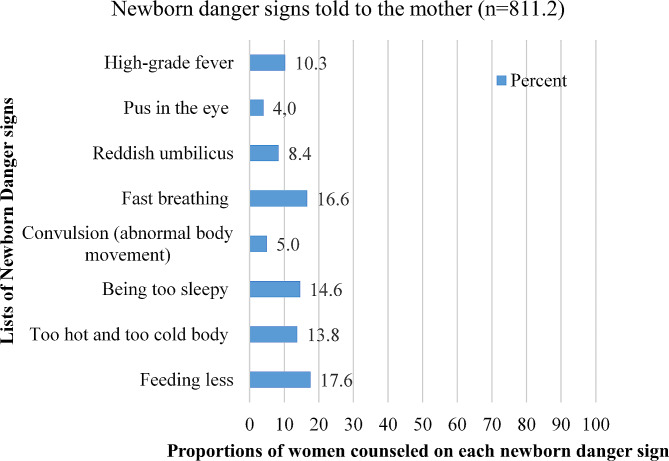 Figure 1
Peer Reviews
No public reviews on file for this paper yet. If you reviewed it on a platform where reviews are public (OpenReview, ICLR, NeurIPS, ICML), you can paste yours below so the community can read it here.
Videos
No videos yet. Explain this paper in a talk, walkthrough, or lecture? Add one.
Taxonomy
TopicsGlobal Maternal and Child Health · Child Nutrition and Water Access · Healthcare Systems and Reforms