Exploring Physiological Differences in Brain Areas Using Statistical Complexity Analysis of BOLD Signals
Catalina Morales-Rojas, Ronney B. Panerai, José Luis Jara

TL;DR
This study uses statistical complexity analysis of BOLD signals to explore physiological differences in brain areas, finding distinct patterns between grey and white matter.
Contribution
The study introduces statistical complexity as a novel method to detect physiological differences in brain tissues using short BOLD signals.
Findings
No differences were found between brain hemispheres using statistical complexity measures.
Differences were detected between grey matter and white matter, showing sensitivity to tissue types.
Statistical complexity proved effective in identifying physiological distinctions in brain areas.
Abstract
The brain is a fundamental organ for the human body to function properly, for which it needs to receive a continuous flow of blood, which explains the existence of control mechanisms that act to maintain this flow as constant as possible in a process known as cerebral autoregulation. One way to obtain information on how the levels of oxygen supplied to the brain vary is through of BOLD (Magnetic Resonance) images, which have the advantage of greater spatial resolution than other forms of measurement, such as transcranial Doppler. However, they do not provide good temporal resolution nor allow for continuous prolonged examination. Thus, it is of great importance to find a method to detect regional differences from short BOLD signals. One of the existing alternatives is complexity measures that can detect changes in the variability and temporal organisation of a signal that could reflect…
Genes, proteins, chemicals, diseases, species, mutations and cell lines named across the full text — each resolved to its canonical identifier and authoritative record.
Click any figure to enlarge with its caption.
 Figure 1
 Figure 2
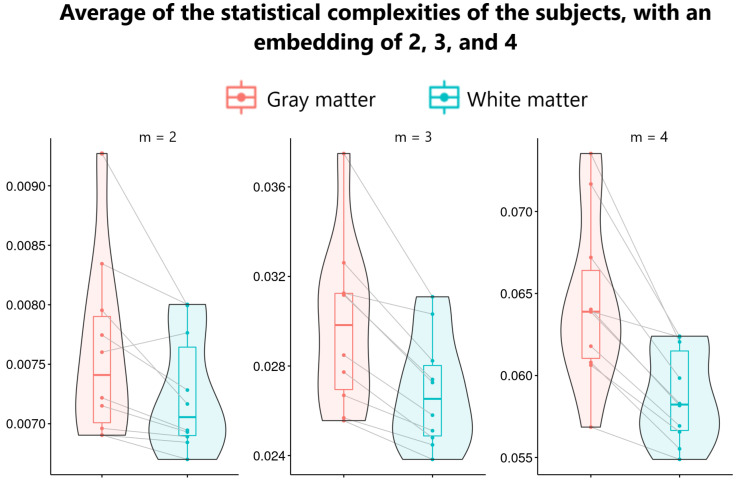 Figure 3
 Figure 4
Peer Reviews
No public reviews on file for this paper yet. If you reviewed it on a platform where reviews are public (OpenReview, ICLR, NeurIPS, ICML), you can paste yours below so the community can read it here.
Videos
No videos yet. Explain this paper in a talk, walkthrough, or lecture? Add one.
Taxonomy
TopicsFunctional Brain Connectivity Studies · Cardiovascular Health and Disease Prevention · Optical Imaging and Spectroscopy Techniques