Investigating the Impact of Humic Acid on Copper Accumulation in Sinonovacula constricta Using a Toxicokinetic–Toxicodynamic Model
Mingyi Cai, Tian Ma, Huayong Que, Bo Shi, Xiande Liu, Yizhou Ke

TL;DR
This study uses a model to show how humic acid affects copper accumulation and toxicity in a bivalve species, highlighting the role of dissolved organic carbon in aquatic ecosystems.
Contribution
The study introduces a toxicokinetic–toxicodynamic model to evaluate the effects of humic acid on copper bioavailability and toxicity in Sinonovacula constricta.
Findings
At low DOC levels, Cu bioavailability decreases due to speciation shifts, reducing Cu accumulation in bivalves.
High DOC levels enable colloidal Cu–HA complexes to enter the bivalve digestive system, but with lower toxicity than water-phase Cu.
Higher DOC concentrations increase bivalve survival, indicating a protective effect against Cu toxicity.
Abstract
In aquatic ecosystems, the interaction between heavy metals and dissolved organic carbon (DOC) plays a pivotal role in modifying the bioavailability of these metals. This study, employing a toxicokinetic–toxicodynamic model, delves into the interactive effects of humic acid (HA), a significant component of DOC, on the bioaccumulation and toxicity of copper (Cu) in the estuarine economic bivalve Sinonovacula constricta. Utilizing the stable isotope 65Cu as a tracer, we evaluated Cu uptake in S. constricta under varied DOC concentrations in a controlled laboratory setting. Our findings reveal that at DOC concentrations below 3.05 mg L−1, the bioavailability of Cu is reduced due to shifts in the speciation distribution of Cu, resulting in decreased bioaccumulation within S. constricta. Conversely, at DOC levels exceeding 3.05 mg L−1, the formation of colloidal Cu–HA complexes allows its…
Genes, proteins, chemicals, diseases, species, mutations and cell lines named across the full text — each resolved to its canonical identifier and authoritative record.
Click any figure to enlarge with its caption.
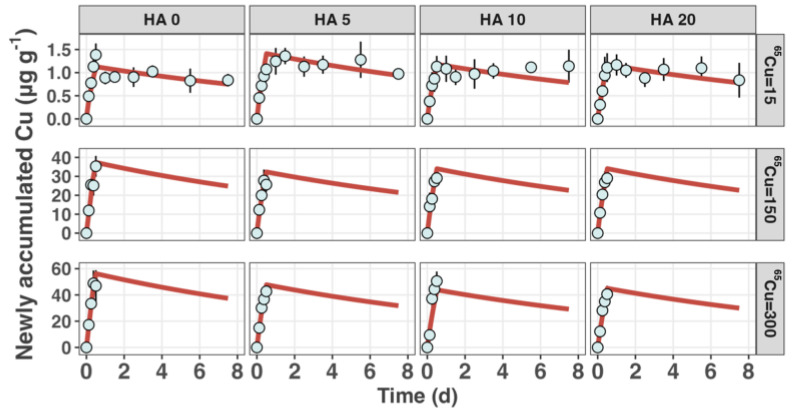 Figure 1
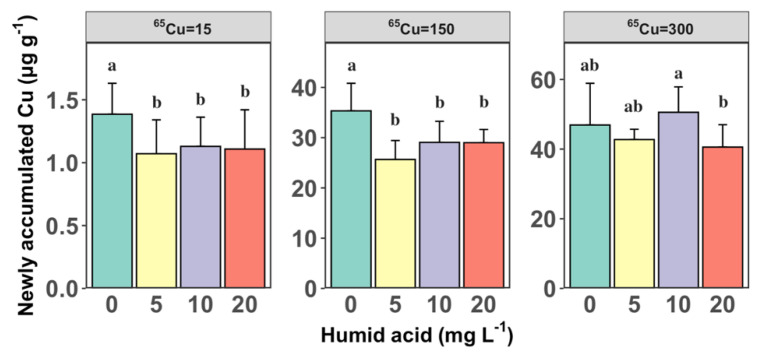 Figure 2
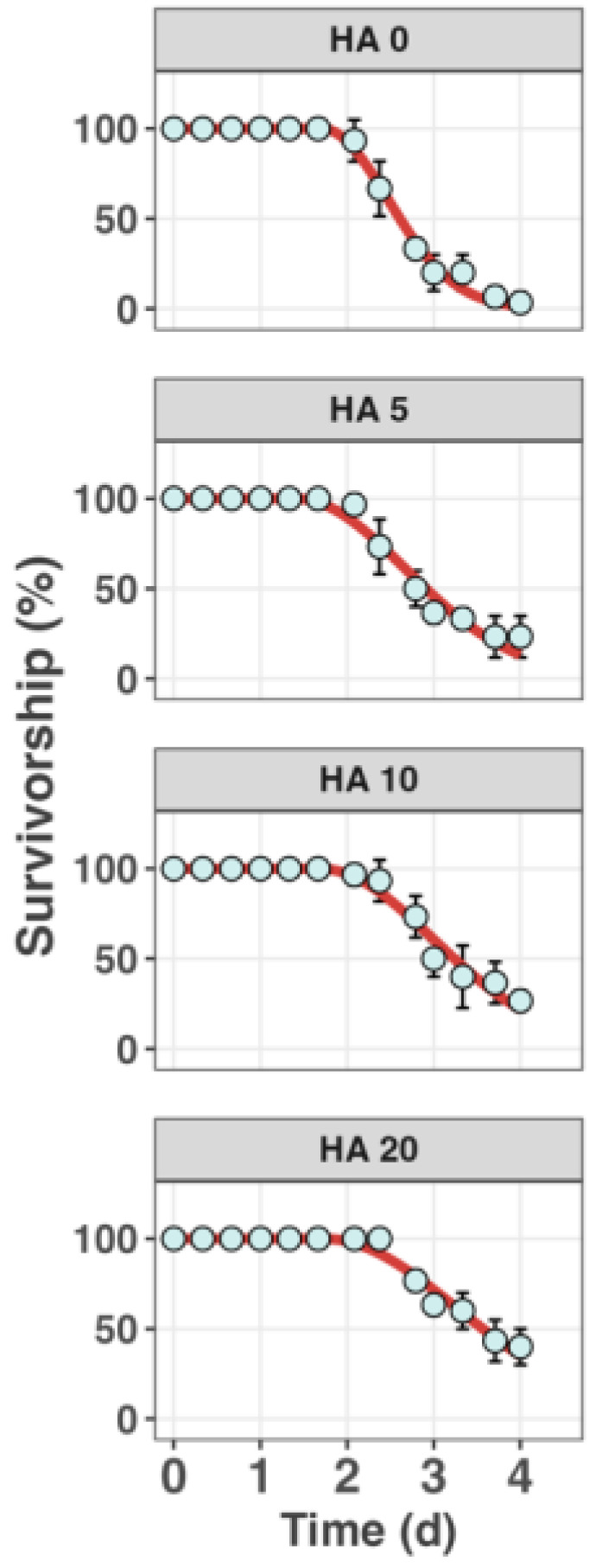 Figure 3
Peer Reviews
No public reviews on file for this paper yet. If you reviewed it on a platform where reviews are public (OpenReview, ICLR, NeurIPS, ICML), you can paste yours below so the community can read it here.
Videos
No videos yet. Explain this paper in a talk, walkthrough, or lecture? Add one.
Taxonomy
TopicsMarine and coastal ecosystems · Environmental Toxicology and Ecotoxicology · Heavy metals in environment