Multipoint Lock-in Detection for Diamond Nitrogen-Vacancy Magnetometry Using DDS-Based Frequency-Shift Keying
Qidi Hu, Luheng Cheng, Yushan Liu, Xinyi Zhu, Yu Tian, Nanyang Xu

TL;DR
This paper introduces a new method for detecting multiple resonant points in diamond nitrogen-vacancy sensors using a single device, enabling efficient and portable quantum sensing.
Contribution
A novel multipoint lock-in detection scheme using DDS-based FSK for NV magnetometry is proposed.
Findings
The method allows frequency hopping up to 1.4 GHz bandwidth.
It can encode an unlimited number of resonant points during sensing.
The technique is experimentally validated for quantum multi-frequency excitation.
Abstract
In recent years, the nitrogen-vacancy (NV) center in diamonds has been demonstrated to be a high-performance multiphysics sensor, where a lock-in amplifier (LIA) is often adopted to monitor photoluminescence changes around the resonance. It is rather complex when multiple resonant points are utilized to realize a vector or temperature-magnetic joint sensing. In this article, we present a novel scheme to realize multipoint lock-in detection with only a single-channel device. This method is based on a direct digital synthesizer (DDS) and frequency-shift keying (FSK) technique, which is capable of freely hopping frequencies with a maximum of 1.4 GHz bandwidth and encoding an unlimited number of resonant points during the sensing process. We demonstrate this method in experiments and show it would be generally useful in quantum multi-frequency excitation applications, especially in the…
Click any figure to enlarge with its caption.
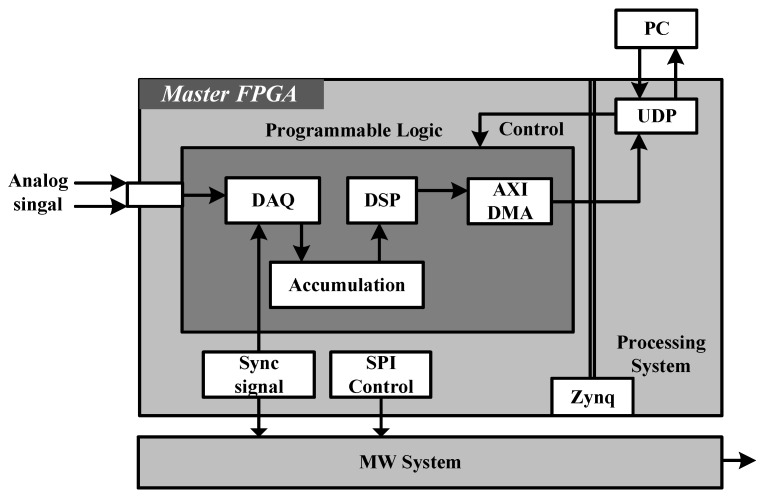 Figure 1
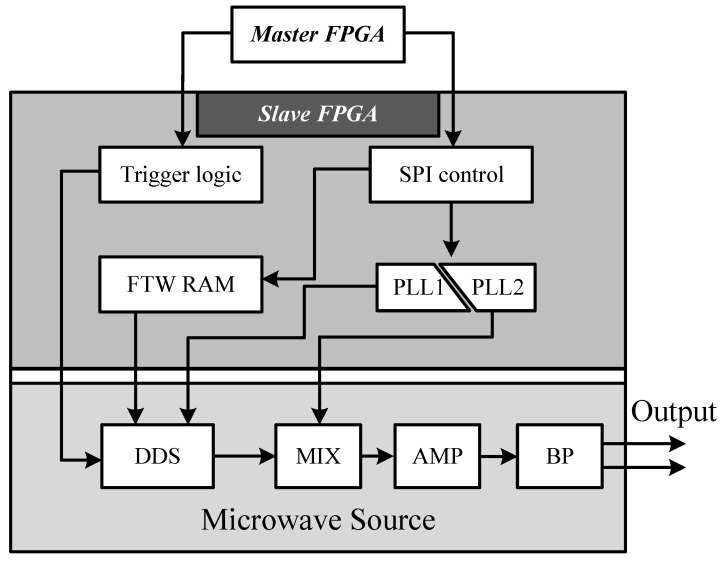 Figure 2
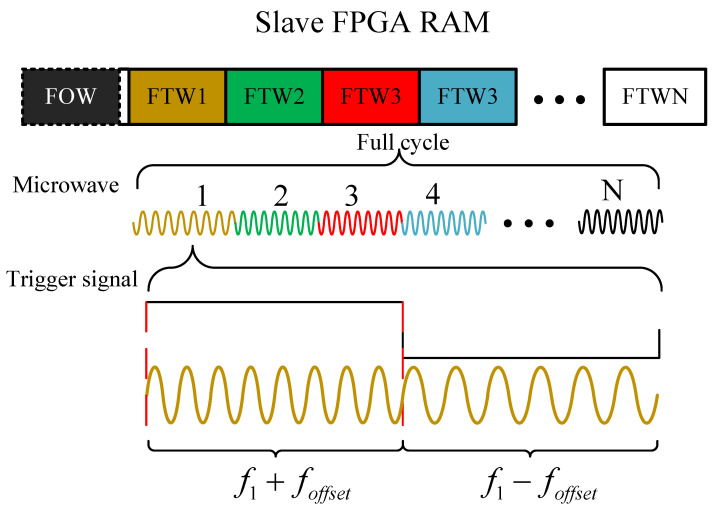 Figure 3
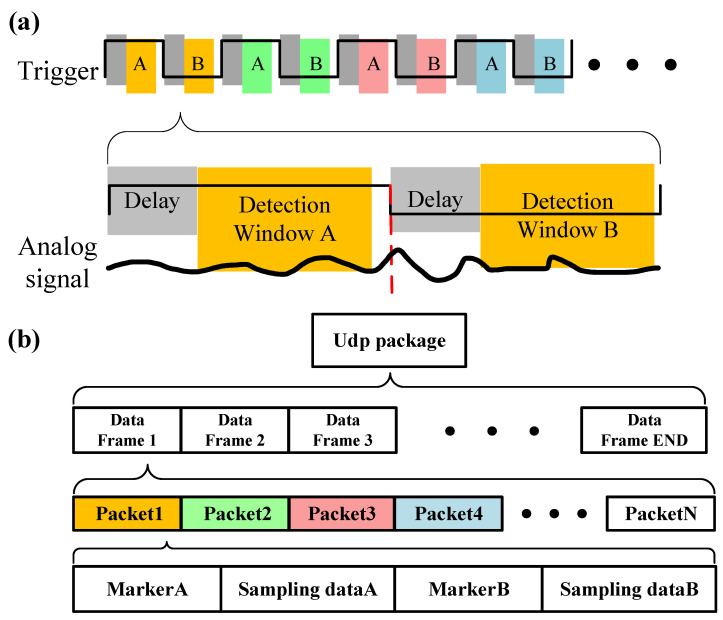 Figure 4
 Figure 5
 Figure 6
 Figure 7
 Figure 8
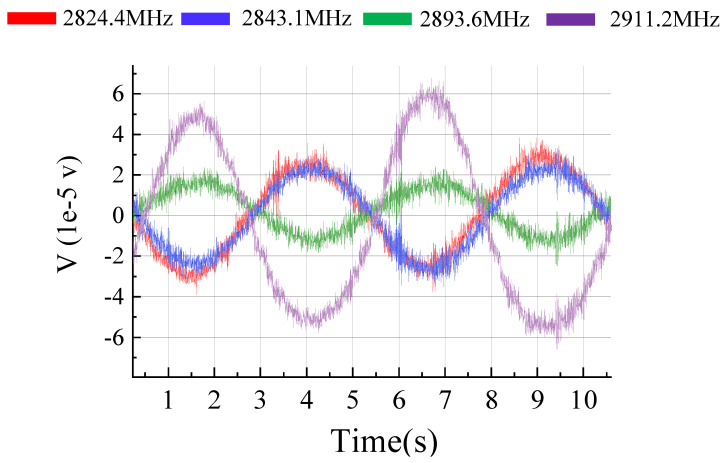 Figure 9
Peer Reviews
No public reviews on file for this paper yet. If you reviewed it on a platform where reviews are public (OpenReview, ICLR, NeurIPS, ICML), you can paste yours below so the community can read it here.
Videos
No videos yet. Explain this paper in a talk, walkthrough, or lecture? Add one.
Taxonomy
TopicsMaritime and Coastal Archaeology · Law, logistics, and international trade