Cross-Cultural Adaptation and Psychometric Properties of the Chinese Version of the Knee Osteoarthritis Fears and Beliefs Questionnaire
Shan Su, Clare Chung-Wah Yu, Gladys Lai-Ying Cheing, Raymond Chi-Keung Chung, Sharon Man-Ha Tsang, Lok-Lok Chan, Tracy Wing-Shan Tang, Winky Cheung, Qunn Jid Lee, Patrick Wai-Hang Kwong

TL;DR
This study adapted and validated a questionnaire to assess fears and beliefs in Chinese patients with knee osteoarthritis, showing it is reliable and valid for use in this population.
Contribution
The study provides a validated Chinese version of the KOFBeQ with strong psychometric properties for assessing fear-avoidance behaviors in knee osteoarthritis patients.
Findings
The adapted questionnaire has three subscales with strong internal consistency (Cronbach’s α = 0.86).
Confirmatory factor analysis confirmed a good model fit and high test–retest reliability (ICC = 0.93).
The tool is effective for assessing fears and beliefs in Chinese knee osteoarthritis patients.
Abstract
This study aimed to adapt and validate the Knee Osteoarthritis Fears and Beliefs Questionnaire (KOFBeQ) for Chinese patients, thereby advancing the understanding of fear-avoidance behaviors. Adopting a cross-sectional design, data were collected for 241 subjects (78.8% women; mean age 68.0 ± 7.8 years) across various healthcare settings in Hong Kong. Exploratory factor analysis resulted in an 11-item questionnaire with three distinct subscales, covering fears and beliefs related to physicians and disease (six items), daily living activities (three items), and sports and leisure activities (two items). The overall Cronbach’s α coefficient was 0.86, indicating strong internal consistency. The questionnaire exhibited favorable convergent validity. Confirmatory factor analyses confirmed a good model fit. Test–retest reliability analysis indicated a high intraclass correlation coefficient…
Genes, proteins, chemicals, diseases, species, mutations and cell lines named across the full text — each resolved to its canonical identifier and authoritative record.
Click any figure to enlarge with its caption.
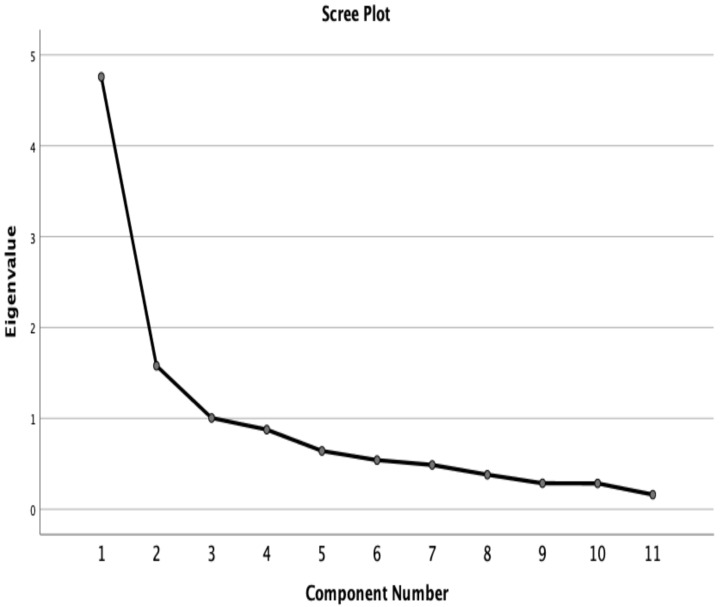 Figure 1
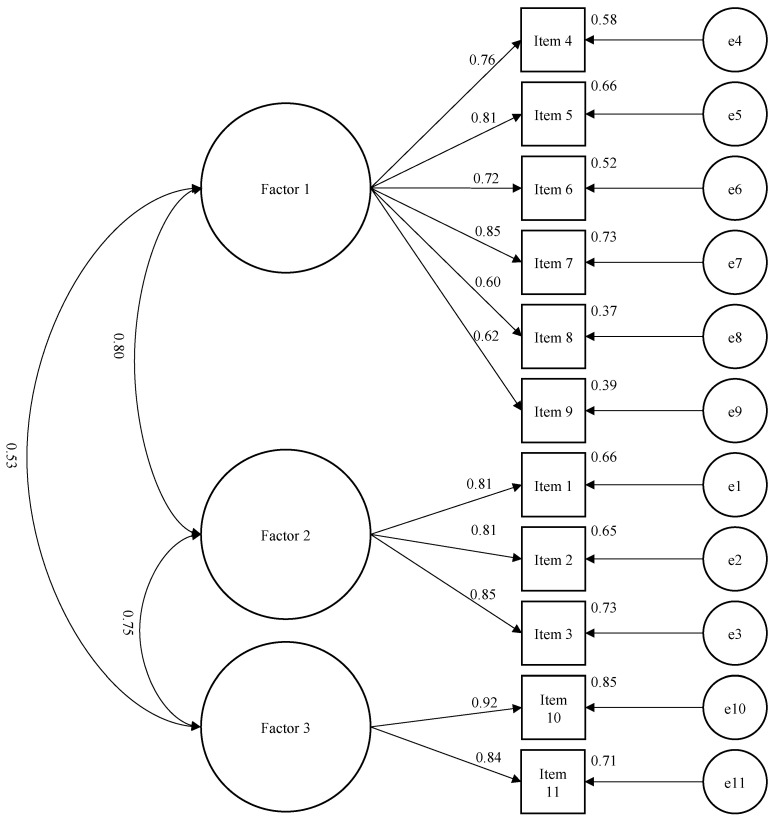 Figure 2
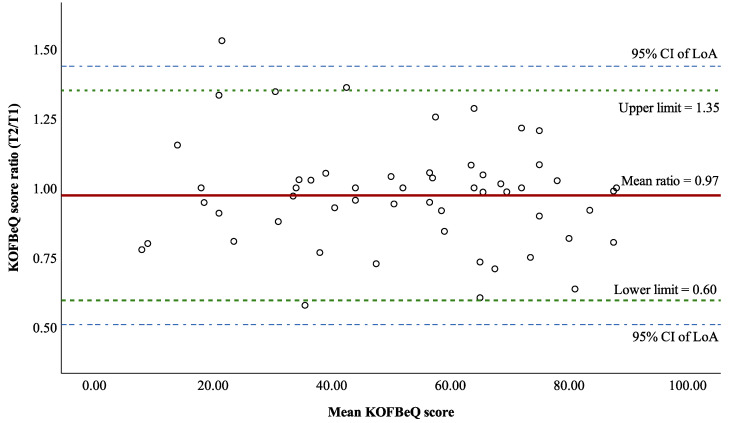 Figure 3
Peer Reviews
No public reviews on file for this paper yet. If you reviewed it on a platform where reviews are public (OpenReview, ICLR, NeurIPS, ICML), you can paste yours below so the community can read it here.
Videos
No videos yet. Explain this paper in a talk, walkthrough, or lecture? Add one.
Taxonomy
TopicsBehavioral Health and Interventions · Motivation and Self-Concept in Sports · Fibromyalgia and Chronic Fatigue Syndrome Research