Serum procalcitonin as a marker of neonatal intrahepatic cholestasis caused by citrin deficiency (NICCD)
Tao Jiang, Wen-Xian Ouyang, Yan-Fang Tan, Ying Yu, Xiao-Mei Qin, Hai-Yan Luo, Lian Tang, Hui Zhang, Shuang-Jie Li

TL;DR
This study shows that procalcitonin (PCT) is a highly effective biomarker for distinguishing neonatal intrahepatic cholestasis caused by citrin deficiency from other liver diseases.
Contribution
The study identifies PCT as a novel and more effective diagnostic marker for NICCD compared to traditional inflammatory markers.
Findings
PCT levels were significantly higher in NICCD patients than in cholestatic hepatitis patients.
PCT showed high sensitivity (90.8%) and specificity (98.3%) for diagnosing NICCD.
PCT levels decreased after NICCD treatment.
Abstract
•PCT was a highly sensitive marker to differentiate NICCD from cholestatic hepatitis patients.•PCT was reduced when NICCD was treated.•PCT is a much more effective marker to differentiate NICCD than the inflammatory markers. PCT was a highly sensitive marker to differentiate NICCD from cholestatic hepatitis patients. PCT was reduced when NICCD was treated. PCT is a much more effective marker to differentiate NICCD than the inflammatory markers. Neonatal Intrahepatic Cholestasis (NICCD), as the early-age stage of Citrin deficiency involving liver dysfunction, lacks efficient diagnostic markers. Procalcitonin (PCT) has been identified as a biomarker for infection as well as various organ damage. This study aimed to explore the potential of PCT as a biomarker for NICCD. In a single-center retrospective case-control study. Serum PCT concentrations before and after treatment of 120…
Genes, proteins, chemicals, diseases, species, mutations and cell lines named across the full text — each resolved to its canonical identifier and authoritative record.
Click any figure to enlarge with its caption.
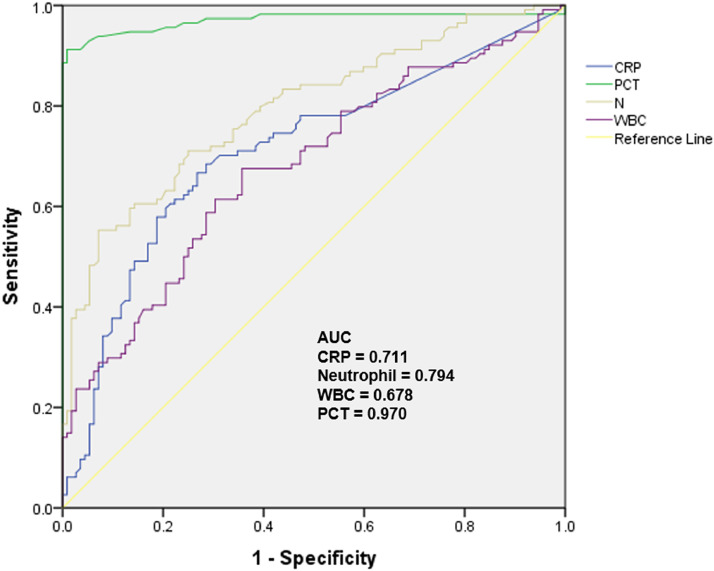 Figure 1
Peer Reviews
No public reviews on file for this paper yet. If you reviewed it on a platform where reviews are public (OpenReview, ICLR, NeurIPS, ICML), you can paste yours below so the community can read it here.
Videos
No videos yet. Explain this paper in a talk, walkthrough, or lecture? Add one.
Taxonomy
TopicsMetabolism and Genetic Disorders · Pediatric Hepatobiliary Diseases and Treatments · Neonatal Health and Biochemistry
Introduction
Citrin deficiency is a recessively inherited metabolic disorder. Functioning as an Aspartate Glutamate Carrier (AGC) expressed mainly in the liver, kidney, and heart, Citrin deficiency may result in a disturbance in urea synthesis and malate-aspartate NADH shuttle, which can lead to various metabolic abnormalities.1 Citrin deficiency exhibits several age-dependent clinical manifestations: in newborn and infant stages, it could cause neonatal cholestasis, defined as conjugated hyperbilirubinemia in the newborn period or shortly thereafter, therefore referred to as Neonatal Intrahepatic Cholestasis (NICCD: OMIM 605,814); in older children, deficiency of citrin could exhibit as Failure to Thrive and Dyslipidemia (FTTDCD); in adults, it causes type II Citrullinemia (CTLN2: OMIM 603,471).2 NICCD was mostly self-resolving with treatments mainly aiming at preventing the progression of cholestasis. Then there usually will be an adaptation/compensation and asymptomatic stage. However, adult-onset CTLN2 may present with hyperammonemia, liver steatosis, and neuropsychiatric symptoms, even leading to death.1 Therefore, timely diagnosis and management of Citrin deficiency is of great importance.
The diagnosis of Citrin deficiency could be initiated from clinical observation such as intrahepatic cholestasis, as well as different biochemical findings (such as plasma ammonia, citrulline, various amino acids, and pancreatic secretory trypsin inhibitor). However, the confirmatory diagnosis has to be dependent on genetic analysis of mutant SLC25A13.3 Missed diagnoses4, 5, 6 and false negative results7 have been often noticed since NICCD symptoms were mostly transient. Therefore, it was very important to find reliable diagnostic indicators.
Procalcitonin (PCT) is a 116-amino acid residue produced in the parafollicular (C cells) of the thyroid gland. It is then converted to calcitonin, a 32-amino acid hormone involved in serum calcium regulation. PCT is a very stable protein in vivo and in vitro, making it feasible as a biomarker in various clinical conditions. In normal conditions, the serum contains negligible procalcitonin.8^,^9 Microbial toxins such as endotoxin and lipopolysaccharide and inflammatory factors can stimulate the synthesis of PCT in multiple tissues, including the liver, kidney, adipocytes, pancreas, colon, and brain.10^,^11 The elevation of PCT levels seems to be specific for bacterial infection while virus infection can reduce PCT, therefore it has been utilized as a sensitive biomarker to evaluate infection severity and to facilitate instruction of antibiotic usage.12^,^13 In recent years, it has been suggested that PCT serum levels may also be elevated in various noninfectious conditions including chronic obstructive pulmonary disease,14 cardiovascular diseases,15 kidney injury.16 In addition, serum PCT levels have also been reported to be correlated with metabolic disorders.17, 18, 19 Previous studies have also suggested that PCT levels were associated with liver disease,20^,^21 especially those accompanied by infection.22
Considering that changes in PCT levels may simultaneously reflect infection, metabolic disorder, as well as liver organ damage, it might be a useful biomarker to facilitate the identification of NICCD. In the study reported here, the authors explored the potential usefulness of PCT to discriminate NICCD from cholestatic hepatitis.
Materials and methods
Study design
In a single-center retrospective case-control study, patients diagnosed with Citrin deficiency (NICCD, study group) and cholestatic hepatitis (as control) between January 2014 to October 2019 at the Department of Hepatopathy Center of Hunan Children's Hospital in Changsha (Hunan Province, China) were reviewed. PCT levels in serum samples were measured and compared between the two groups. The diagnostic value of PCT to discriminate NICCD from cholestatic hepatitis was determined using Receiver Operating Characteristic (ROC) curve analysis. The study was approved by the Ethics Committee at Hunan Children's Hospital (KS2021–59), and informed consent was obtained from each patient. This study follows the STROBE Statement.
Participants
Children diagnosed with Citrin deficiency (NICCD) children were identified through clinical record review. Inclusion criteria were no fever or bacterial infection in the records; had available blood samples reserved before and after treatment. As controls, patients diagnosed with cholestatic hepatitis due to other pathology at the same period, with reserved blood samples available, were randomly selected.
Variables data extraction
Citrin deficiency diagnosis was made based on the clinical manifestations and genetic analysis of SLC25A13 mutations.23 The diagnosis was reconfirmed according to clinical records during data extraction.
Other extracted baseline data at diagnosis included demographics (gender, age, height, weight), and blood and laboratory test results (white blood cell count, hemoglobin, liver and renal function, myocardial enzyme, electrolyte, glucose, lipids, lactic acid, ammonia and coagulation factors).
Treatments of NICCD patients were also extracted from the records. All diagnosed NICCD were fed with Medium Chain Triglycerides (MCT) milk and lactose-free milk and received treatment with Diisopropylamino Dichloroacetate (20 mg ivgtt qd, 5‒7d), Ursodeoxycholic acid (10‒20 mg/kg qd 5‒7d) and probiotics.
PCT measurement
The PCT level was determined using electrochemiluminescence (reagent: Elecsys BRAHMS PCT, instrument: electrochemiluminescence automatic immune analyzer, (cobas e 411, Japan). A value of 0∼0.05 ng/mL was considered as normal.
Statistical analysis
All statistical analyses were performed using the SPSS Statistics software (version 23.0, IBM, Armonk, NY, USA) and R software (version 4.2.3). The normality of continuous variables was assessed using the Kolmogorov-Smirnov test. Normally distributed data were presented as mean ± standard deviation and differences between groups were compared using t-tests. Skewed data are presented as median (25th to 75th percentiles), and differences between groups were compared using the Mann-Whitney U test. Categorical data are presented as numbers (percentages), with differences between groups compared using Chi-Square, or Fisher's exact test when one or more cells had an expected frequency of five or less. Due to the skewed distribution of data, a paired Wilcoxon signed-rank test was used to compare PCT levels pre- and post- treatment. The linear regression model of Spearman's correlation analysis was used to determine the association between PCT and other test parameters. Receiver Operating Characteristic (ROC) curve analysis was employed to determine the potential diagnostic value of PCT to discriminate NICCD from cholestatic hepatitis. The cutoff was determined by calculating the highest Youden index (sensitivity+specificity^−1^). Statistical significance was determined by a p-value < 0.05.
Results
Participants
The 120 NICCD patients included were identified with seven mutations: (I) 851del4; (II) IVS11 +1G>A; (III) 1638ins23; (IV) S225X; (V) IVS13 +1G>A; (VIII) E601X; and (XIX) IVS16ins3kb. Combinations of these mutations yielded the following 11 genotypes: I/I (n = 4), I/II (n = 2), I/IV (n = 2), I/XIX (n = 1), II/II (n = 1), II/IV (n = 2), II/V (n = 3), II/VIII (n = 1), III/XIX (n = 1), IV/XIX (n = 2), and V/V (n = 1), respectively. The allele frequencies were I (32.5 %), II (25.0 %), III (2.5 %), IV (15.0 %), V (12.5 %), VIII (2.5 %), and XIX (10.0 %). Baseline characteristics are presented in Table 1. The majority (108) of the children were aged 1‒4 months and the other 12 were aged 4‒7 months. There were 75 males and 45 females. Three of them had liver cirrhosis and one case had liver failure.Table 1. Characteristics and biochemical indices.Table 1. VariablesNICCD (n = 120)Control (n = 120)p-valueZ/χ2Age: (year), Median (P25, P75)2 (1.71, 2.72)1.89 (1.28, 2.20)0.0100a3.40Gender:(% male)75 (62.5 %)79 (65.8 %)0.6861b0.29Clinical patterns:Jaundice; n (%)100 %100 %‒‒Clay-colored stools n (%)7 (5.83 %)3 (2.5 %)0.1964b1.67Diarrhea; n (%)10 (8.33 %)4 (3.33 %)0.0980b2.73Selected clinical parametersWbc(10^^9^/L) Median (P25, P75)12.58 (10.31, 15.28)10.70 (9.01, 12.66)0.0000c−4.453Leukocytes (10^^9^/L) Median (P25, P75)7.02 (5.21, 9.15)6.76 (5.38, 8.71)0.6330 c−4.77Neutrophils (10^9/L) Median (P25, P75)3.81 (2.69, 5.09)2.38 (1.77, 2.95)0.0000c−7.891Hemoglobin (g/L) Median (P25, P75)100 (88, 109)102 (94, 116)0.0318c−2.151Platelet(10^^9^/L) Median (P25, P75)466 (381, 603.25)412(338, 529)0.0038c−3.016C reactive protein (mg/L), Median (P25, P75)2.05 (0.63, 3.56)0.57 (0.5, 1.4)0.0000c−5.529Total bilirubin (μmoL/L), Median (P25, P75)171.75 (122.61, 217.29)135.4 (87.95,174.5)0.0000c−4.309Conjugated bilirubin (μmoL/L), Median (P25, P75)73.87 (54.59, 98.59)86.65 (58.45, 120.28)0.0567c−1.192Indirect bilirubin (μmoL/L), Median (P25, P75)90.82 (56.38, 120.14)37.55 (25.23, 57.18)0.0000c−8.282Albumin (g/L), Median (P25, P75)30.14 (27.28, 33.37)37.5 (35.63, 39.6)0.0000c−11.002Globin (g/L), Median (P25, P75)15.8 (13.53, 18.05)17.15 (15.1, 19.28)0.0000c−3.543Glutamic-pyruvic transaminase (IU/L), Median (P25, P75)42.05 (31.3, 56.55)103.6 (64.25, 170.75)0.0000c−8.929Glutamic-Oxaloacetic transaminase (IU/L), Median (P25, P75)96.63 (71.27, 134.98)132.45 (90.13, 202.18)0.0000c−3.656Total bile acid (IU/L), Median (P25, P75)174.05 (125.79, 208.38)106.4 (82.7, 136.15)0.0000c−7.770Gamma-glutamyl transferase (μmoL/L), Median (P25, P75)176 (145.39,225.85)124 (85, 221.05)0.0000c−3.586Glycerin dilaurate (mmoL/L), Median (P25, P75)1.48 (1.2, 2)1.63 (1.01, 2.09)0.9932c−0.009Cholesterol (mmoL/L), Median (P25, P75)4.34 (3.59, 5.13)3.7 (3.02, 4.41)0.0000c−4.109Blood sugar(mmoL/L), Median (P25, P75)4.12 (2.92, 5.02)4.64 (3.72, 5.13)0.0065c−2.767Blood lactic acid(mmoL/L), Median (P25, P75)4.43 (3.14, 5.48)3.73 (2.83, 4.6)0.0010c−3.383Blood ammonia (μmoL/L), Median (P25, P75)81.2 (51, 103)54.3 (39.6, 75.93)0.0000c−5.237Prothrombin time(sec), Median (P25, P75)16.15 (14.73, 18.68)12.9 (12.3, 13.5)0.0000c−11.530International normalized ratio (INR), Median (P25, P75)1.3 (1.16, 1.56)0.98 (0.93, 1.04)0.0000c−11.522APTT (sec), Median (P25, P75)47.85 (42.98, 54)43.6 (40.5, 46.78)0.0000c−5.332Plasma fibrinogen (mg/dL), Median (P25, P75)119.75 (100, 153)284 (254.5, 337.25)0.0000c−12.427PCT (ng/ml), Median (P25, P75)1.51 (0.88, 2.40)0.21 (0.14, 0.30)0.0000c−12.573WBC, White Blood Cells; APTT, Activated Partial Thromboplastin Time.aMann-Whitney U test.bChi-Square test.cMann-Whitney U test.
The same number of control patients were included. Comparisons of baseline characteristics between the two groups of patients found statistically significant differences in various blood test parameters. Noticeable larger differences were noticed in indirect bilirubin, glutamic-pyruvic transaminase, and plasma fibrinogen, along with explicit differences in neutrophils, CRP, bile acid, Gamma-glutamyl transferase, lactic acid, and ammonia. The other differences appeared to be small, although with statistical significance. These results indicated that the patients in the two disease groups might had different levels of liver damage, metabolism, as well as inflammation.
Serum PCT levels in NICCD and control groups
As shown in Table 1, the median PCT level in the NICCD group (1.51 ng/mL) was significantly (p ˂ 0.0001) higher than that in the control group (0.26 ng/mL). In addition, In 69 patients with both pre- and post-treatment blood samples were available. Significant decreases of serum PCT levels after treatment were detected compared to pre-treatment (Table 2). These results indicated a significant correlation between serum PCT level with NICCD.Table 2. Comparison between pre- and post-treatment PCT levels.Table 2. VatablePre-treatmentPost-treatmentp-valueZ-valueProcalcitonin(ng/mL), Median (P25, P75)1.77 (1.23, 2.82)0.37 (0.25, 0.72)0.0000a−7.323aPaired Wilcoxon signed-rank test.
Diagnostic value of PCT to discriminate NICCD from cholestatic hepatitis
Results of ROC analysis (Fig. 1) showed that PCT had significant diagnostic value for NICCD, with AUC = 0.968 (95 % CI 0.944, 0.996), sensitivity = 90.8 %, specificity = 98.3 %, and a cut-off of 0.495 ng/mL. On the other hand, inflammatory markers CRP, neutrophil, and WBC, although also reached significances for diagnostic value, were significantly less effective, with AUC of 0.711 (95 % CI 0.643, 0.780), 0.794 (95 % CI 0.736, 0.862), and 0.678 (95 % CI 0.609, 0.748), respectively.Fig. 1. Receiver-Operating Characteristic (ROC) curve analysis of diagnostic value of serum PCT level and inflammatory markers for differentiating NICCD from cholestatic hepatitis.Fig. 1
Correlation between PCT and other serum markers
To explore the potential mechanism that connects NICCD to PCT elevation. The authors tested the correlation between PCT with various serum markers of inflammation, organ functions, metabolism and coagulation. For primary exploration of the potential correlation between these quantitative data, a linear Spearman model analysis was used. As shown in Table 3, the results showed that PCT had only a weakly positive correlation with neutrophils (r = 0.223), CRP (r = 0.229), and conjugated bilirubin (r = 0.191) but no correlation with other variables. These results indicated that the changes in PCT in NICCD may not be explained by a single mechanism such as infection, organ damage, or metallic disorder, but rather reflect a combination of multiple mechanisms.Table 3. Correlation analysis between serum PCT levels and other serum markers in NICCD patients.Table 3. Biomarkersr valuep-valueWBC (10^9/L)0.0980.2896Leukocytes (10^9/L)0.0340.7134Neutrophils (10^9/L)0.2120.0202Hemoglobin (g/L)−0.0980.2888Platelet (10^9)0.1180.1981C reactive protein (mg/L)0.2480.0064Total bilirubin (μmoL/L)0.1430.1182Conjugated bilirubin (μmoL/L)0.1910.0362*Indirect bilirubin (μmoL/L)0.090.3273Albumin (g/L)0.010.9189Globin (g/L)−0.640.4888Glutamic-pyruvic transaminase (IU/L)−0.0650.4797Glutamic-oxaloacetic transaminase (IU/L)−0.1120.2253Total bile acid (IU/L)−0.080.3853Gamma-glutamyl transferase (μmoL/L)−0.0480.6068Glycerin dilaurate (mmoL/L)−0.0380.6786Cholesterol (mmoL/L)−0.090.3284Blood sugar (mmoL/L)−0.0850.3573Blood lactic acid (mmoL/L)−0.0050.9532bBlood ammonia (μmoL/L)−0.1260.1708Prothrombin time (sec)0.0630.4965International normalized ratio (INR)0.0530.5676APTT (sec)−0.0710.4391Plasma fibrinogen (mg/dL)−0.0830.3675WBC, White Blood Cells; APTT, Activated Partial Thromboplastin Time.
Discussion
PCT as a biochemical marker has been widely explored in the diagnosis and prognosis of various diseases. To our knowledge, this is the first study to examine the relationship between PCT and the NICCD. The results showed that PCT was a highly sensitive marker to differentiate NICCD from cholestatic hepatitis patients and that PCT was reduced when NICCD was treated.
In this study, the authors found that a cut-off value of 0.495 ng/mL performed well (with a sensitivity of 90.8 % and specificity of 98.3 %) in the diagnosis of NICCD. Although PCT is a widely used biomarker for the diagnosis of bacterial infections. Studies did not show such high sensitivity and specificity in the diagnosis of liver disease with bacterial infection. The previous study^22^ has found that when used for sepsis from alcoholic hepatitis, at a cut-off value of 0.57 ng/mL, PCT had a sensitivity of 79 % and a specificity of 82 %. Moreover, when used as a predictor of spontaneous bacterial peritonitis SBP, at a cut-off value of > 0.78 ng/mL, was with only a sensitivity of 77.5 % and specificity of 60.4 %. These results indicated that PCT can reflect liver dysfunction in Citrin deficiency with a very high specificity.
The NICCD patients in this study were with no concomitant infection records. Although the inflammatory markers indicate that there might be infections in both NICCD and control patients, it may also be from non-infection causes. Liver injury results in the death of a vast amount of liver cells and the release of Damage-Associated Molecular Patterns (DAMPs), which cause systemic inflammation or other changes in immune responses,24^,^25 including the production of various inflammatory mediators (e.g., the Tumor Necrosis Factor [TNF] and Interleukin [IL]−1β, IL-6, IL-8, IL-10).26^,^27 It has been suggested that systemic inflammation and significant increases in IL-1β and TNF-a can induce the expression of PCT.28^,^29 Therefore, the correlations between PCT and levels of different inflammatory factors were explored. Only weak positive correlations between PCT with neutrophils and CRP were found in NICCD patients from this study. In addition, the PCT levels showed no clear trend of changes in 3 patients with cirrhosis and 1 patient with liver failure (2.3 ng/mL, 0.37 ng/mL, 1.57 ng/mL, and 0.75 ng/mL respectively). Thus, the observed changes in PCT levels in NICCD patients could not be simply explained by systematic inflammation or metabolism changes. The comparisons among ROC curves also indicated that PCT is a much more effective marker to differentiate NICCD than the inflammatory markers.
PCT was originally identified and considered as a biomarker for bacteria but not viral infection.30 The exact cause that induces PCR release remains to be elusive. The biomarker has been suggested to be indicative in different organ damage detection,14^,^15^,^21 while not a simple reflection of inflammatory injury.30 NICCD, or Citrin deficiency is a metabolic disorder that mainly causes disturbance in urea synthesis and malate-aspartate NADH shuttle function, which may result in a disorder in energy metabolism.1^,^31 Whether the specificity of PCT in detecting NICCD is an indicator of organ damage, or it may also reflect metabolic changes, will be an interesting question for further analysis.
The study is subjected to certain limitations. This was a single-center study with a small sample size. Therefore, the interpretation of the results in this study is limited. Studies with larger sizes and more diverse samples are needed in the future to verify the reliability of our conclusions.
Conclusions
The serum concentration of PCT was increased in Citrin deficiency patients. PCT greater than 0.495 ng/mL may be used to initially differentiate NICCD from cholestatic hepatitis. The levels of PCT decreased significantly after treatment. Further research is warranted in the future to identify the procalcitonin levels distinguishing NICCD from various other types of hepatic cholestasis.
This work was supported by the 2019 National Medical Service and Support Capacity Improvement Project (Medical and Health Institution Capacity Building), and the Clinical Research (Translation) Center of Hunan Children's Hospital.
CRediT authorship contribution statement
Tao Jiang: Conceptualization, Writing – original draft, Data curation. Wen-Xian Ouyang: Writing – review & editing. Yan-Fang Tan: Data curation. Ying Yu: Resources. Xiao-Mei Qin: Resources. Hai-Yan Luo: Writing – review & editing. Lian Tang: Resources. Hui Zhang: Resources. Shuang-Jie Li: Investigation, Methodology, Writing – review & editing.
Conflicts of interest
The authors declare no conflicts of interest.
The reference list from the paper itself. Each links out to its DOI / PubMed record.
- 1Okano Y.Ohura T.Sakamoto O.Inui A.Current treatment for citrin deficiency during NICCD and adaptation/compensation stages: strategy to prevent CTLN 2Mol Genet Metab 127320191751833125543610.1016/j.ymgme.2019.06.004 · doi ↗ · pubmed ↗
- 2Kobayashi K.Sinasac D.S.Iijima M.Boright A.P.Begum L.Lee J.R.The gene mutated in adult-onset type II citrullinaemia encodes a putative mitochondrial carrier protein Nat Genet 22219991591631036925710.1038/9667 · doi ↗ · pubmed ↗
- 3in Gene Reviews®Seattle (WA): university of Washington Adam M.P.Seattle (WA): university of Washington Seattle Copyright© 1993-20211993 Gene Reviews is a registered trademark of the University of Washington, Seattle. All rights reserved
- 4Tokuhara D.Iijima M.Tamamori A.Ohura T.Takaya J.Maisawa S.Novel diagnostic approach to citrin deficiency: analysis of citrin protein in lymphocytes Mol Genet Metab 901200730361709274910.1016/j.ymgme.2006.09.009 · doi ↗ · pubmed ↗
- 5Chen H.W.Chen H.L.Ni Y.H.Lee N.C.Chien Y.H.Hwu W.L.Chubby face and the biochemical parameters for the early diagnosis of neonatal intrahepatic cholestasis caused by citrin deficiency J Pediatr Gastroenterol Nutr 47220081871921866487110.1097/MPG.0b 013e 318162 d 96d · doi ↗ · pubmed ↗
- 6Shigetomi H.Tanaka T.Nagao M.Tsutsumi H Early detection and diagnosis of neonatal intrahepatic cholestasis caused by citrin deficiency missed by newborn screening using tandem mass spectrometry Int J Neonatal Screen 41201853307293110.3390/ijns 4010005 PMC 7548893 · doi ↗ · pubmed ↗
- 7Lipiński P.Jurkiewicz D.Ciara E.Płoski R.Więcek S.Bogdańska A.Neonatal cholestasis due to citrin deficiency: diagnostic pitfalls Acta Biochim Pol 67220202252283243667310.18388/abp.2020_5202 · doi ↗ · pubmed ↗
- 8Shinya S.Sasaki T.Yamashita Y.Kato D.Yamashita K.Nakashima R.Procalcitonin as a useful biomarker for determining the need to perform emergency biliary drainage in cases of acute cholangitis J Hepatobiliary Pancreat Sci 211020147777852498506710.1002/jhbp.132 · doi ↗ · pubmed ↗