Detection of novel PPP1R1B::STARD3 fusion transcript in acute myeloid leukemia: a case report
Elahe Dehghani Firouzabadi, Mohammed Allami, Eman Jassim Mohammed, Hossein Barzegar, Mahtab Dastpak, Reza Alemohammad, Vahid Moghimi, Reihaneh Alsadat Mahmoudian, Fatemeh Nasrabadi, Nahid Arghiani, Yohei Kitamura, Seyed Abolfazl Hosseini, Ali Ghasemi, Moein Farshchian

TL;DR
A new fusion gene, PPP1R1B::STARD3, was found in a child with acute myeloid leukemia, suggesting a potential role in cancer progression and treatment.
Contribution
This is the first report of the PPP1R1B::STARD3 fusion transcript in acute myeloid leukemia.
Findings
PPP1R1B::STARD3 fusion transcript was detected in an AML patient using RNA sequencing.
The fusion transcript may influence cholesterol metabolism and cancer progression via lipid metabolite alterations.
The PPP1R1B promoter may drive the expression of the PPP1R1B::STARD3 fusion transcript.
Abstract
Acute myeloid leukemia (AML) is the second most common type of leukemia in children. Although prognostic and diagnostic tests of AML patients have improved, there is still a great demand for new reliable clinical biomarkers for AML. Read-through fusion transcripts (RTFTs) are complex transcripts of adjacent genes whose molecular mechanisms are poorly understood. This is the first report of the presence of the PPP1R1B::STARD3 fusion transcript in an AML patient. Here, we investigated the presence of PPP1R1B::STARD3 RTFT in a case of AML using paired-end RNA sequencing (RNA-seq). A Persian 12-year-old male was admitted to Dr. Sheikh Hospital of Mashhad, Iran, in September 2019 with the following symptoms, including fever, convulsions, hemorrhage, and bone pain. The patient was diagnosed with AML (non-M3-FAB subtype) based on cell morphologies and immunophenotypical features. Chromosomal…
Genes, proteins, chemicals, diseases, species, mutations and cell lines named across the full text — each resolved to its canonical identifier and authoritative record.
Click any figure to enlarge with its caption.
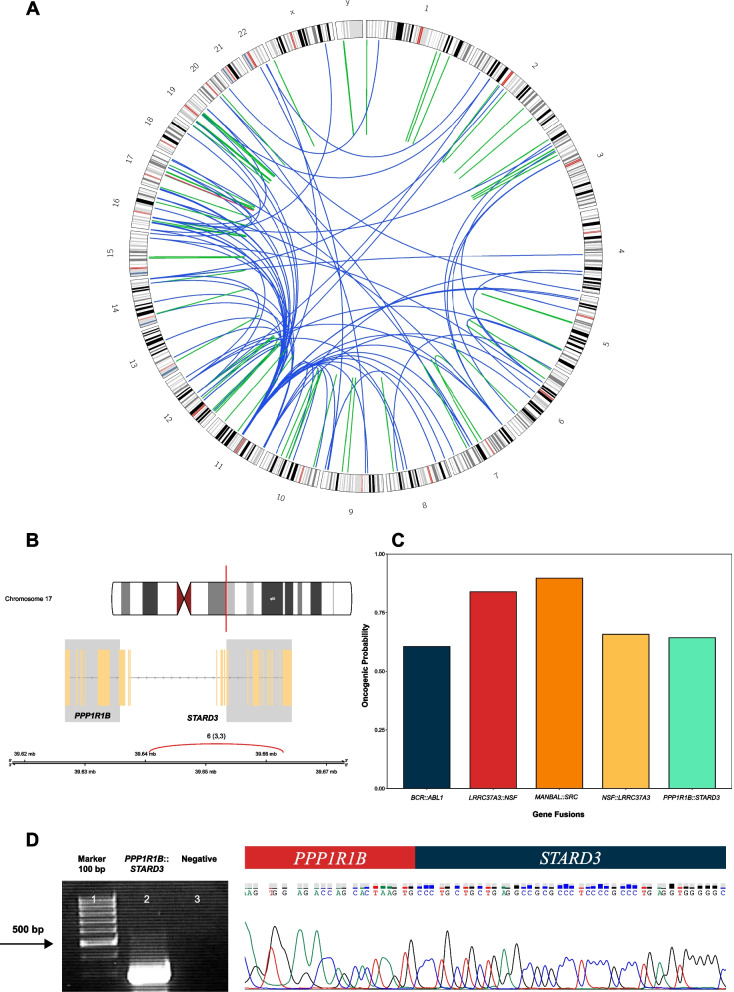 Figure 1
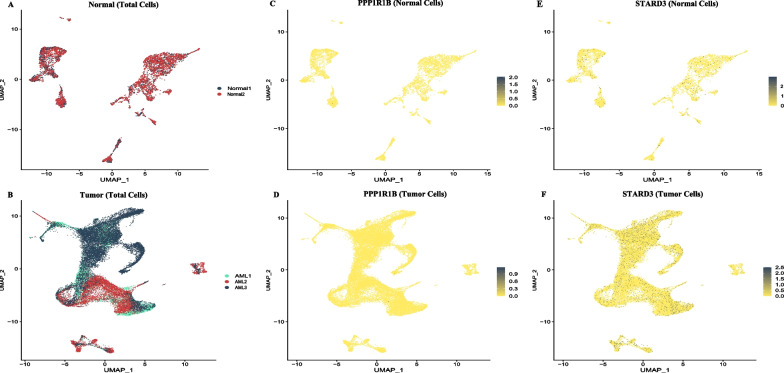 Figure 2
- —http://dx.doi.org/10.13039/501100004748Mashhad University of Medical Sciences
Peer Reviews
No public reviews on file for this paper yet. If you reviewed it on a platform where reviews are public (OpenReview, ICLR, NeurIPS, ICML), you can paste yours below so the community can read it here.
Videos
No videos yet. Explain this paper in a talk, walkthrough, or lecture? Add one.
Taxonomy
TopicsCancer, Lipids, and Metabolism · Acute Myeloid Leukemia Research · RNA modifications and cancer
Introduction
Acute myeloid leukemia (AML) is a hematologic malignancy of myeloid progenitor cells that accounts for 15–20% of pediatric leukemias [1]. It is a complex genetic disorder with multiple fusion genes that regulate cell proliferation, differentiation, and apoptosis [2]. Fusion genes are genomic and transcriptional abnormalities associated with these fusion loci that can potentially lead to tumor formation and are utilized as diagnostic, prognostic, and therapeutic targets for AML patients [3, 4]. Currently, there are several techniques for the identification of fusion genes, including fluorescence in situ hybridization (FISH), whole-genome sequencing (WGS), and transcriptome analysis [5, 6]. Transcriptome analysis using the RNA-seq method is the best approach to identify novel fusion or chimeric (the transcripts generated via gene fusion and trans-splicing) transcripts for AML diagnosis [7–9]. The PPP1R1B::STARD3 is a chimeric transcript generated via RNA processing resulting from the splicing of two adjacent pre-mRNAs in the same direction without chromosomal abnormalities [10–12]. It has been indicated that the frequency of PPP1R1B::STARD3 is approximately 21.3% and 8.3% in gastric and breast cancer patients, respectively [11, 12]. This chimeric RNA is the product of a read-through event between the PPP1R1B and STARD3 genes separated by 455 bp at chr17:q12 [12]. The fusion site is usually between exon 6 of PPP1R1B and exon 2 of STARD3 [11–13]. Protein Phosphatase 1 Regulatory (Inhibitor) Subunit 1B (PPP1R1B), as a dopamine and cAMP regulated phosphoprotein 32 kDa (DARPP-32), was discovered in the brain and plays a key role in brain signaling and physiological processes. Moreover, t-DARPP, the truncated splice isoform, is expressed in tumor cells of gastric, breast, prostate, colon, and stomach cancers [12, 14–17]. The StAR-related lipid transfer protein domain 3 (STARD3), as a member of the steroidogenic acute regulatory-related lipid transfer (START) protein family, plays a critical role in the transfer of lipids through both vesicular and non-vesicular pathways. Due to the importance of lipid metabolism in cancer cells, any change in the expression of these metabolites may contribute to cancer progression [18]. Overexpression of PPP1R1B::STARD3 may increase cancer cell proliferation and tumorigenesis by activating the PI3K/AKT pathway [12].
Here, we identified a PPP1R1B::STARD3 fusion transcript in a 12-year-old Iranian boy with AML by transcriptome analysis and confirmed it using q-PCR and Sanger sequencing, suggesting that it may be a novel biomarker in AML. Moreover, single-cell RNA sequencing (scRNA-seq) analysis was used to infer the expression pattern of STARD3 and PPP1R1B subclones according to different AML cell populations and normal samples using public scRNA-seq expression matrix data.
Case presentation
A Persian 12-year-old male was admitted to Dr. Sheikh Hospital of Mashhad, Iran, in September 2019 with the following symptoms, including fever, convulsions, hemorrhage, and bone pain. The peripheral blood examination determined 173.4 K/L white blood cells (WBC) with 86% blast cells, 10 g/dl hemoglobin (Hb), and 19 × 10^9/L platelets. The bone marrow aspiration revealed hypercellularity and a notable decrease in the number of mature myeloid cells and megakaryocytes in the presence of 75% blast cells. Immunophenotyping of the bone marrow sample was carried out by a flow cytometer (Attune NxT, ThermoFisher, USA), and data were analyzed using FlowJo v7.6 software (Tree Star, Ashland, OR). The cells were positive for CD45 (95%), HLA-DR (76%), CD33 (41%), and CD34 (94%) markers, while they were negative for CD19 (< 1%), CD3 (8%), CD5 (< 1%), CD10 (3%), CD20 (< 1%), CD61 (< 1%), CD71 (3%), and CD117 (< 1%) markers. The patient was diagnosed with AML (non-M3-FAB subtype) based on cell morphologies and immunophenotypical features. Bone marrow evaluation revealed an abnormal male chromosome complement composite karyotype with translocation between chromosomes 9 and 22 in 15 metaphases of 15 cells examined (t (9;22)(q34; q13)). The patient received induction chemotherapy. However, he died a few months after the diagnosis.
RNA sequencing, RT-PCR, and Sanger sequencing
Total RNA was extracted from the bone marrow mononuclear cells (BMMNCs) using the Tripure reagent (Roche, Mannheim, Germany) according to the manufacturer's instructions. The RNA-seq libraries were prepared using a KAPA HyperPrep kit with RiboErase (HMR) and RNA-seq was performed with 100 million paired reads on the NovaSeq 6000 platform (Illumina) (CeGaT company, Tubingen, Germany). FusionCatcher software v1.20 [19], a Python-based tool, was exploited to investigate the fusion transcripts, identifying read-through fusion transcripts (RTFTs) between PPP1R1B (NM_032192.4) and STARD3 (NM_006804.4) transcripts. A complete list of fusions is provided in Additional File 1: Table S1. An overview of all 234 fusion events detected by Circos, a software package for data visualization [20], as well as the location of both genes involved in the PPP1R1B::STARD3 fusion on chromosome 17 using the chimeraviz package v1.24.0 [21] in R is shown in Fig. 1A, B. To further confirm this finding, we analyzed an RNA-seq data profile (GSE142514) for 35 samples of AML and identified the PPP1R1B::STARD3 fusion (2.8%). A complete list of fusion transcripts identified by FusionCatcher is available in Additional File 2: Table S2. The oncogenicity of fusions was assessed by DEEPrior v2.0 [22], a deep learning technique, to investigate the amino acid sequences of the fused proteins (Additional File 3: Table S3). The oncogenic potential of the PPP1R1B::STARD3 was predicted in 64% of fusions, and the oncogenic probability of the top selected candidate fusions was depicted via a bar plot using ggplot2 package v3.4.0 [23] in R (Fig. 1C). The detection of PPP1R1B::STARD3 fusion transcript (PPP1R1B forward primer 5′-TCTGGATGAGTCCGAGAGAGA-3′ and STARD3 reverse primer 5′- GTCGAAGGTGACGAAGAGACA-3′) was validated by RT-PCR and Sanger sequencing (Fig. 1D). To gain further insight into the exclusivity of the PPP1R1B::STARD3 fusion*,* we analyzed two RNA-seq data profiles (including GSE115525 and PRJNA589314) for B-cell acute lymphoblastic leukemia (B-ALL) samples. Interestingly, there are no reports of the presence of PPP1R1B::STARD3 in B-ALL patients was found in previous studies and RNA-seq data. Moreover, the expression levels of PPP1R1B and STARD3 were investigated through scRNA-seq matrices for three AML and two normal bone marrow samples (phs000159) obtained from dbGap [24]. After quality control, 35,000 AML cells and 6200 normal cells were identified for further analysis. Principal component analysis (PCA) was applied for the variable genes, and the uniform manifold approximation and projection (UMAP) algorithm was applied for dimensionality reduction and visualization (Seurat implementation) (Fig. 2).Fig. 1A Circular genomic landscape of detected fusion transcripts in acute myeloid leukemia case using FusionCatcher. The intrachromosomal fusion transcripts have been indicated with blue links, while the interchromosomal ones are connected as green ribbons. Protein phosphatase 1 regulatory (inhibitor) subunit 1B::*StAR-related lipid transfer protein domain 3 *has been marked with a red colored ribbon. B Fusion plot of Protein phosphatase 1 regulatory (inhibitor) subunit 1B::StAR-related lipid transfer protein domain 3 indicating the position of both partner genes involved in the fusion event on chromosome 17. The red link indicates the breakpoint between two partner genes with the number of sequencing reads, which supports the fusion event. C Bar plot of the oncogenic probability of different candidate fusions predicted by DEEPrior. The oncogenicity of Protein phosphatase 1 regulatory (inhibitor) subunit 1B::StAR-related lipid transfer protein domain 3 was predicted by 64%. D Detection of Protein phosphatase 1 regulatory (inhibitor) subunit 1B::StAR-related lipid transfer protein domain 3 fusion transcript using RT-PCR. Lane 1: size marker (100 bp ladder); lane 2: patient sample; lane 3: negative control. RT-PCR analysis for the Protein phosphatase 1 regulatory (inhibitor) subunit 1B::StAR-related lipid transfer protein domain 3 fusion transcript showed a 293 bp band on the agarose gel. Sanger sequencing confirmed fusion between the Protein phosphatase 1 regulatory (inhibitor) subunit 1B and StAR-related lipid transfer protein domain 3 genesFig. 2Visualization of Single-cell RNA sequencing data. The Single-cell RNA sequencing data consists of 35,000 acute myeloid leukemia cells and 6200 normal cells on three acute myeloid leukemia and two normal samples. A and B Uniform manifold approximation and projection show the merged single-cell transcriptomes for normal and tumor cells. C and D Expression of Protein phosphatase 1 regulatory (inhibitor) subunit 1B for normal and tumor cells, respectively. E and F Expression of StAR-related lipid transfer protein for normal and tumor cells, respectively
Results and discussion
In cancer, it is not uncommon for two or more neighbor genes to be co-transcribed into a single mRNA, which may leads to production of a read-through fusion transcripts (RTFT) and potentially, a corresponding fusion protein. These fusion transcripts may contain some or all exons from two adjacent genes, where the transcription start site is from the upstream gene and the termination site is from the downstream gene [25, 26]. RTFTs leads to dysregulation of oncogenes by upregulating of downstream genes, resulting in the development of various types of cancer [27–29]. Abnormalities of chromosome 17 in AML patients are associated with poor prognosis and chemotherapy resistance [30–35]. This study introduced PPP1R1B::STARD3 as a novel fusion transcript in an Iranian AML patient using RNA-seq analysis, which identified the PPP1R1B::STARD3 fusion transcript and found that this fusion breakpoint is located at a different site compared to previous reports. STARD3 plays a pivotal role in cholesterol transfer in cancer cells, leading to cancer cell proliferation and development. Its ectopic expression can increase tumor aggressiveness in ovarian and breast cancers, suggesting its potential role in cancer treatment [36, 37]. On the other hand, PPP1R1B is involved in gastric and pancreatic tumorigenesis [17, 30, 38–42]. PPP1R1B binds BCL-2 and calcineurin, which contributes to the anti-apoptotic function of BCL-2 through reducing the inositol 1,4,5-triphosphate receptor (InsP3R) phosphorylation [14, 43]. Evidence suggests that aberrant expression of PPP1R1B::STARD3 significantly increases cell proliferation through the PI3K/AKT signaling pathway [12, 18]. Dysregulation of the PI3K/AKT pathway is involved in numerous human cancers, including colorectal, breast, and hematologic malignancies, indicating the therapeutic value of this pathway in cancer treatment [44, 45]. The UMAP analysis demonstrated that a higher proportion of AML samples expressed STARD3 compared to normal samples. Nevertheless, there was no significant detection of PPP1R1B expression in either normal or AML samples. The results suggest that the PPP1R1B::STARD3 fusion transcript may be expressed due to abnormal activation of the PPP1R1B promoter. The expression of PPP1R1B::STARD3 in solid tumors (gastric and breast cancers) and leukaemia, but not B-ALL, shows that this fusion transcript may play an essential role in cancer development through the PI3K-AKT pathway. Taken together, our data may suggest that PPP1R1B::STARD3 contributes to tumorigenesis and may be a prognostic marker in AML patients with the potential to develop therapeutic targets.
Conclusion
In summary, our data elucidate the first report of the PPP1R1B::STARD3 fusion transcript, confirmed by Sanger sequencing, in an Iranian AML patient, which may be a valuable target for AML diagnosing and treatment. This fusion may avail as a new potential and therapeutic biomarker for AML. However, further analysis is required to investigate the oncogenic function of the PPP1R1B::STARD3 fusion genes and the downstream molecular events due to this fusion transcript.
Supplementary Information
**Additional file 1: **A complete list of fusions identified by FusionCatcher (following ID SRR18012668).**Additional file 2: **A complete list of fusions identified by FusionCatcher (following ID GSE142514).**Additional file 3: **Detailed report of DEEPrior for AML patient (following ID SRR18012668).
The reference list from the paper itself. Each links out to its DOI / PubMed record.
- 1De Kouchkovsky I Abdul-Hay M Acute myeloid leukemia: a comprehensive review and 2016 update Blood Cancer J 201667 e 44110.1038/bcj.2016.5027367478 PMC 5030376 · doi ↗ · pubmed ↗
- 2Prensner JR Chinnaiyan AM Oncogenic gene fusions in epithelial carcinomas Curr Opin Genet Dev 200919829110.1016/j.gde.2008.11.00819233641 PMC 2676581 · doi ↗ · pubmed ↗
- 3Padella A Simonetti G Paciello G Giotopoulos G Baldazzi C Righi S Novel and rare fusion transcripts involving transcription factors and tumor suppressor genes in acute myeloid leukemia Cancers 201911195110.3390/cancers 1112195131817495 PMC 6966504 · doi ↗ · pubmed ↗
- 4Shago M. Recurrent cytogenetic abnormalities in acute lymphoblastic leukemia. Cancer Cytogenet Methods Protoc. 2017;257–78.10.1007/978-1-4939-6703-2_2127910029 · doi ↗ · pubmed ↗
- 5Niu X Chuang JC Berry GJ Wakelee HA Anaplastic lymphoma kinase testing: IHC vs FISH vs. NGS Curr Treat Options Oncol 20171811810.1007/s 11864-017-0513-x 29143897 · doi ↗ · pubmed ↗
- 6Sun Y Li H Chimeric RN As discovered by RNA sequencing and their roles in cancer and rare genetic diseases Genes 20221374110.3390/genes 1305074135627126 PMC 9140685 · doi ↗ · pubmed ↗
- 7Kumar S Razzaq SK Vo AD Gautam M Li H Identifyng fusion transcripts using next generation sequencing advanced review Wiley Interdiscip Rev RNA.2016176313914810.1002/wrna.1382 PMC 506576727485475 · doi ↗ · pubmed ↗
- 8Lee J Cho S Hong SE Kang D Choi H Lee JM Integrative analysis of gene expression data by RNA sequencing for differential diagnosis of acute leukemia: potential application of machine learning Front Oncol 202111 August 1910.3389/fonc.2021.717616 PMC 841933934497767 · doi ↗ · pubmed ↗