Calcinosis Cutis in Juvenile Systemic Sclerosis
Dhanush Balaji, Kavitha Mohanasundaram, Karpaka Vinayakam Gopalakrishnan

TL;DR
This paper reports a rare case of calcinosis cutis in a 14-year-old with juvenile systemic sclerosis, highlighting the importance of early diagnosis.
Contribution
The novelty lies in documenting a rare manifestation of calcinosis cutis in juvenile systemic sclerosis.
Findings
Calcinosis cutis was surgically excised in a 14-year-old with JSSc.
Early diagnosis and treatment are critical for preventing mortality in such cases.
Abstract
Juvenile systemic sclerosis (JSSc) is a rare autoimmune disorder that primarily affects children and adolescents. It is thought to be caused by a confluence of immunological, environmental, and genetic variables. The disease is characterized by excessive collagen production. It can result in symptoms such as shortness of breath, chest pain, difficulty swallowing, high blood pressure, and kidney problems. Although calcinosis cutis is common in systemic sclerosis, it is very rare in JSSc. We report the case of a 14-year-old female who presented with complaints of breathlessness for four days and multiple lesions in the sacral region for two months. She underwent surgical excision for calcinosis cutis in dependent regions. Early diagnosis and treatment of the condition are of immense importance in preventing mortality.
Genes, proteins, chemicals, diseases, species, mutations and cell lines named across the full text — each resolved to its canonical identifier and authoritative record.
Click any figure to enlarge with its caption.
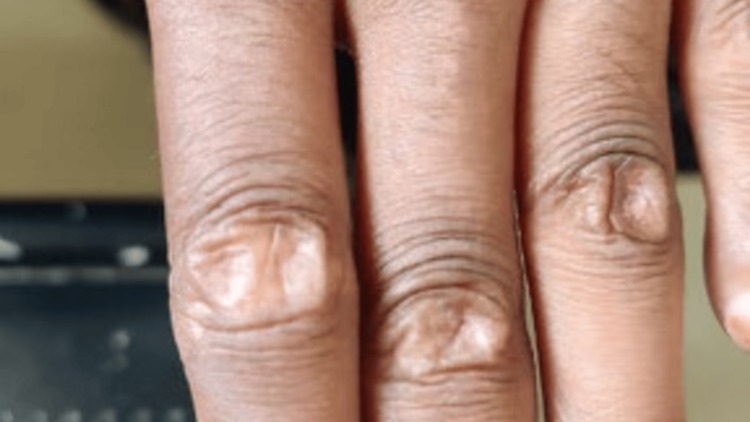 Figure 1
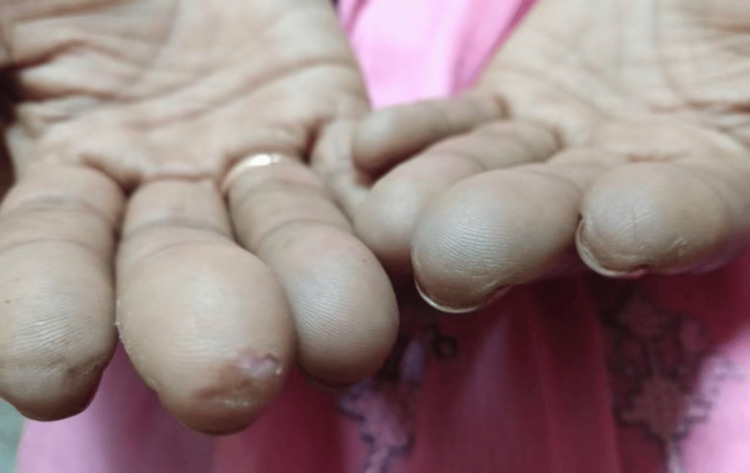 Figure 2
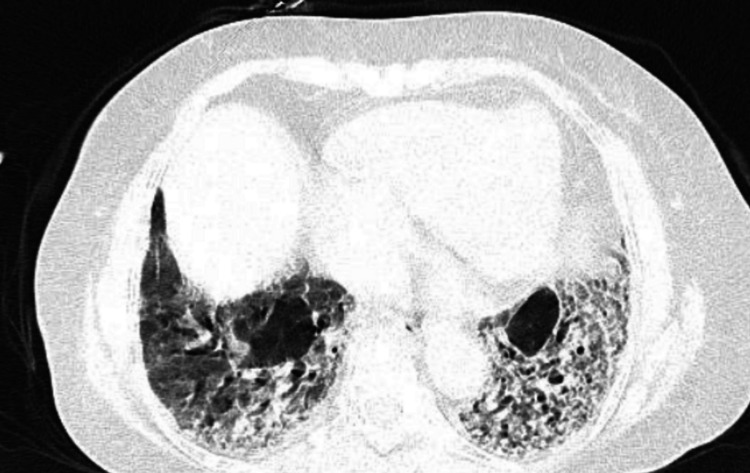 Figure 3
Peer Reviews
No public reviews on file for this paper yet. If you reviewed it on a platform where reviews are public (OpenReview, ICLR, NeurIPS, ICML), you can paste yours below so the community can read it here.
Videos
No videos yet. Explain this paper in a talk, walkthrough, or lecture? Add one.
Taxonomy
TopicsInflammatory Myopathies and Dermatomyositis · Systemic Sclerosis and Related Diseases · Skin Diseases and Diabetes