Snare-Assisted Retrieval of an Embolized Long Coronary Guidewire From the Aortic Arch
Dibyasundar Mahanta, Kowtarapu Sai Karthik, Saran Mohanan, Satyapriya Mohanty, Debasish Das

TL;DR
This paper describes a rare medical case where a coronary guidewire embolized during a procedure and was successfully retrieved using a gooseneck snare from the aortic arch.
Contribution
The paper highlights a novel retrieval technique using a gooseneck snare for embolized guidewires in the aortic arch.
Findings
A gooseneck snare successfully retrieved an embolized coronary guidewire from the aortic arch.
Traditional snare methods failed in the brachial artery and aortic root.
The aortic arch can serve as a moderately spacious area for such retrievals.
Abstract
We report an extremely rare case of gooseneck snare-assisted retrieval of an embolized coronary guidewire from the aortic arch in an elderly male scheduled for a transradial coronary angiogram for unstable angina. In this case, the proximal end of the embolized coronary guidewire could not be retrieved from the brachial artery nor the roomy aortic root using a flower petal snare. The key takeaway from this case is that an embolized coronary guidewire can be successfully retrieved with a gooseneck snare from its proximal end in a moderately spacious area like the aortic arch.
Genes, proteins, chemicals, diseases, species, mutations and cell lines named across the full text — each resolved to its canonical identifier and authoritative record.
Click any figure to enlarge with its caption.
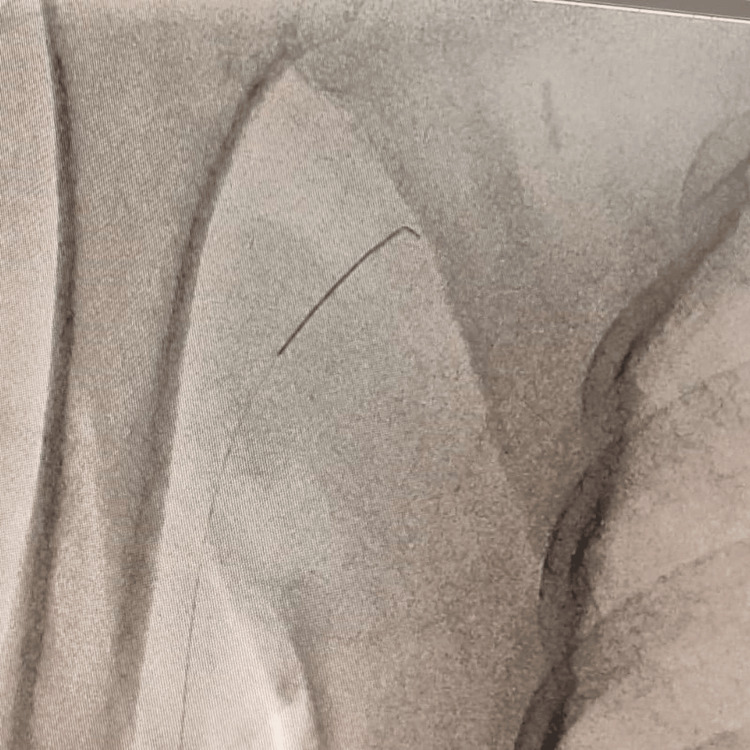 Figure 1
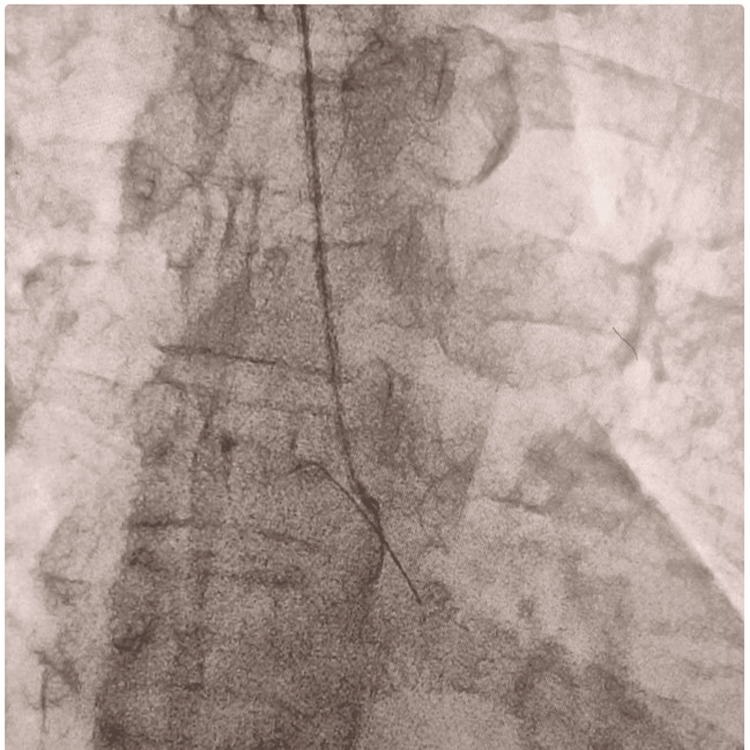 Figure 2
Peer Reviews
No public reviews on file for this paper yet. If you reviewed it on a platform where reviews are public (OpenReview, ICLR, NeurIPS, ICML), you can paste yours below so the community can read it here.
Videos
No videos yet. Explain this paper in a talk, walkthrough, or lecture? Add one.
Taxonomy
TopicsCardiac Valve Diseases and Treatments · Coronary Artery Anomalies · Infective Endocarditis Diagnosis and Management