DiffraGAN: a conditional generative adversarial network for phasing single molecule diffraction data to atomic resolution
S. Matinyan, P. Filipcik, E. van Genderen, J. P. Abrahams

TL;DR
DiffraGAN is a new AI tool that helps determine protein structures at atomic resolution by solving the phase problem in single molecule diffraction data.
Contribution
DiffraGAN introduces a conditional GAN that combines diffraction data and low-resolution images to recover missing phase information.
Findings
DiffraGAN successfully determines protein structures at atomic resolution using simulated datasets.
The method combines high-resolution diffraction data with noisy low-resolution images to estimate missing phases.
DiffraGAN offers a promising alternative to existing structural biology methods like cryo-EM.
Abstract
Proteins that adopt multiple conformations pose significant challenges in structural biology research and pharmaceutical development, as structure determination via single particle cryo-electron microscopy (cryo-EM) is often impeded by data heterogeneity. In this context, the enhanced signal-to-noise ratio of single molecule cryo-electron diffraction (simED) offers a promising alternative. However, a significant challenge in diffraction methods is the loss of phase information, which is crucial for accurate structure determination. Here, we present DiffraGAN, a conditional generative adversarial network (cGAN) that estimates the missing phases at high resolution from a combination of single particle high-resolution diffraction data and low-resolution image data. For simulated datasets, DiffraGAN allows effectively determining protein structures at atomic resolution from diffraction…
Genes, proteins, chemicals, diseases, species, mutations and cell lines named across the full text — each resolved to its canonical identifier and authoritative record.
Click any figure to enlarge with its caption.
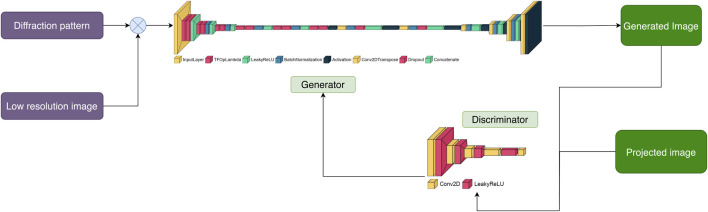 Figure 1
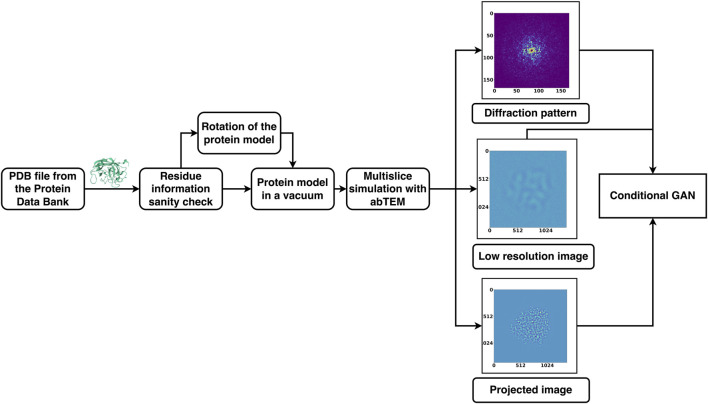 Figure 2
 Figure 3
 Figure 4
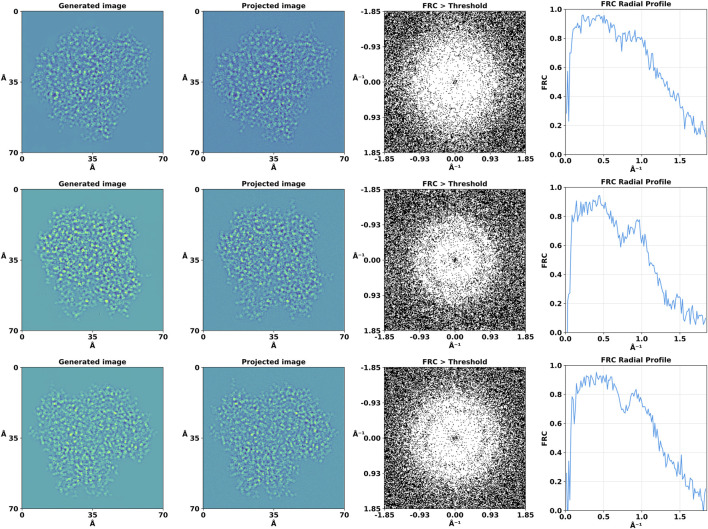 Figure 5
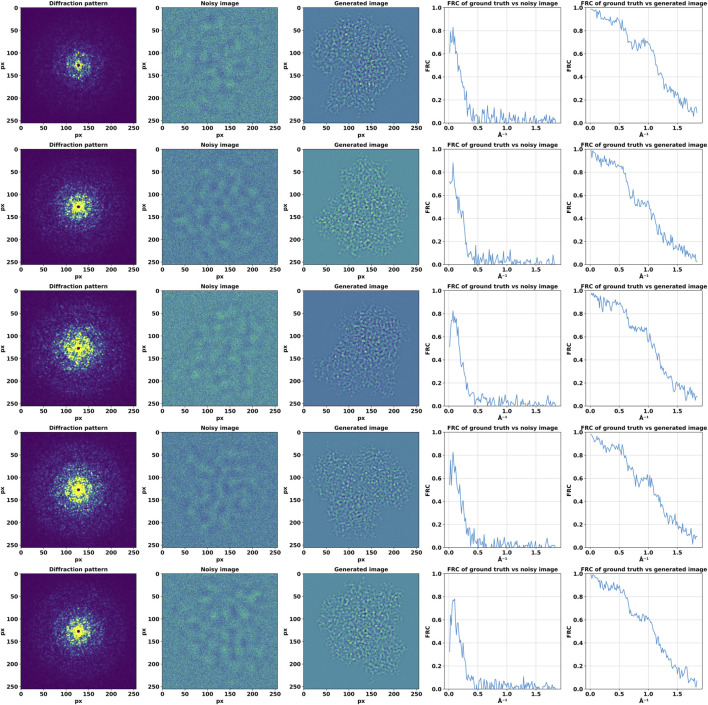 Figure 6
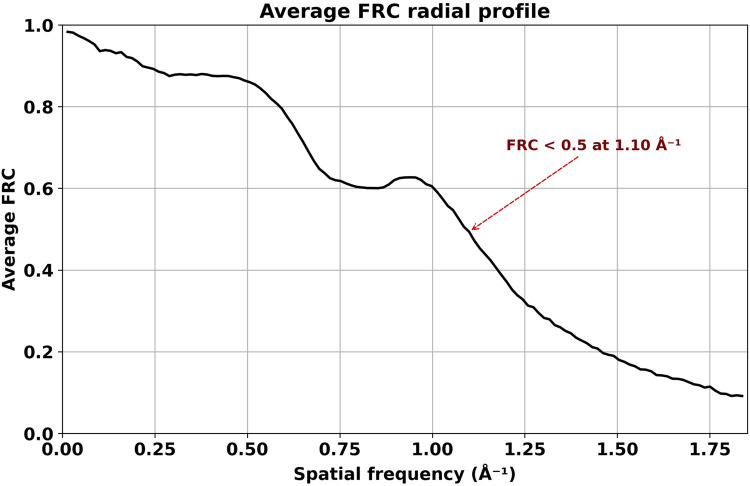 Figure 7
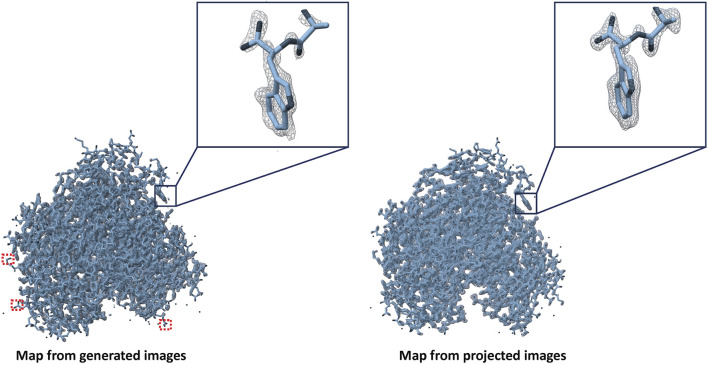 Figure 8
Peer Reviews
No public reviews on file for this paper yet. If you reviewed it on a platform where reviews are public (OpenReview, ICLR, NeurIPS, ICML), you can paste yours below so the community can read it here.
Videos
No videos yet. Explain this paper in a talk, walkthrough, or lecture? Add one.
Taxonomy
TopicsAdvanced Electron Microscopy Techniques and Applications · Advanced X-ray Imaging Techniques · Enzyme Structure and Function