Comparing time to recovery in wasting treatment: simplified approach vs. standard protocol among children aged 6–59 months in Ethiopia—a cluster-randomized, controlled, non-inferiority trial
Yetayesh Maru, Dessalegn Tamiru, Kaleab Baye, Stanley Chitekwe, Yehenew G. Kifle, Arnaud Lailou, Tefera Belachew

TL;DR
This study compared two treatment approaches for malnourished children in Ethiopia and found no significant difference in recovery time between them.
Contribution
The study provides evidence that a simplified malnutrition treatment protocol is non-inferior to the standard protocol in terms of recovery time.
Findings
For severe acute malnutrition, the simplified and standard protocols had similar average recovery times (8.86 vs. 8.26 weeks).
For moderate acute malnutrition, both protocols showed no significant difference in recovery time (8.18 vs. 8.32 weeks).
Survival curves and log-rank tests confirmed the non-inferiority of the simplified approach for cure time.
Abstract
Wasting occurs when the body's nutritional needs are unmet due to insufficient intake or illness. It represents a significant global challenge, with approximately 45 million infants and children under 5 years of age suffering from wasting in 2022. A cluster-randomized, controlled, non-inferiority trial was conducted in three regions of Ethiopia. A non-inferiority margin of 15%, along with a recovery rate of 90% and a minimum acceptable recovery rate of 75%, were considered alongside an intra-cluster correlation coefficient of 0.05 and an anticipated loss to follow-up of 10% in determining the total sample size of 1,052 children. Children with severe acute malnutrition (SAM) in the simplified group received two sachets of ready-to-use therapeutic food (RUTF) daily, while the standard group received RUTF based on their body weight. For moderate acute malnutrition (MAM) cases, the…
Genes, proteins, chemicals, diseases, species, mutations and cell lines named across the full text — each resolved to its canonical identifier and authoritative record.
Click any figure to enlarge with its caption.
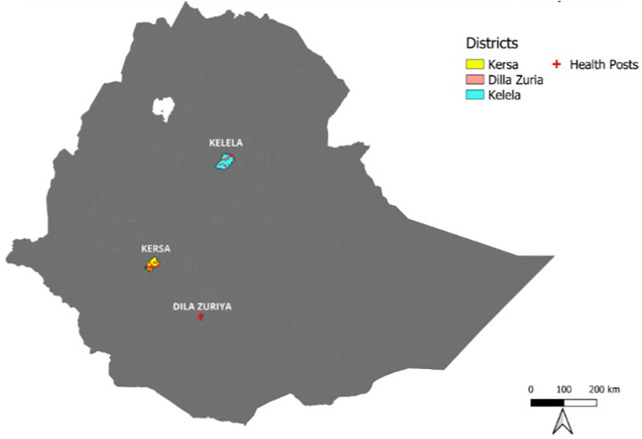 Figure 1
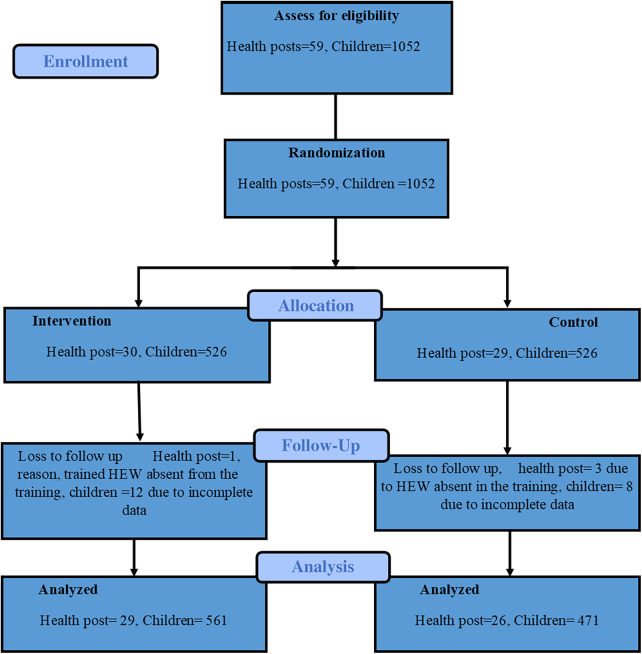 Figure 2
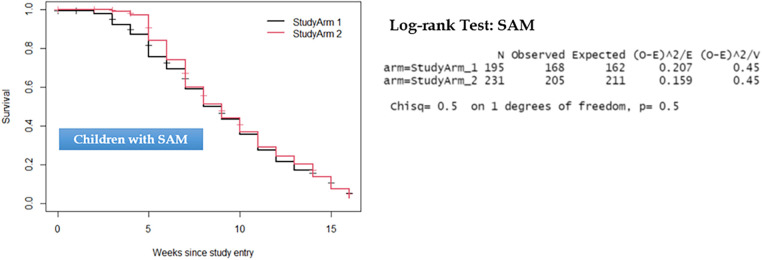 Figure 3
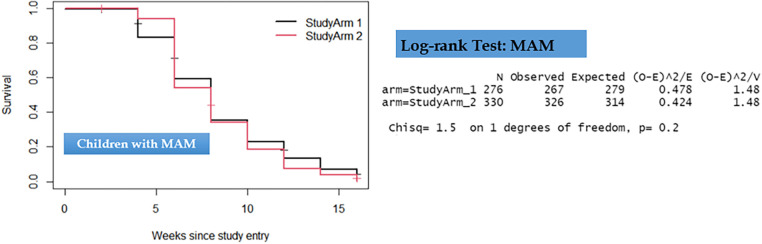 Figure 4
Peer Reviews
No public reviews on file for this paper yet. If you reviewed it on a platform where reviews are public (OpenReview, ICLR, NeurIPS, ICML), you can paste yours below so the community can read it here.
Videos
No videos yet. Explain this paper in a talk, walkthrough, or lecture? Add one.
Taxonomy
TopicsTransport and Logistics Innovations · Operations Management Techniques