Time-efficient combined morphologic and quantitative joint MRI: an in situ study of standardized knee cartilage defects in human cadaveric specimens
Teresa Lemainque, Nicola Pridöhl, Shuo Zhang, Marc Huppertz, Manuel Post, Can Yüksel, Masami Yoneyama, Andreas Prescher, Christiane Kuhl, Daniel Truhn, Sven Nebelung

TL;DR
This study compares a new MRI technique called MIXTURE with traditional methods for assessing knee cartilage defects in human cadavers.
Contribution
The study introduces MIXTURE sequences for time-efficient simultaneous morphologic and quantitative joint MRI.
Findings
MIXTURE sequences provided comparable defect delineability and bone texture to reference sequences.
Relaxation times increased significantly after defect creation in the central femur and combined regions.
MIXTURE sequences allowed time-efficient morphologic and quantitative knee joint assessment.
Abstract
Quantitative techniques such as T2 and T1ρ mapping allow evaluating the cartilage and meniscus. We evaluated multi-interleaved X-prepared turbo-spin echo with intuitive relaxometry (MIXTURE) sequences with turbo spin-echo (TSE) contrast and additional parameter maps versus reference TSE sequences in an in situ model of human cartilage defects. Standardized cartilage defects of 8, 5, and 3 mm in diameter were created in the lateral femora of ten human cadaveric knee specimens (81 ± 10 years old; nine males, one female). MIXTURE sequences providing proton density-weighted fat-saturated images and T2 maps or T1-weighted images and T1ρ maps as well as the corresponding two- and three-dimensional TSE reference sequences were acquired before and after defect creation (3-T scanner; knee coil). Defect delineability, bone texture, and cartilage relaxation times were quantified. Appropriate…
Genes, proteins, chemicals, diseases, species, mutations and cell lines named across the full text — each resolved to its canonical identifier and authoritative record.
Click any figure to enlarge with its caption.
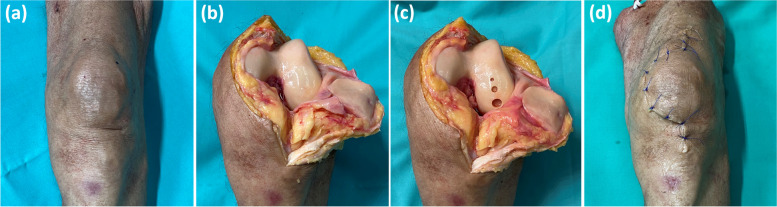 Figure 1
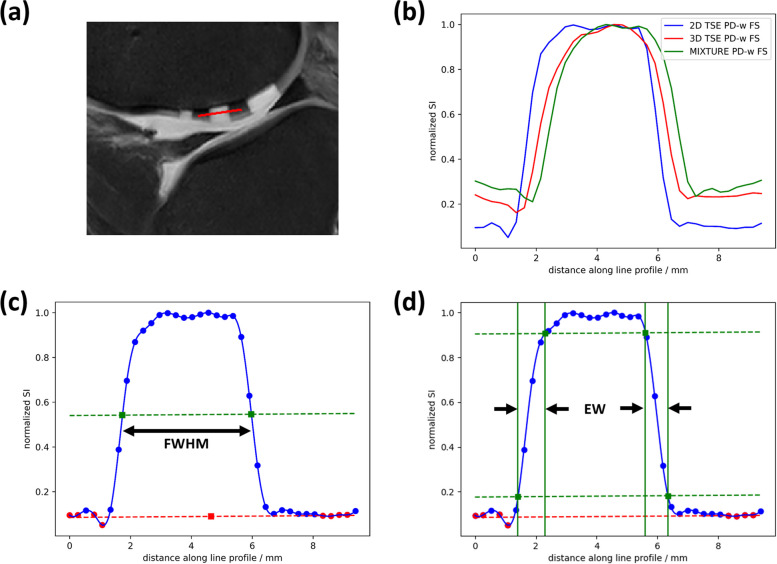 Figure 2
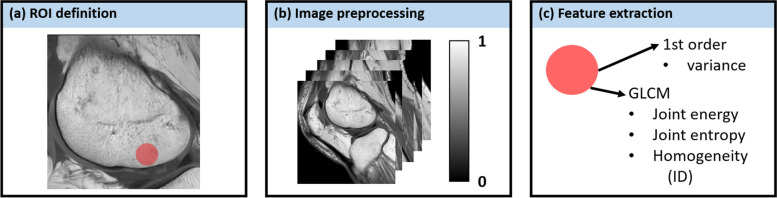 Figure 3
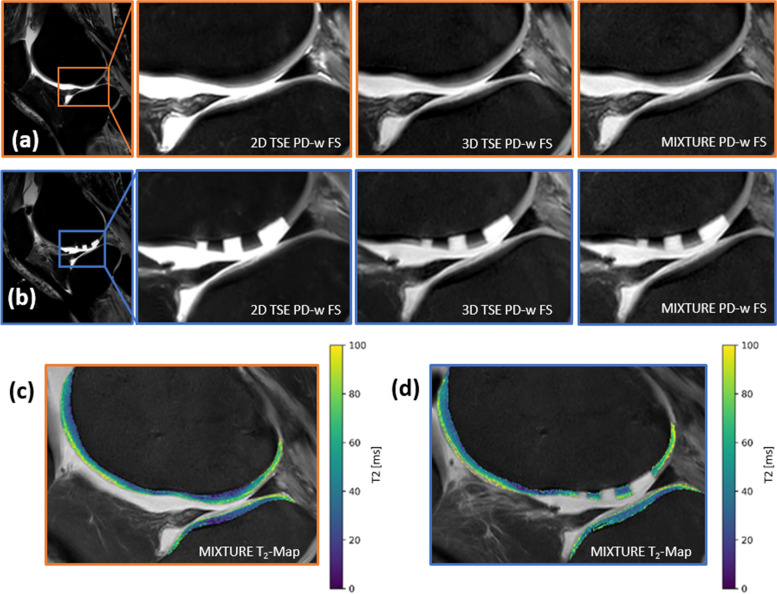 Figure 4
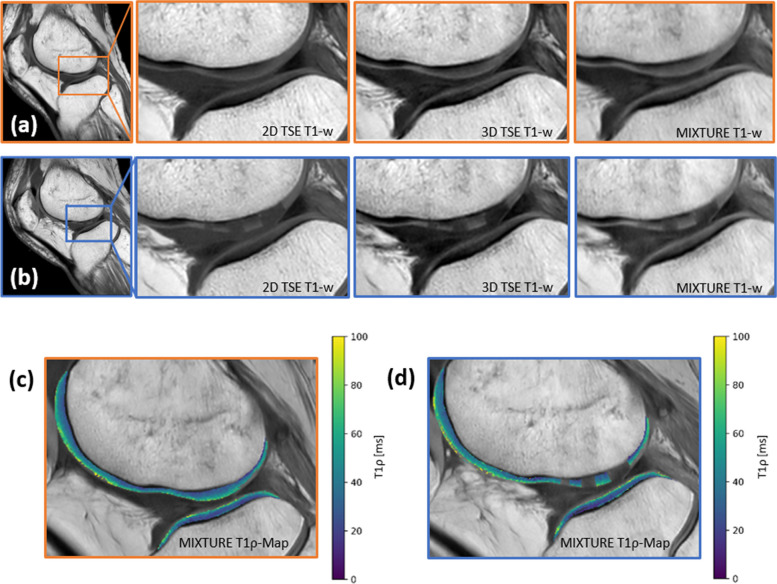 Figure 5
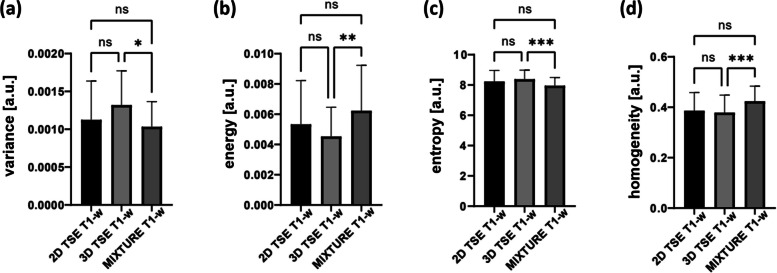 Figure 6
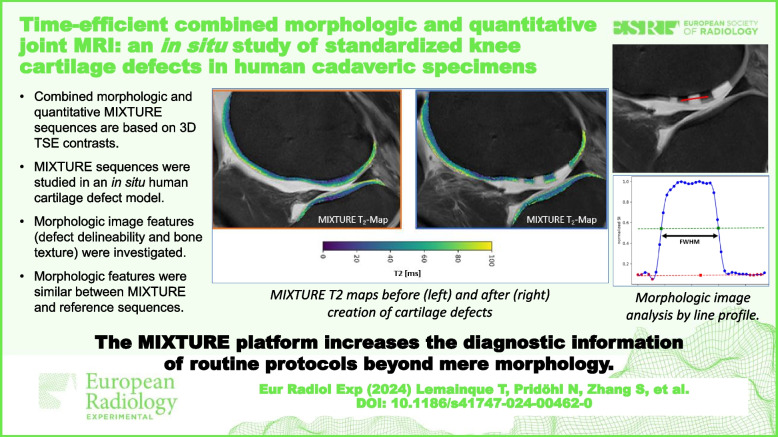 Figure 7
Peer Reviews
No public reviews on file for this paper yet. If you reviewed it on a platform where reviews are public (OpenReview, ICLR, NeurIPS, ICML), you can paste yours below so the community can read it here.
Videos
No videos yet. Explain this paper in a talk, walkthrough, or lecture? Add one.
Taxonomy
TopicsKnee injuries and reconstruction techniques · Total Knee Arthroplasty Outcomes · Osteoarthritis Treatment and Mechanisms