No free lunch for avoiding clustering vulnerabilities in distributed systems
Pheerawich Chitnelawong, Andrei A. Klishin, Norman Mackay, David J. Singer, Greg van Anders

TL;DR
This paper explores how clustering in complex systems can lead to design failures and proposes a framework to manage these vulnerabilities using insights from statistical physics.
Contribution
The paper introduces a novel framework to identify and quantify trade-offs between clustering and uncertainty in design objectives using statistical physics.
Findings
Heterogeneous networks can exhibit repulsion-driven clustering in addition to attraction-driven clustering.
Trade-offs between clustering and uncertainty in design objectives are common in distributed systems.
The framework connects naval engineering models to entropy-driven phenomena in nanoscale self-assembly.
Abstract
Emergent design failures are ubiquitous in complex systems, and often arise when system elements cluster. Approaches to systematically reduce clustering could improve a design’s resilience, but reducing clustering is difficult if it is driven by collective interactions among design elements. Here, we use techniques from statistical physics to identify mechanisms by which spatial clusters of design elements emerge in complex systems modelled by heterogeneous networks. We find that, in addition to naive, attraction-driven clustering, heterogeneous networks can exhibit emergent, repulsion-driven clustering. We draw quantitative connections between our results on a model system in naval engineering to entropy-driven phenomena in nanoscale self-assembly, and give a general argument that the clustering phenomena we observe should arise in many distributed systems. We identify circumstances…
Genes, proteins, chemicals, diseases, species, mutations and cell lines named across the full text — each resolved to its canonical identifier and authoritative record.
Click any figure to enlarge with its caption.
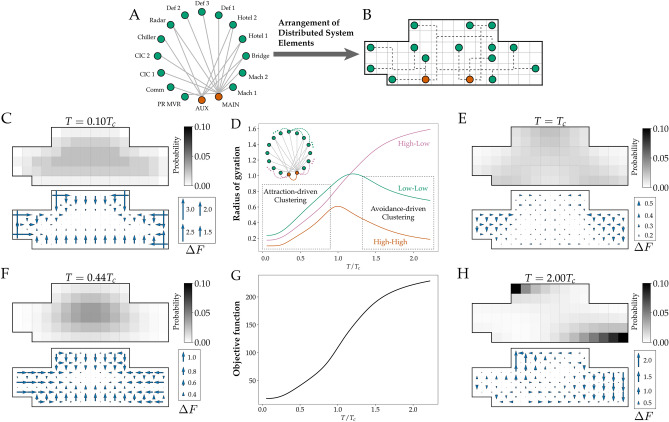 Figure 1
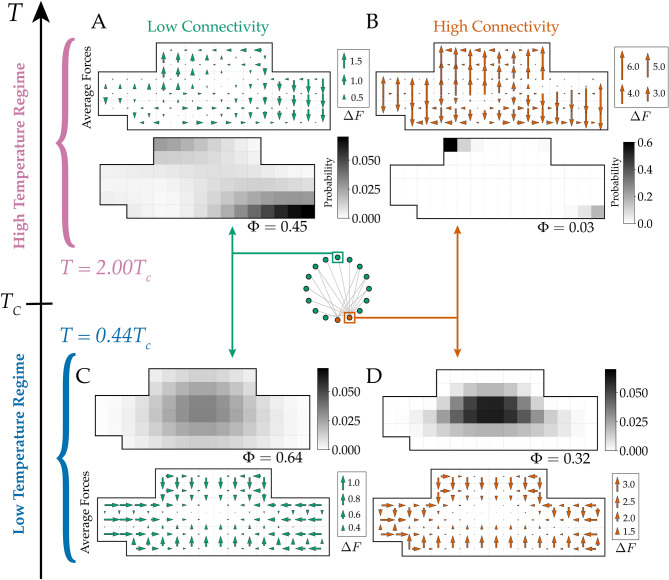 Figure 2
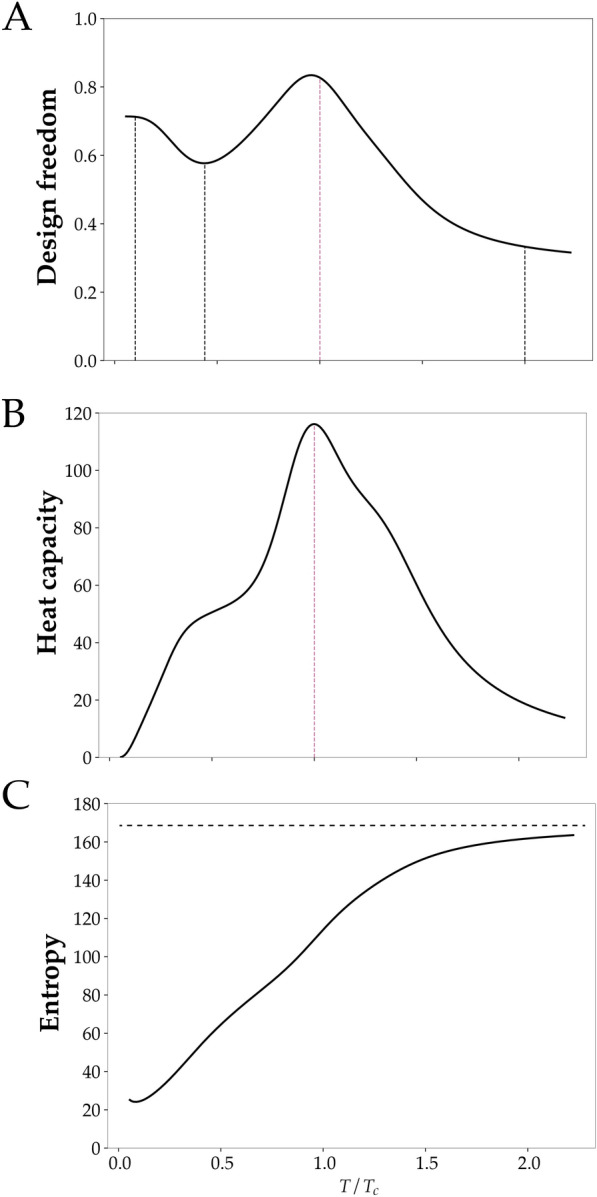 Figure 3
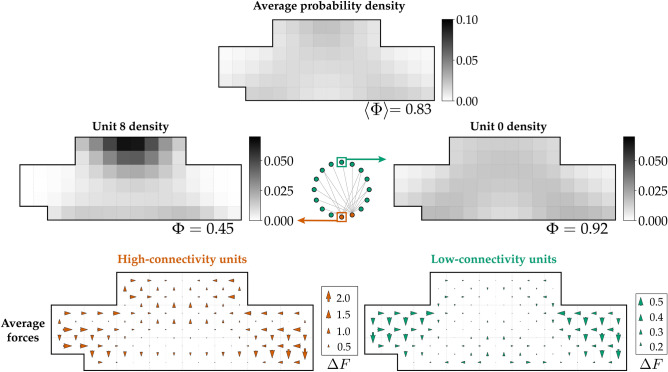 Figure 4
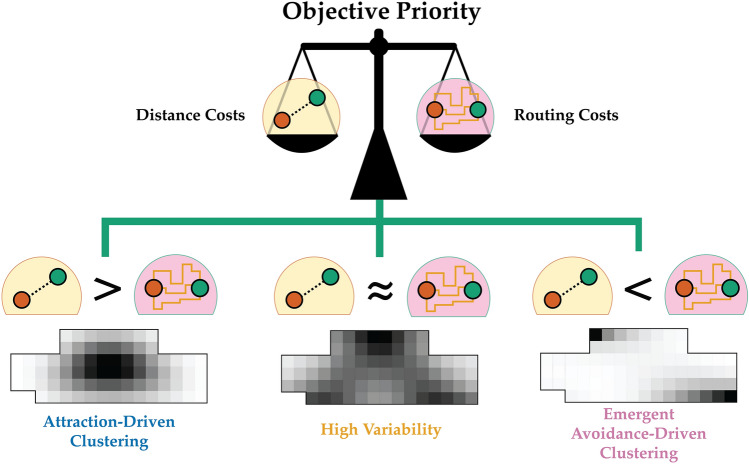 Figure 5
Peer Reviews
No public reviews on file for this paper yet. If you reviewed it on a platform where reviews are public (OpenReview, ICLR, NeurIPS, ICML), you can paste yours below so the community can read it here.
Videos
No videos yet. Explain this paper in a talk, walkthrough, or lecture? Add one.
Taxonomy
TopicsComplex Network Analysis Techniques · Insect and Arachnid Ecology and Behavior · Modular Robots and Swarm Intelligence