Rib cage contributions to inspiratory capacity in patients with cervical spinal cord injury
Ryo Yoshida, Kenta Kawamura, Yukako Setaka, Hyunjae Woo, Nobuhisa Ishii, Masafumi Mizukami, Hirotaka Mutsuzaki, Kazuhide Tomita

TL;DR
This study shows that rib cage movement significantly affects how much air patients with cervical spinal cord injury can inhale.
Contribution
The study demonstrates a significant correlation between rib cage motion and inspiratory capacity in cervical spinal cord injury patients.
Findings
Inspiratory capacity (IC) was significantly correlated with rib cage motion (VRIP-rc) in cervical spinal cord injury patients.
Rib cage motion contributes more to inspiratory volume than abdominal motion in these patients.
Respiratory inductance plethysmography and spirometry together provide insights into respiratory function in cervical spinal cord injury.
Abstract
Cervical spinal cord injury (CSI) often leads to impaired respiratory function, affecting the overall well-being of patients. This study aimed to investigate the influence of rib cage motion on inspiratory capacity in CSI patients. We conducted a study with 11 CSI patients, utilising respiratory inductance plethysmography (RIP). We measured ventilatory volume by spirometry concurrently with RIP. Participants were instructed to perform maximal inspiratory efforts. Inspiratory capacity (IC) was calculated from spirometry waveforms. We converted the respiratory waveforms of the chest and abdomen into inspiratory volume measured by a spirometer. The inspiratory volume measured by the chest sensor was defined as VRIP-rib cage (VRIP-rc), and the inspiratory volume measured by the abdominal sensor was defined as VRIP-abdomen (VRIP-ab). Subsequently, the relationships of IC with VRIP-rc and…
Genes, proteins, chemicals, diseases, species, mutations and cell lines named across the full text — each resolved to its canonical identifier and authoritative record.
Click any figure to enlarge with its caption.
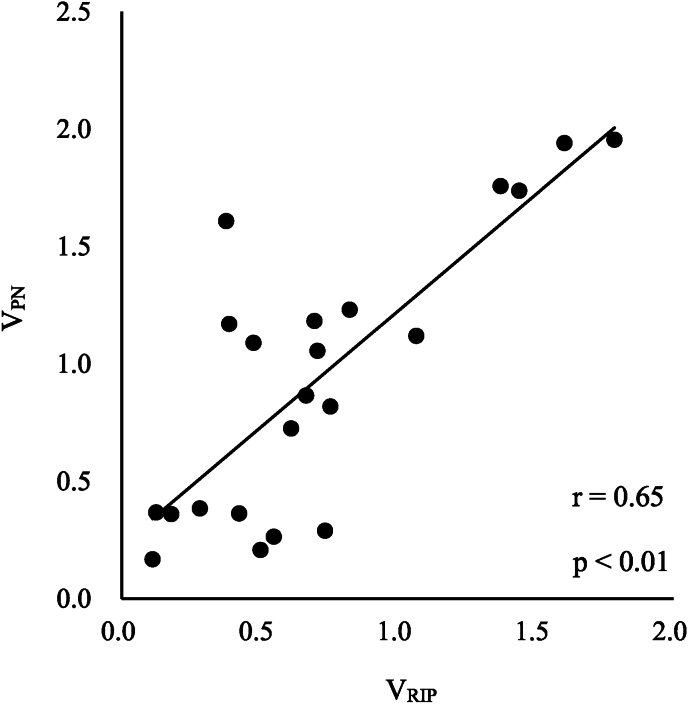 Figure 1
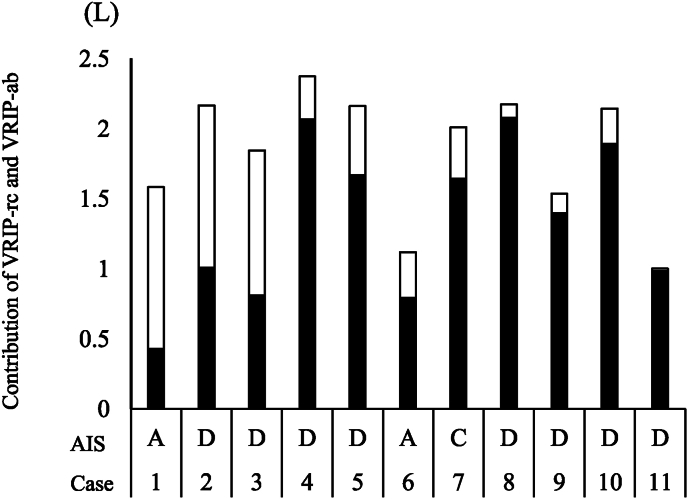 Figure 2
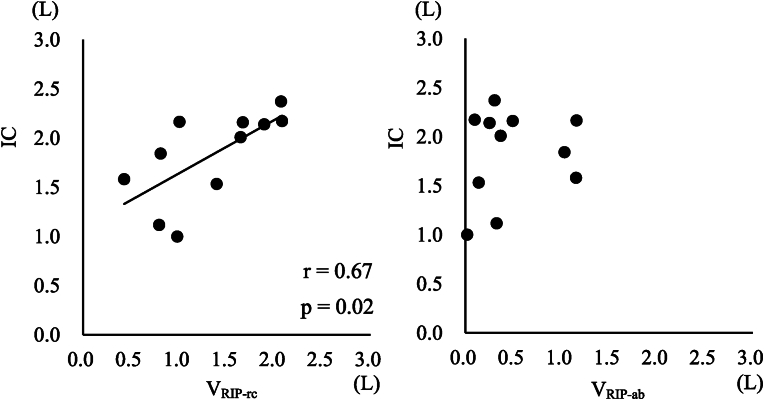 Figure 3
Peer Reviews
No public reviews on file for this paper yet. If you reviewed it on a platform where reviews are public (OpenReview, ICLR, NeurIPS, ICML), you can paste yours below so the community can read it here.
Videos
No videos yet. Explain this paper in a talk, walkthrough, or lecture? Add one.
Taxonomy
TopicsCardiac, Anesthesia and Surgical Outcomes