Single versus double retrograde intramedullary nail technique for treatment of displaced proximal humeral fractures in children: A retrospective cohort study
Eleftheria Samara, Isabella Locatelli, Benjamin Tschopp, Nicolas Lutz, Pierre-Yves Zambelli

TL;DR
This study compares two techniques for fixing broken upper arm bones in children, finding that a single nail method is faster without worse outcomes.
Contribution
A modified single retrograde nail technique is proposed to reduce surgical time without compromising outcomes.
Findings
The single nail technique had significantly shorter surgical duration for initial fixation.
Both techniques showed similar excellent functional outcomes and radiological healing at 6 weeks.
Only one minor secondary displacement occurred in the single nail group, which did not require reoperation.
Abstract
Highly displaced proximal humeral fractures in children with low remodeling potential need to be reduced and fixed. The use of two flexible retrograde nails became the most popular fixation technique due to the excellent functional outcome, the low complication rates, and the possibility of early mobilization. A modified single retrograde technique has been suggested by the authors to address the main disadvantage of this technique, the long operative duration. The aim of this study was to compare these techniques in terms of efficacy, and clinical and radiological outcomes. We performed a retrospective, monocentric study. Two groups of patients were defined: One was treated with the standard flexible retrograde double nail technique and the other with the modified single nail technique. The demographic and fracture characteristics were similar in both groups and the postoperative…
Genes, proteins, chemicals, diseases, species, mutations and cell lines named across the full text — each resolved to its canonical identifier and authoritative record.
Click any figure to enlarge with its caption.
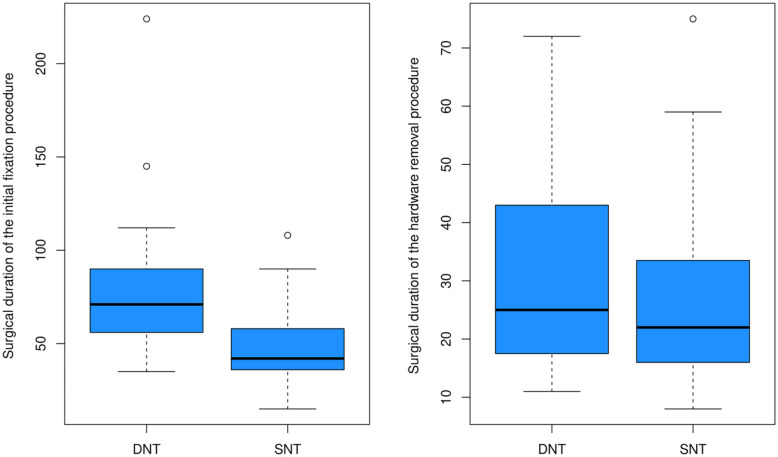 Figure 1
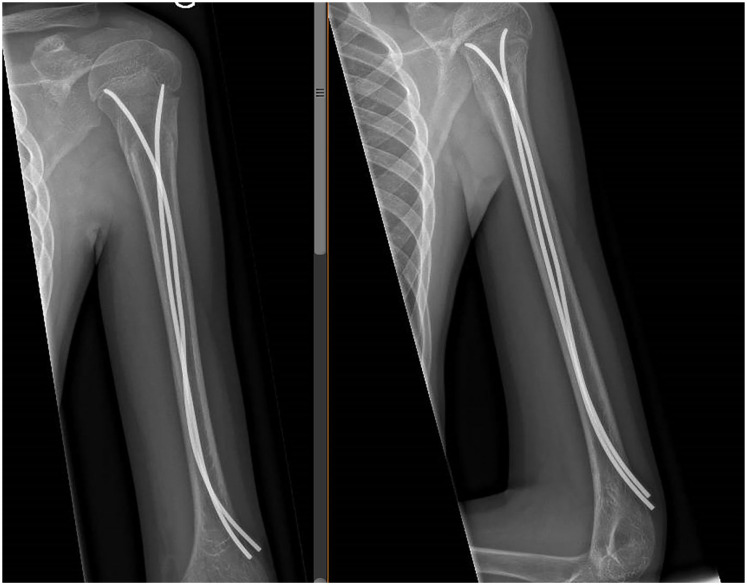 Figure 2
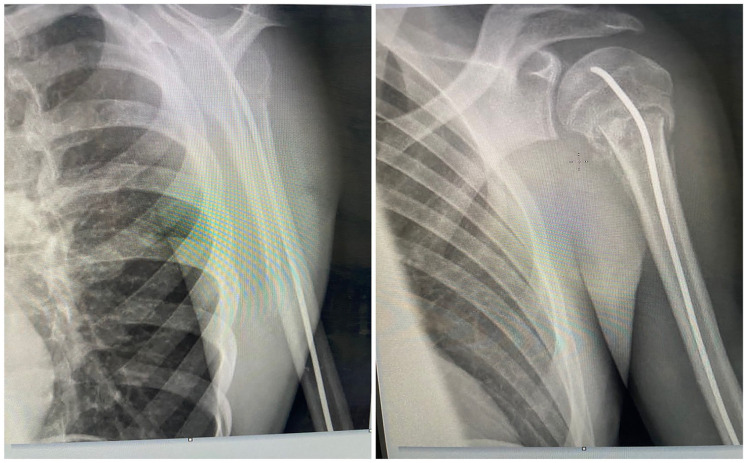 Figure 3
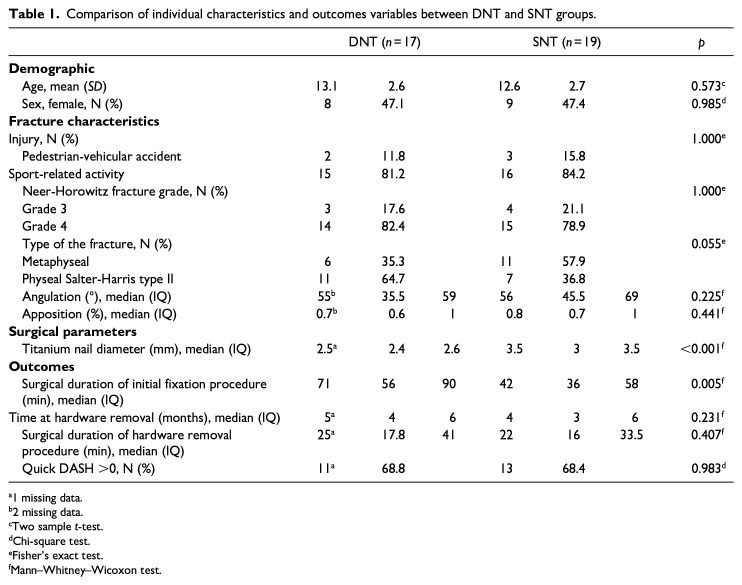 Figure 4
Peer Reviews
No public reviews on file for this paper yet. If you reviewed it on a platform where reviews are public (OpenReview, ICLR, NeurIPS, ICML), you can paste yours below so the community can read it here.
Videos
No videos yet. Explain this paper in a talk, walkthrough, or lecture? Add one.
Taxonomy
TopicsShoulder Injury and Treatment · Shoulder and Clavicle Injuries · Trauma Management and Diagnosis