Zoonotic human liver flukes, a type 1 biocarcinogen, in freshwater fishes: genetic analysis and confirmation of molluscan vectors and reservoir hosts in Bangladesh
Sharmin Shahid Labony, Md. Abdul Alim, Muhammad Mehedi Hasan, Md. Shahadat Hossain, Sharmin Akter, Joydeep Paul, Thahsin Farjana, Md. Haydar Ali, Mohammad Zahangir Alam, Takeshi Hatta, Hayato Kawada, Keiko Mizutani, Naotoshi Tsuji, Anisuzzaman

TL;DR
This study finds that human liver flukes are common in freshwater fish in Bangladesh, posing a health risk due to their presence in commonly consumed fish and their spread through intermediate hosts like snails and domestic animals.
Contribution
The study confirms the presence of multiple zoonotic liver fluke species in Bangladeshi freshwater fish and identifies molluscan vectors and reservoir hosts using molecular techniques.
Findings
Eleven species of freshwater fish were found infected with metacercariae of human liver flukes.
Clonorchis sinensis had the highest infection rate among detected flukes.
Bithynia snails and domestic animals like dogs, cats, and ducks were identified as reservoir hosts.
Abstract
Opisthorchiid flukes, particularly Opisthorchis viverrini, Opisthorchis felineus, Clonorchis sinensis, and Metorchis spp. are the most common fish-borne zoonotic human liver flukes (hLFs). Liver fluke infections are more prevalent in resource-deprived and underprivileged areas. We herein estimated the prevalence of the metacercariae (MC) of major hLFs in common large freshwater fishes (lFWF) marketed for human consumption from some selected areas of Bangladesh along with detection of their molluscan vectors and reservoirs. The current status of fish-borne zoonotic hLF infections in lFWF was investigated along with their molluscan vectors and mammalian reservoir hosts in Mymensingh and Kishoreganj in Bangladesh from July 2018–June 2022 using conventional and multiple molecular techniques, such as PCR, PCR-restriction fragment length polymorphism (RFLP), sequencing, and bioinformatic…
Genes, proteins, chemicals, diseases, species, mutations and cell lines named across the full text — each resolved to its canonical identifier and authoritative record.
Click any figure to enlarge with its caption.
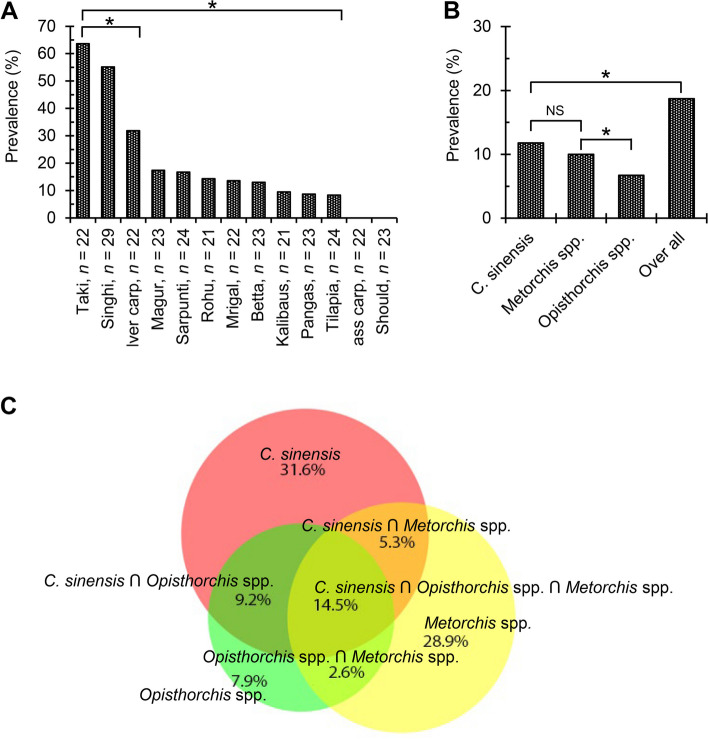 Figure 1
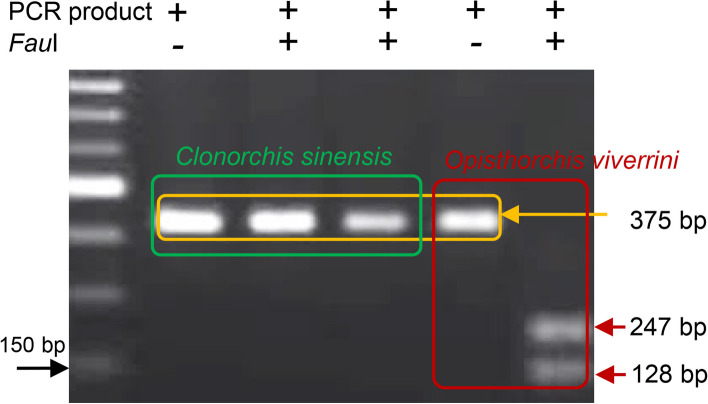 Figure 2
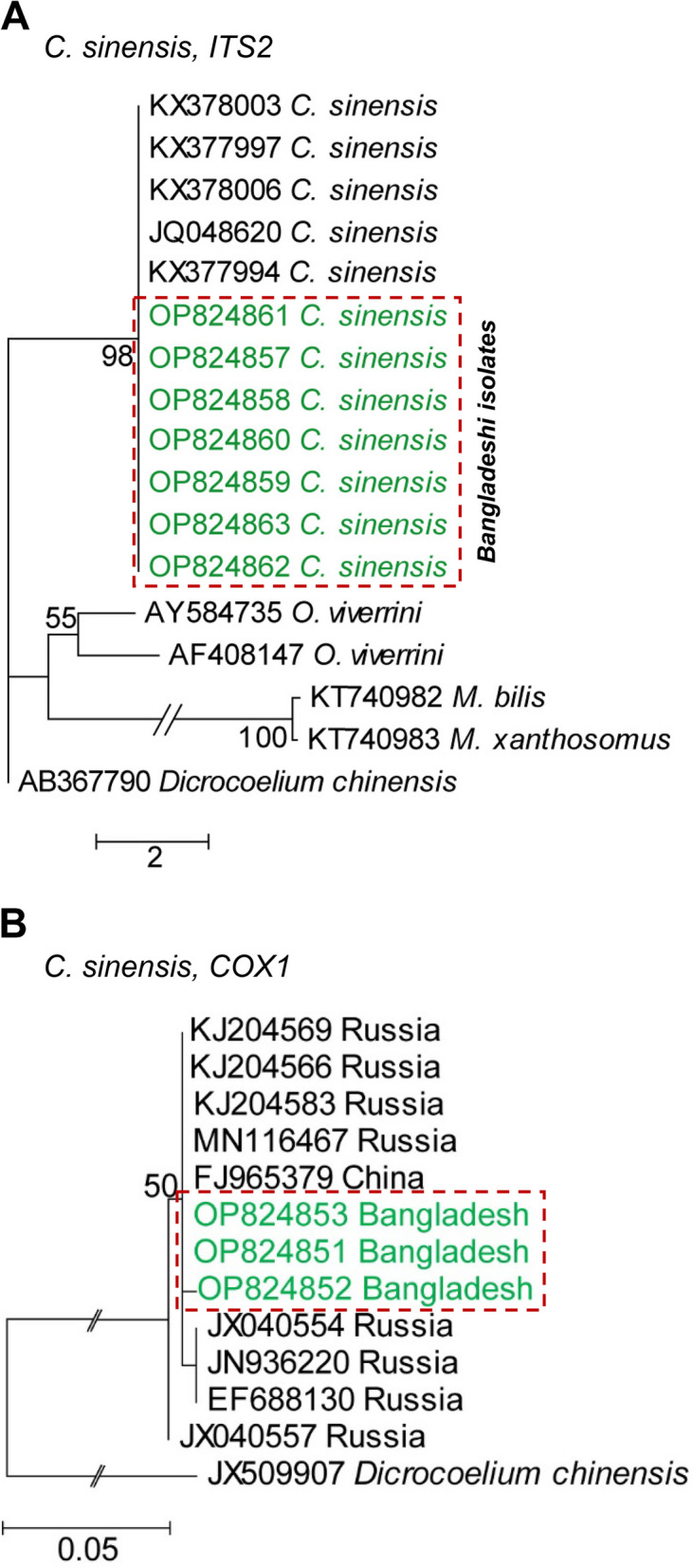 Figure 3
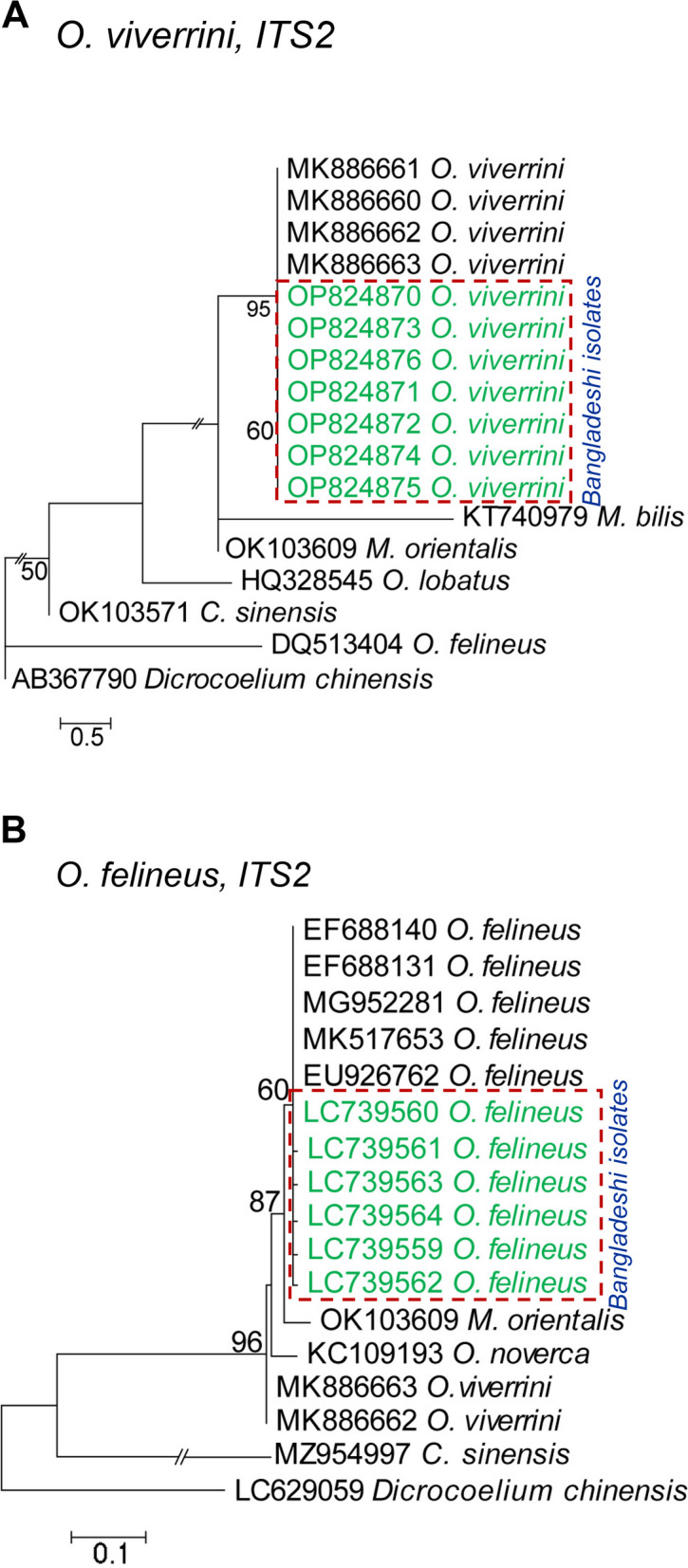 Figure 4
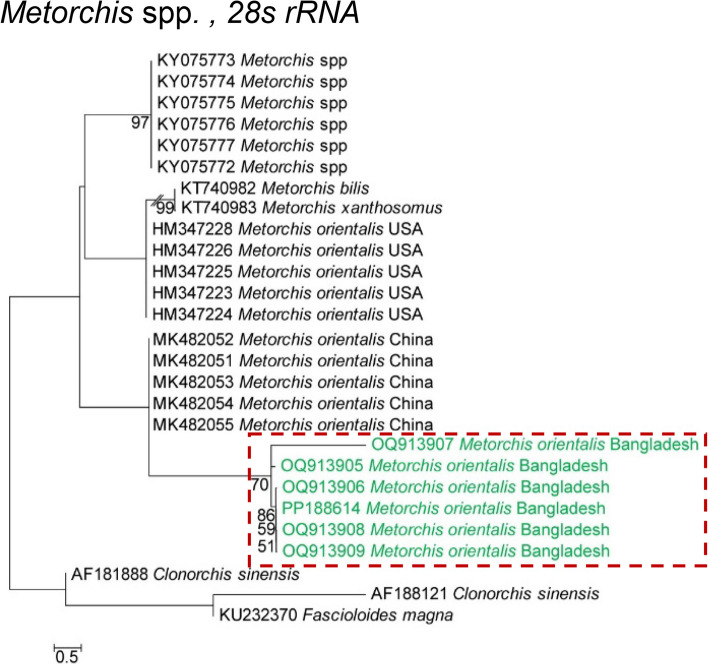 Figure 5
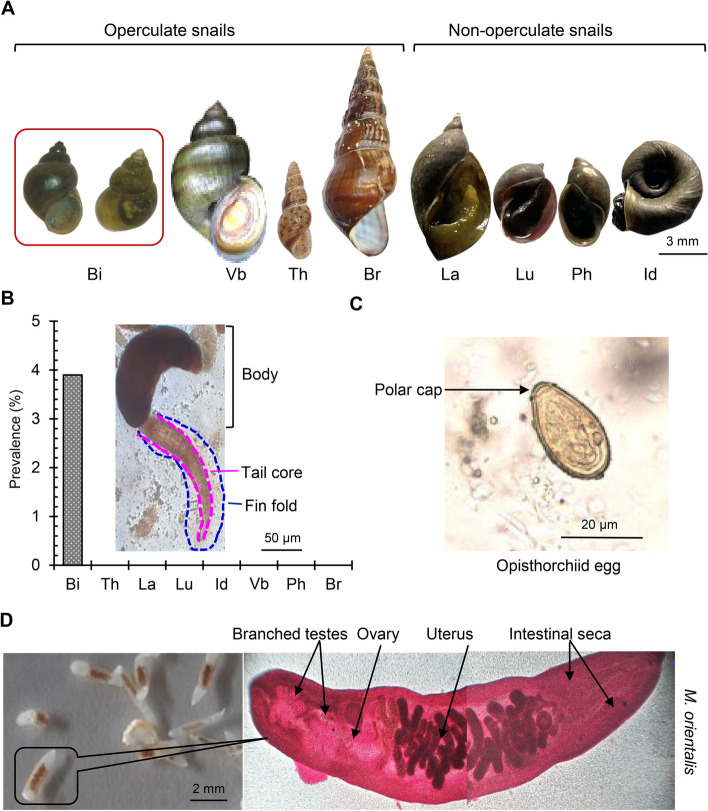 Figure 6
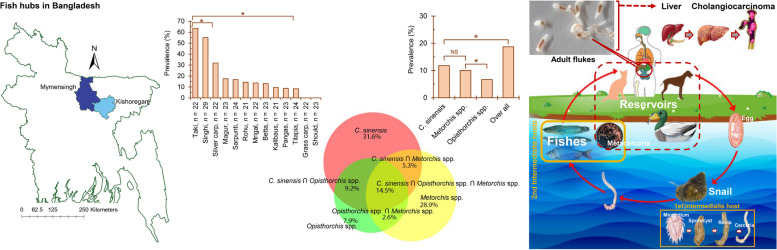 Figure 7
Peer Reviews
No public reviews on file for this paper yet. If you reviewed it on a platform where reviews are public (OpenReview, ICLR, NeurIPS, ICML), you can paste yours below so the community can read it here.
Videos
No videos yet. Explain this paper in a talk, walkthrough, or lecture? Add one.
Taxonomy
TopicsParasites and Host Interactions · Parasite Biology and Host Interactions · Zoonotic diseases and public health