Evaluation of ivabradine plus beta-blocker versus beta-blocker alone in addition to standard care in reducing hospitalization and major adverse cardiovascular event in patients with chronic heart failure: a prospective observational study in tertiary care hospital in central India
Ramyaa Desingu, Shilpa Kaore, Gaurav Kandelwal, S. Balakrishnan

TL;DR
This study compares ivabradine plus beta-blocker versus beta-blocker alone in heart failure patients, finding potential benefits in reducing hospitalization and cardiovascular events.
Contribution
The study evaluates a drug combination's effect on heart failure outcomes in an Indian population, highlighting potential clinical benefits.
Findings
Ivabradine plus beta-blocker significantly reduced heart rate compared to beta-blocker alone.
The combination showed a trend toward fewer hospitalizations and delayed MACE events.
No significant changes were observed in NYHA class or MLWHFQ scores.
Abstract
In recent years, there has been an increase in cases of heart failure, ultimately leading to an increase in hospitalization for heart failure (HF) and cardiovascular mortality. The aim of our study was to evaluate ivabradine combined with beta-blocker versus beta-blocker alone in addition to standard care for chronic heart failure, followed for a period of 6 months for the rate of hospitalization and major adverse cardiovascular event (MACE) in patients with reduced left ventricular ejection fraction (LVEF < 35%). A total of 64 patients were included in this observational study with 30 patients in the ivabradine + beta-blocker (IVA + BB) group and 34 in the beta-blocker (BB) group. The median (IQR) age of the study sample was 57 (50–62) and 58.5 (55–67) in IVA + BB and BB groups, respectively, with LVEF < 35%. The incidence of the primary endpoint of composite MACE (MI, stroke, death,…
Genes, proteins, chemicals, diseases, species, mutations and cell lines named across the full text — each resolved to its canonical identifier and authoritative record.
Click any figure to enlarge with its caption.
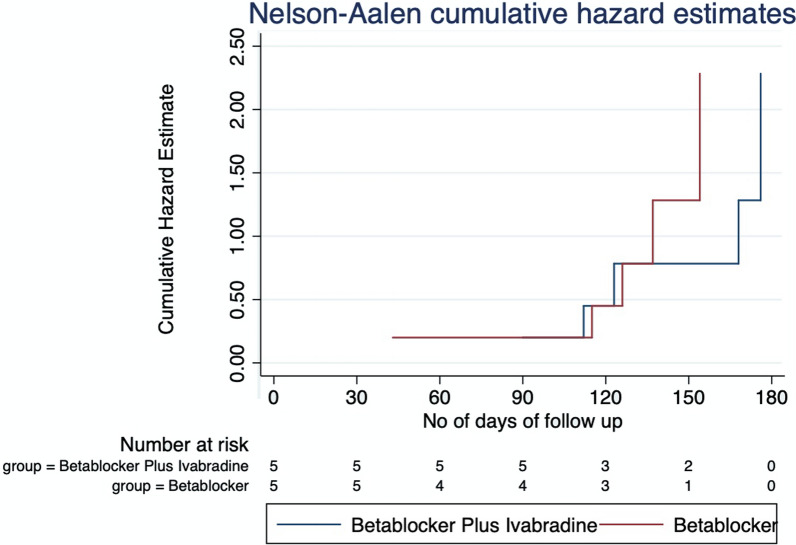 Figure 1
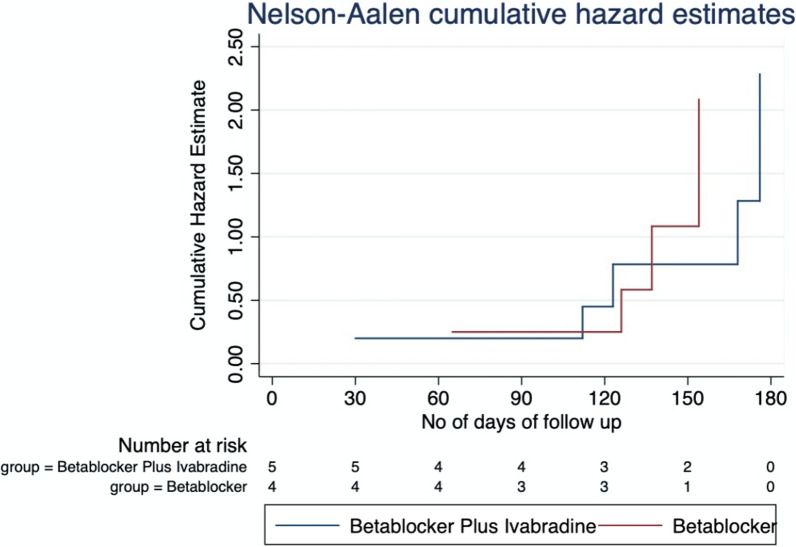 Figure 2
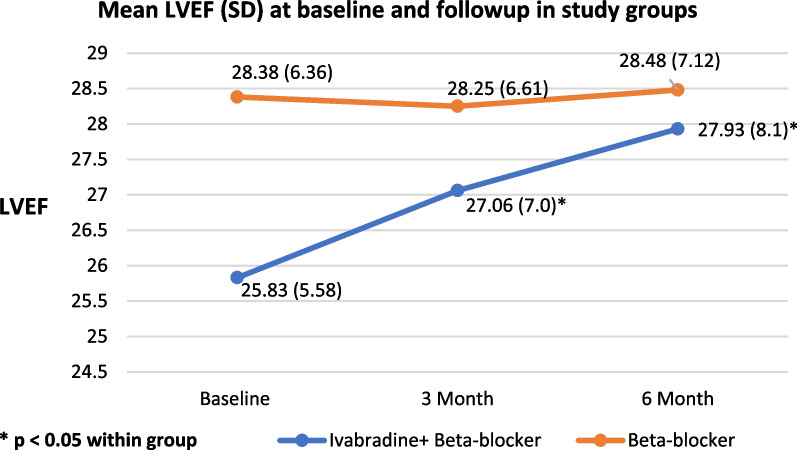 Figure 3
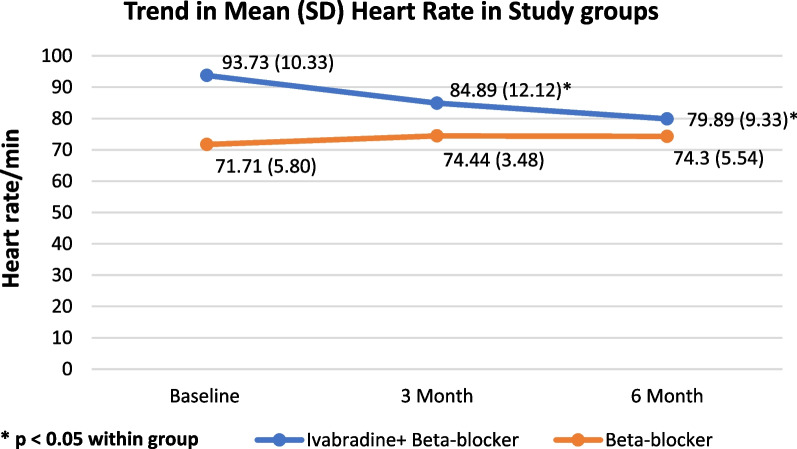 Figure 4
Peer Reviews
No public reviews on file for this paper yet. If you reviewed it on a platform where reviews are public (OpenReview, ICLR, NeurIPS, ICML), you can paste yours below so the community can read it here.
Videos
No videos yet. Explain this paper in a talk, walkthrough, or lecture? Add one.
Taxonomy
TopicsHeart rate and cardiovascular health · Heart Failure Treatment and Management · Blood Pressure and Hypertension Studies