Can frequent long stimulus onset ansynchronies (SOAs) foster the representation of two separated task-sets in dual-tasking?
Lasse Pelzer, Christoph Naefgen, Julius Herzig, Robert Gaschler, Hilde Haider

TL;DR
This study investigates whether using long stimulus onset ansynchronies (SOAs) can help separate task representations in dual-tasking, potentially reducing conjoint memory episodes.
Contribution
The study introduces a novel approach to modulate task-set integration in dual-tasking using SOA frequency.
Findings
Conjoint memory episodes appear to be a default process in dual-tasking regardless of SOA frequency.
SOA frequency influences participants' strategies for grouping task processing.
Reactivated memory episodes modulate task performance based on SOA frequency.
Abstract
Recent findings suggest that in dual-tasking the elements of the two tasks are associated across tasks and are stored in a conjoint memory episode, meaning that the tasks are not represented as isolated task-sets. In the current study, we tested whether frequent long stimulus onset ansynchronies (SOAs) can foster the representation of two separated task-sets thereby reducing or even hindering participants to generate conjoint memory episodes—compared to an integrated task-set representation induced by frequent short SOAs. Alternatively, it is conceivable that conjoint memory episodes are an inevitable consequence of presenting two tasks within a single trial. In two dual-task experiments, we tested between consecutive trials whether repeating the stimulus–response bindings of both tasks would lead to faster responses than repeating only one of the two tasks’ stimulus–response bindings.…
Genes, proteins, chemicals, diseases, species, mutations and cell lines named across the full text — each resolved to its canonical identifier and authoritative record.
Click any figure to enlarge with its caption.
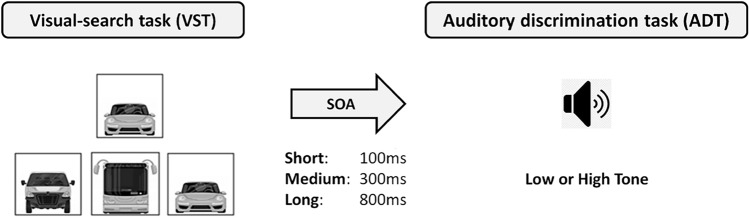 Figure 1
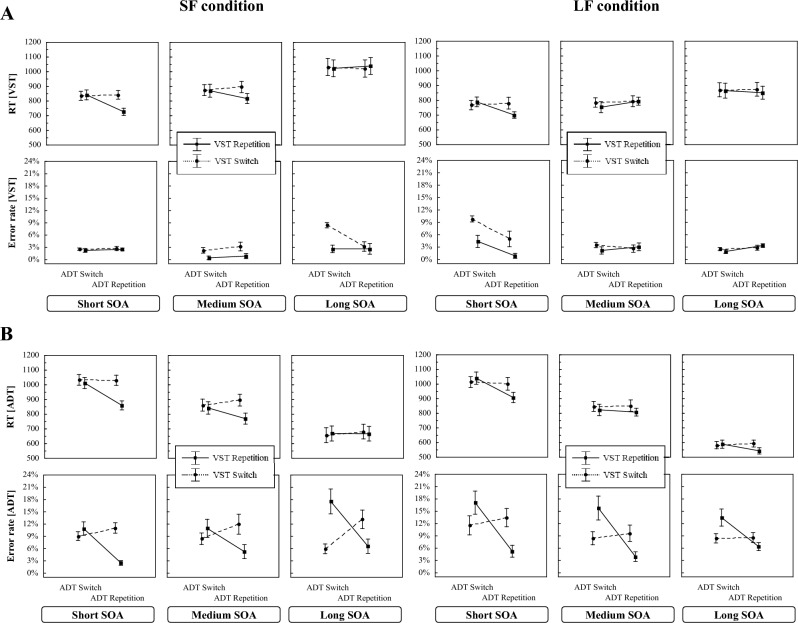 Figure 2
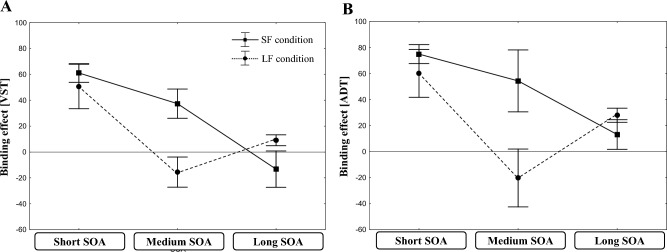 Figure 3
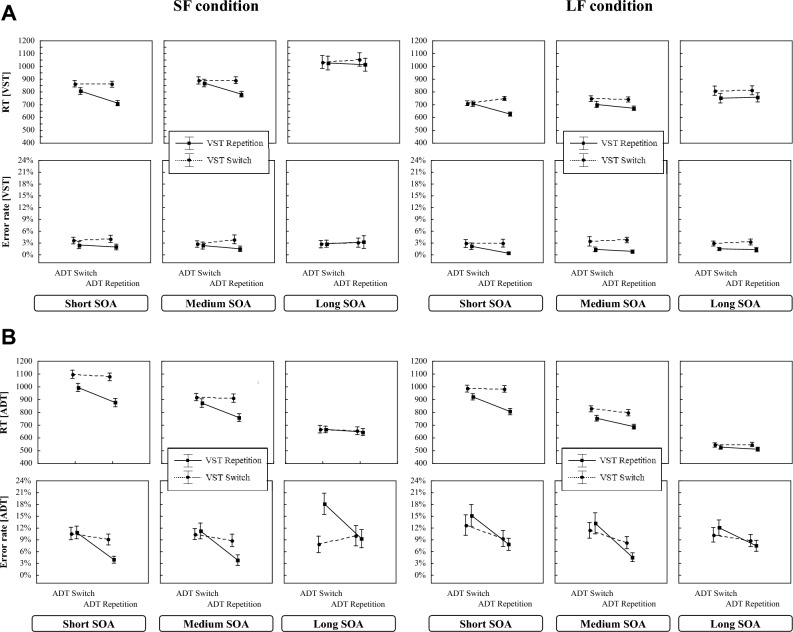 Figure 4
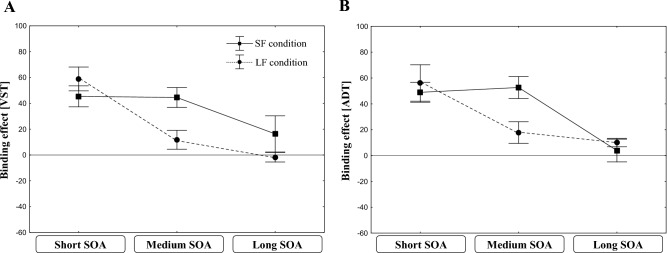 Figure 5
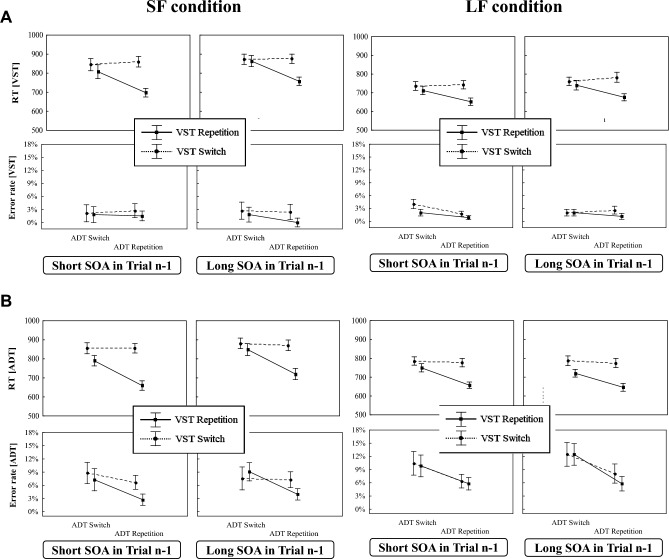 Figure 6
Peer Reviews
No public reviews on file for this paper yet. If you reviewed it on a platform where reviews are public (OpenReview, ICLR, NeurIPS, ICML), you can paste yours below so the community can read it here.
Videos
No videos yet. Explain this paper in a talk, walkthrough, or lecture? Add one.
Taxonomy
TopicsNeural and Behavioral Psychology Studies · EEG and Brain-Computer Interfaces · Neural dynamics and brain function