Insomniac symptoms and suicidality—link and management
Dirk Schwerthöffer, Hans Förstl

TL;DR
Insomnia symptoms are linked to increased suicide risk, and managing them could help prevent suicidal behavior.
Contribution
This paper proposes targeted management strategies for insomnia symptoms in patients with suicidal tendencies.
Findings
Insomnia symptoms are an independent risk factor for suicidality.
Neurobiological factors like serotonin dysfunction and disrupted circadian rhythms may explain the link.
Early treatment of insomnia in high-risk patients is crucial for suicide prevention.
Abstract
Ein Zusammenhang zwischen insomnischen Symptomen und Suizidalität wurde lange vermutet und ist von besonderem klinischem Interesse. Wir untersuchen aktuelle Hinweise aus Epidemiologie und Neurobiologie auf diesen Zusammenhang, um ein gezieltes Management vorzuschlagen. Klinisches Beispiel und selektive Medline-Literaturrecherche zu insomnischen Symptomen und Suizidalität. Epidemiologische Daten weisen auf insomnische Symptome als unabhängigen Risikofaktor für Suizidalität hin. Neurobiologische Befunde unterlegen eine Beziehung zwischen insomnischen Symptomen und Suizidalität, u. a. durch eine serotonerge Dysfunktion sowie eine besonders beeinträchtigte circadiane Rhythmik mit konsekutiver Hypofrontalität, beeinträchtigter Problemlösefähigkeit und verminderter Impulskontrolle. Im Rahmen der Suizidprävention muss bei Patienten mit kombinierten insomnischen und depressiven Symptomen…
Genes, proteins, chemicals, diseases, species, mutations and cell lines named across the full text — each resolved to its canonical identifier and authoritative record.
Click any figure to enlarge with its caption.
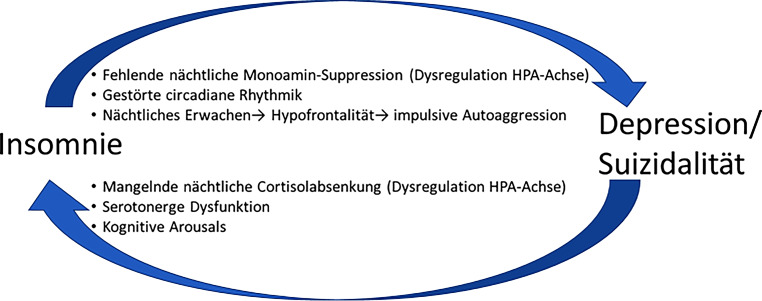 Figure 1
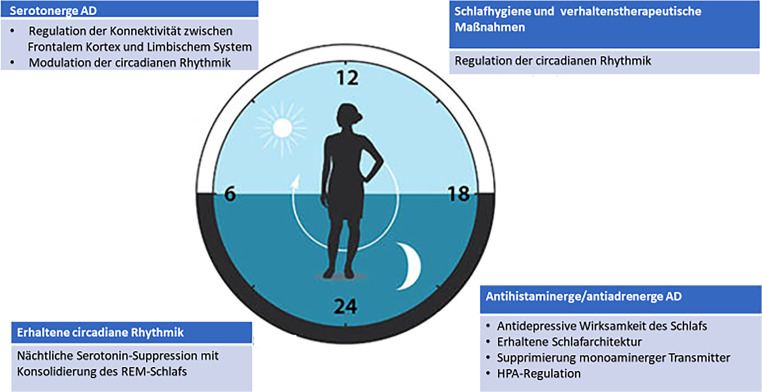 Figure 2
Peer Reviews
No public reviews on file for this paper yet. If you reviewed it on a platform where reviews are public (OpenReview, ICLR, NeurIPS, ICML), you can paste yours below so the community can read it here.
Videos
No videos yet. Explain this paper in a talk, walkthrough, or lecture? Add one.
Taxonomy
TopicsSleep and related disorders · Youth Substance Use and School Attendance · Tryptophan and brain disorders